


Dual Сitizenship draft law: promised changes and reality
On January 22, 2024, the President of Ukraine submitted to the parliament the Draft law No. 10425 “On Some Issues in the Migration Sphere Regarding the Grounds and Procedure for Acquisition and Termination of Ukrainian Citizenship”, which proposes some changes to the Law “On Ukrainian Citizenship”.
Multiple Citizenship
Among other things, the draft law provides for the introduction of multiple citizenship. It is not the first time the President initiates this. Back in 2019, a draft law No. 2590 was submitted to the parliament. It also suggested the named amendments, the introduction of dual citizenship in Ukraine, to the legislative acts dealing. The Draft law No. 2590 of 2019 was approved by the relevant committee, but did not make it to the first reading.
As of now, according to Article 4 of the Constitution of Ukraine, there is only exclusive citizenship in Ukraine. Therefore, in order for any legislative act regarding dual or multiple citizenship not to be subsequently recognized as unconstitutional, amendments to the Constitution of Ukraine will be required. At the same time, according to part 2 of Article 157 of the Constitution of Ukraine, the Constitution cannot be amended in conditions of war or in a state of emergency. It raises doubts about the possibility of adopting the draft Law No. 10425.
Who gets the right to a multiple citizenship
Press releases regarding the draft law mentioned that Ukrainian citizenship can be acquired by “those who, during different waves of emigration, were forced to leave their homeland and found themselves in Europe, the USA, Canada, Asian countries, Latin America” and “all those whose veins flow with Ukrainian blood and in whose chests beats a free heart. Ukrainians by descent, who have long proven themselves to be Ukrainians in spirit. And after many years of waiting, they finally get the opportunity to become Ukrainians by passport as well.”
At the same time, draft law No. 10425 has a list of the countries, whose passport-holders have a right to apply for a Ukrainian passport: Austria, Belgium, Bulgaria, UK, Greece, Denmark, Estonia, Ireland, Spain, Italy, Canada, Cyprus, Norway, Latvia, Lithuania, Luxembourg, Malta, the Netherlands, Germany, Poland, Portugal, Romania, Slovakia, Slovenia, USA, Hungary, Finland, France, Croatia, Czech Republic, Sweden, Switzerland, Japan.
Unfortunately, other countries, such as Kazakhstan, Israel, Brazil, Argentina, and Australia, where many ethnic Ukrainians reside in diasporas, were not included. Therefore, the draft does not provide for the repatriation of all ethnic Ukrainians.
In what form is dual citizenship proposed to be established in the Draft law?
To acquire or to be admitted to citizenship, all the named countries’ nationals will not have to renounce their citizenship and will have to acknowledge oneself as a citizen of Ukraine.
As a result, in all their relations with Ukraine, the foreigners, who obtained the citizenship, also get all the rights and obligations Ukrainian nationals have (including military and tax ones).
N.B. For such people, using a foreign passport instead of a Ukrainian one on the territory of Ukraine can be considered as a threat to national security/Ukraine’s interests and, henceforth, which can result in deprivation of Ukrainian citizenship.
Can all “ethnic” Ukrainians acquire citizenship?
While press releases about the draft law state that all ethnic Ukrainians will have the right to obtain Ukrainian citizenship, the actual text of the Draft law No. 10425 neither does not reflect it nor does not improve the procedure for citizenship acquisition based on the territorial origin. The procedure will not become simpler as well.
An individual applying for citizenship based on territorial origin must prove their lineage back to their great-grandparent, grandparent, or parent, fully demonstrating a documented connection to Ukraine. Given the challenges posed by three wars in the past 150 years, and a consequent displacement and the loss or absence of documents, many ethnic Ukrainians may find it difficult to establish this connection. The only alternative is to recognize the fact their relatives were born/resided in Ukraine through a lengthy legal process through the court.
Furthermore, the draft law proposes to eliminate the acquisition procedure based on “territorial origin”. In the current legislation, it works for individuals who themselves or whose relatives (great-grandparent, grandparent, parent) resided in the territory that became independent Ukraine. Such a ground for citizenship acquisition is planned to be taken away.
The draft law also introduces mandatory exams on the Ukrainian language, the fundamentals of the Constitution of Ukraine, and Ukrainian history for both individuals applying for citizenship and those seeking acceptance into citizenship (these are two different procedures). It’s worth noting that current legislation only requires exams for the citizenship acceptance procedure.
For individuals from the abovementioned list of countries, the draft law allows for taking exams within three years after acquiring or being admitted to Ukrainian citizenship, without imposing any consequences for non-compliance.
Citizenship Withdrawal/Loss
The draft law does not propose any essential changes to the procedures for citizenship withdrawal or loss. The problem that still exists and was not addressed by the draft is that only the President makes the decision on the citizenship withdrawal/loss. The President is not limited in time of making this decision. As of now, there are people waiting for more than 4 years for the order on the citizenship withdrawal to be signed.
The draft law also does not address the issue of prolonged delays in citizenship admission. The decision to grant citizenship is also exclusively made by the President.
Other amendments
Firstly, the draft law changes the requirements for individuals married to Ukrainian citizens. It proposes to allow citizenship admissions for marriages lasting three years or more, changing the current requirement of two.
Secondly, children born in Ukraine to foreigners holding temporary residence permits will no longer automatically acquire Ukrainian citizenship at birth. This proposal seeks to abolish the “right of the soil” for children of foreigners. In contrast, other European countries, such as Germany, have recently implemented such a right into their legislation to prevent demographic crisis.
Thirdly, a new ground for citizenship refusal is introduced: restrictions imposed by Ukrainian legislation on state secrets.
Fourthly, for all citizens of the Russian Federation and the Republic of Belarus who received temporary passports of the citizens of Ukraine during the war, but could provide documents confirming their withdrawal from citizenship for objective reasons, a deadline of 12 months from the cancellation of martial law is defined. However, these citizens, who have helped the Ukrainian army during their stay in Ukraine, may face persecution when returning to their country of previous citizenship to obtain documents confirming their citizenship withdrawal.
Fifthly, the draft law proposes to suspend the consideration of all applications for Ukrainian citizenship made by citizens of the Russian Federation and to halt the acceptance of new applications for the entire period of martial law and an additional 24 months after its expiration. Exceptions are made only for individuals who have merit to Ukraine or whose migration is in the state’s interest, as well as for those serving in the Armed Forces and minors.
In conclusion, not all changes announced in the press releases are reflected in draft law No. 10425. Some procedures remain unchanged, and there are no promised simplifications to allow ethnic Ukrainians from around the world to obtain Ukrainian citizenship. Unfortunately, behind the loud headlines, there are currently no real positive changes. The Draft law contains many technical errors, inaccuracies, gaps, and violations of legislative technique. In my opinion, in its current form, it cannot be accepted.
This article was first published at Ligazakon.net
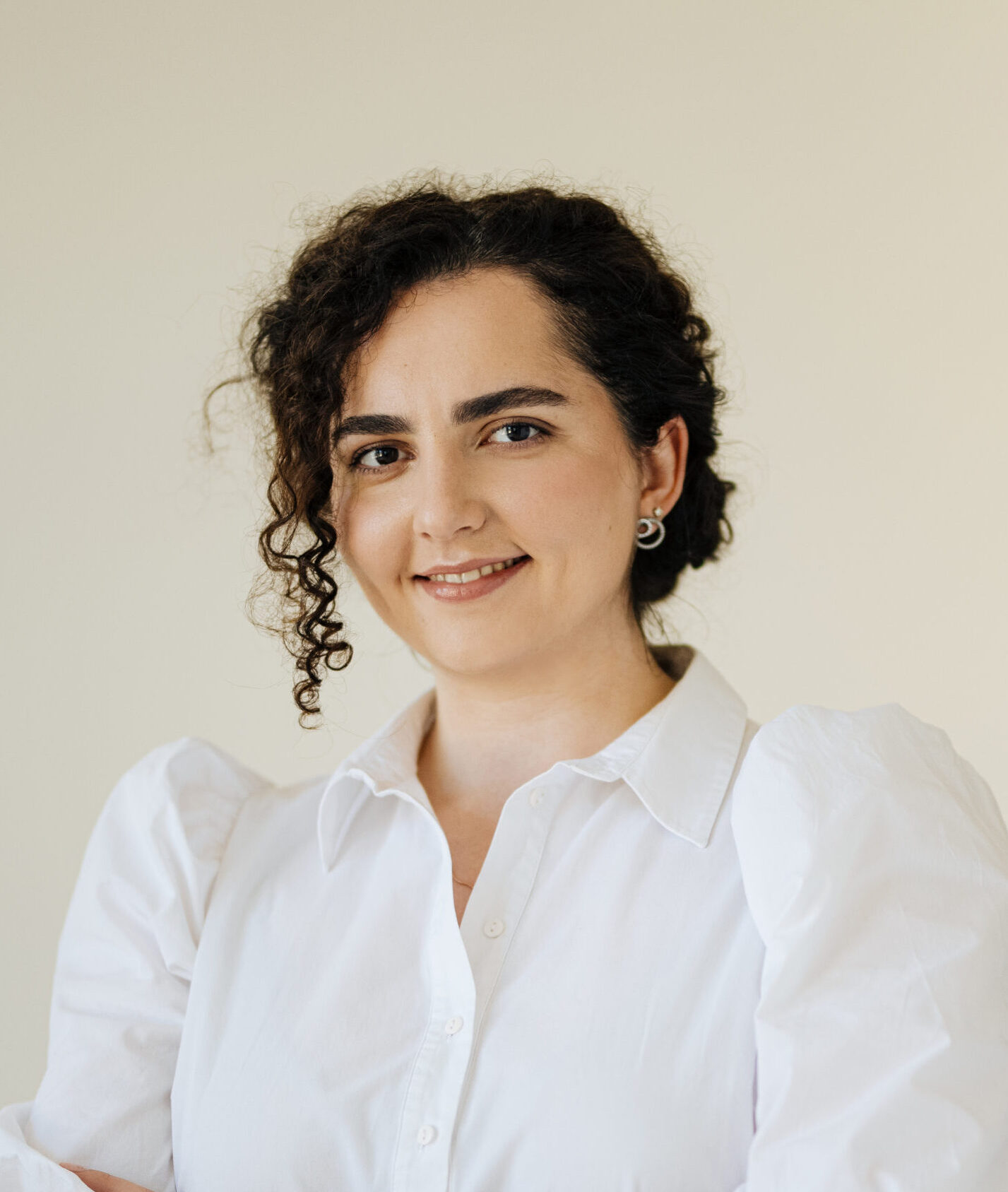
Kateryna Zatulko
Senior lawyer, attorney