


Blog
Dual citizenship permitted with more countries
On November 5, 2025, the Cabinet of Ministers of Ukraine approved a list of countries with which dual citizenship is permitted. Citizens of these states may acquire Ukrainian citizenship without renouncing their own, and Ukrainian citizens may retain Ukrainian citizenship while acquiring citizenship of these countries.
At the time the resolution was adopted, the list included only five countries: Canada, Federal Republic of Germany, Republic of Poland, United States of America, and Czech Republic.
On May 8, 2026, the list was expanded to include EU countries, Switzerland, Norway, Iceland, and Canada.
Currently, the list of countries with which dual citizenship is permitted is as follows:
- Republic of Austria
- Kingdom of Belgium
- Republic of Bulgaria
- United Kingdom of Great Britain and Northern Ireland
- Hellenic Republic
- Kingdom of Denmark
- Republic of Estonia
- Ireland
- Republic of Iceland
- Kingdom of Spain
- Italian Republic
- Canada
- Republic of Cyprus
- Republic of Latvia
- Republic of Lithuania
- Grand Duchy of Luxembourg
- Republic of Malta
- Kingdom of the Netherlands
- Federal Republic of Germany
- Kingdom of Norway
- Republic of Poland
- Portuguese Republic
- Romania
- Slovak Republic
- Republic of Slovenia
- United States of America
- Hungary
- Republic of Finland
- French Republic
- Republic of Croatia
- Czech Republic
- Swiss Confederation
- Kingdom of Sweden.
You may also bi interested in:
Legislative Initiative on Restricting Access to Public Service for Individuals with Dual Citizenship

Immigration Quotas for Highly Qualified Specialists in 2026
By Order No. 3663 of the Ministry of Economy, Environment and Agriculture of Ukraine, dated March 3, 2026, an updated List of Professions has been approved under which foreign nationals may obtain an immigration permit as highly qualified specialists.
List of Professions:
- Finance, banking, insurance and capital markets
- Biology and biochemistry
- Ecology
- Applied physics and nanomaterials
- Software engineering
- Information systems and technologies
- Computer engineering
- Electrical engineering
- Energy production (by specialization)
- Electronics, electronic communications, instrumentation and radio engineering
- Information measurement technologies
- Automation, computer-integrated technologies and robotics
- Applied mechanics
- Metallurgy
- Mechanical engineering (by specialization)
- Construction and civil engineering
- Biotechnology and bioengineering
- Biomedical engineering
- Agroengineering
- Medicine
- Therapy and rehabilitation (by specialization)
- Railway transport
- Road transport
The basis for immigration is approval from the Ministry of Economy. The only qualification requirement is a higher education diploma in the relevant profession at bachelor’s degree level or above, which must be apostilled or legalized. If the profession falls within the IT sector, a copy of the document package must also be submitted to the Ministry of Digital Transformation of Ukraine.
If your education corresponds to any of the professions on the list, this is a valid ground for obtaining an immigration permit to Ukraine and, subsequently, a permanent residence permit. We recommend consulting one of our specialists to assess your specific situation.

Foreign Military in Ukraine Should Obtain a TRP
Currently, the legal stay of foreign military personnel on the territory of Ukraine is confirmed by a military ID. However, as of 10 May 2026, a new requirement comes into effect: foreign nationals serving in the Armed Forces of Ukraine, the State Special Transport Service, or the National Guard of Ukraine are required to obtain a temporary residence permit.
Applications for the temporary residence permit must be submitted between 10 May 2026 and 10 November 2026.
To obtain the permit, applicants must submit the following documents to the regional department of the State migration service:
- passport and its notarially certified translation;
- military ID;
- military service contract;
- undertaking from the military unit.
The temporary residence permit shall remain valid for the duration of the military service contract, plus additional 6 months following its termination.
As of 10 November 2026, foreign military personnel will cross the border using their passport together with the temporary residence permit.
Foreign military servicemembers are exempt from the obligation to register or declare their place of residence.
Legal basis: the Law of Ukraine “On Amendments to Certain Laws of Ukraine Regarding the Legal Status and Medical Care of Military Personnel Who Are Foreign Nationals and Stateless Persons” dated December 17, 2025.
Read also


Financial Support for Families of Fallen Ukrainian Defenders
Freedom has a high price, and Ukraine remains profoundly grateful to the Foreign Volunteers who have fought side-by-side with our soldiers. To the families of these volunteers: your loss is immeasurable. While no amount of support can fill the void left by a loved one, Ukraine is committed to ensuring that the families of its fallen defenders are cared for and respected.
What kind of monetary support is there for the families of the fallen soldiers?
Ukraine provides one-time monetary assistance of 15 million UAH to the families of servicemen who died while defending the country (or within one year after injury, trauma, or disability sustained in service). This compensation also applies to the Foreign Volunteers serving in the Armed Forces of Ukraine, National Guard, or other defense formations under contract. As of March 2026, 15 million UAH is approximately $345,000 USD or €290,000 EUR (depending on exchange rates).
Who can apply for monetary support?
The right to receive the compensation belongs to the persons designated by the deceased serviceman in his or her personal disposition (a written order specifying recipients and shares).
If no disposition exists, the compensation is divided equally among:
- Children (including adopted children and those conceived during the serviceman’s lifetime but born after death)
- Spouse
- Parents (who have not been deprived of parental rights)
- Grandchildren (if their parents have died)
- Cohabiting partner (if confirmed by the decision of the Ukrainian court)
- Dependents
A recipient may voluntarily renounce their share by a notarized document, after which it is redistributed equally among the others or allocated to a single recipient. This is especially helpful for foreigners, as only one family member needs to open a bank account in Ukraine, not everyone.
Application process and required documents
According to the official information from the Ministry of Defense of Ukraine, the application process is as follows:
Applications must be submitted to the Territorial Centers of Recruitment and Social Support within three years from the date the death certificate is entered into the registry (or from the court decision declaring the person deceased).
Required documents (originals + copies, certified by the Territorial Center of Recruitment and Social Support):
- Application for payment
- Passport or other identity document of the applicant
- Certificate of name change (if applicable)
- Ukrainian tax ID number
- Death certificate of the serviceman
- Documents confirming family relationships or dependency (marriage certificate, birth certificates, court decisions, etc.)
- Family composition certificate
- Bank statement or document confirming account details (Ukrainian bank)
- Notarized power of attorney for transferring the full share to one family member (used when the family chooses to receive the payment through one person instead of dividing it equally).
- For applicants over 16 years old: a certificate of no criminal record
- Notarized consent for personal data processing
- For foreign documents: apostille and notarized translation into Ukrainian
The Territorial Center of Recruitment and Social Support certifies the copies, prepares a conclusion on eligible recipients, and forwards the package to the regional level. The regional center verifies everything and sends it to the Ministry of Defense Commission, which makes the final decision. The payment is disbursed in two stages: one-fifth (3 million UAH) is issued within 5 working days after funds arrive at the Territorial Center of Recruitment and Social Support, and the remaining four-fifths are paid in equal monthly instalments over 40 months.
Navigating this process from abroad can be complex — especially when it involves Ukrainian bureaucracy, document legalization, obtaining a Ukrainian taxpayer identification number, and opening a Ukrainian bank account to receive the funds.
We provide legal aid and can assist you in collecting and obtaining all necessary documents to secure the monetary compensation for the service of your family member. With a properly issued power of attorney, we can further simplify the entire process for you by preparing and submitting required applications, applying for a tax ID, arranging notarized translations, and representing you before Ukrainian authorities and banks. You do not have to handle this alone during your time of grief. We will guide you through every step with care, professionalism, and respect for the sacrifice your loved one made for Ukraine.
Read also:
FAMILY MEMBER IS REPORTED MISSING IN ACTION IN UKRAINE: WHAT TO DO

Relative Missing in Action in Ukraine: What to Do
The russian invasion of Ukraine has caused deep pain not only for Ukrainian families but also for many families worldwide, especially when a loved one serving as a Volunteer Fighter is reported Missing in Action (MIA). This article explains the main steps in simple terms for non-Ukrainians whose family member is in this heartbreaking situation.
First, we want to express sincere gratitude to all Foreign Volunteers who chose to stand with Ukraine in our fight for freedom and our deepest solidarity to the families of Missing Defenders. Please know that your loved ones are not forgotten, and we remain steadfast in our commitment to bring every hero home and honor them.
So, after you received a notification that your family member is missing in Ukraine, here are the key actions to consider:
1. Seek information and consultations.
To gather details and navigate the process, you can reach out to the following entities:
- The Military Unit: Reach out to the soldier’s unit to clarify the circumstances of the disappearance. Many units now have patronage services specifically designed to support families.
- Department for Coordination of Foreigners’ Military Service in the Armed Forces of Ukraine: They provide consultations and help with the documentation required for entitled payments. Email: int_legion_ua@post.mil.gov.ua
- Your Country’s Embassy in Ukraine: They can assist in communicating with Ukrainian authorities and provide additional diplomatic support.
2. Secure official Missing in Action (MIA) status.
Under Ukrainian law, a person officially gains Missing in Action status as soon as the information about their disappearance is entered into the Unified Register of Persons Missing under Special Circumstances, which can be done through the departments of the National Police of Ukraine. If you are not in Ukraine, you can refer to the mentioned entities or a legal representative to secure the status. This formal recognition is important as it opens access to rights and support from the Ukrainian government.
3. Provide DNA samples.
Submitting DNA is a critical step for identification and future repatriation. You can submit DNA samples at official identification centers in Ukraine, or if you are abroad, at any branch of State Enterprise “Document” — pasport.org.ua/centers, or directly through the International Commission on Missing Persons after reporting the missing person through ICMP’s Online Inquiry Center — oic.icmp.int. ICPM accepts samples in person at ICMP offices in Kyiv, the Hague, Sarajevo, or Tuzla; during its publicly announced collection campaigns held throughout the year in various countries (mostly in Europe); or — if all other options have been exhausted — via a remote DNA collection kit.
4. Request monthly payments.
Under Ukrainian law, close relatives can apply to the military unit for the soldier’s monthly salary while the service member holds MIA status. However, this procedure can be complicated for foreigners as it requires obtaining a Ukrainian tax identification number and a Ukrainian bank account. Also, foreign documents (passports, marriage and birth certificates, family composition certificates) must be apostilled and officially translated into Ukrainian.
5. Consider applying to change status to Killed in Action (KIA) after 6 months.
Under Ukrainian law, after at least 6 months in MIA status — and if circumstances suggest the person likely perished — relatives can petition a Ukrainian court to declare them deceased. This court decision enables access to one-time monetary assistance of 15 million UAH (around $345,000 USD or €290,000 EUR as of March 2026, depending on exchange rates) for families of fallen defenders. This payment is divided among eligible relatives. But again, for this, you will need to obtain a Ukrainian bank account and tax ID.
These processes can feel overwhelming, especially from abroad and in a foreign legal system. Expatpro law firm is available to support families in these situations. We provide legal support to gather information from Ukrainian institutions, assist with obtaining MIA or KIA status, handle paperwork for monthly payments, and guide you through securing the full compensation your family deserves.
Please feel free to reach out if professional guidance would make this process clearer or more manageable for you. Our thoughts remain with you and your family during this difficult time.
Read also
Financial Support for Families of Fallen Ukrainian Defenders

New Rules for the Legalization of Foreign Fighters
On 17 December, Ukrainian Parliament adopted Law No. 14052, which changes the approach to the legal status of foreigners serving in Ukrainian army. The law applies to servicemembers of the Armed Forces of Ukraine, the National Guard of Ukraine, and the State Special Transport Service.
The main purpose of the amendments is to regulate documentation issues, legal stay in Ukraine, and to ensure basic social and medical guarantees for foreigners serving.
Under the new rules, foreigners who have entered into a contract for military service will be able to obtain a temporary residence permit for the entire duration of the contract, plus three months after its termination. The law clarifies the list of documents on the basis of which such a permit is issued.
Separately, the law provides for the possibility of submitting a passport document with an expired validity period or one subject to replacement. This is permitted in cases where obtaining a new passport would require applying to the authorities of the aggressor state or the state not recognizing Ukrainian territorial integrity and sovereignty.
For foreigners who concluded a contract prior to the entry into force of this law, a transitional period is established – they should apply for a temporary residence permit within 6 months from the date the law enters into force. Until that time, they may continue to use their military ID to confirm their legal stay in Ukraine.
Foreign fighters who are documented with a temporary residence permit will not be subject to the requirement to register their place of residence.
The law also shortens the timeframe for the entry into force of amendments related to the exercise of the right to acquire and retain Ukrainian citizenship, and grants the Cabinet of Ministers up to three months to adopt the necessary subordinate regulatory legal acts.
At the same time, the law clarifies the scope of social guarantees for foreigners serving. The Law on Social and Legal Protection of Servicemen does not apply to them in full; however, they retain the right for vacation, financial remuneration, and medical support.
Introduced changes are aimed at simplifying the lawful stay of foreign servicemen in Ukraine and creating clearer and fairer conditions for military service.
We await the publication of the final text of the law after its signing by the President of Ukraine to provide a more detailed analysis.

Ukraine Unblocks Legalization for Foreign Journalists
For over a year, foreign journalists covering events in Ukraine have been in a difficult situation, unable to legalize their stay in the country. The reason was a legal conflict that arose after the reorganization of central executive authorities.
What was the problem?
According to the provisions of the Cabinet of Ministers of Ukraine Resolution No. 322 of April 25, 2018, the submission for a temporary residence permit for foreign journalists was to be issued by the Ministry for Reintegration of Temporarily Occupied Territories of Ukraine (Minreintegration).
However, last December, Minreintegration was liquidated. The Ministry of National Unity (Minnatsyednosti) was created on its basis. Yet, during the transfer of powers, the function of issuing submissions for foreign journalists’ residence permits was not transferred to the newly established ministry.
Thus, for almost a year, there was no authorized body in Ukraine to issue the necessary submissions, which effectively blocked the legalization process for foreign media workers.
A Solution is Found: A New Resolution
On November 19, 2025, the Government adopted a resolution that is expected to settle this issue. The authority to issue submissions for the temporary residence permit for foreign journalists has now been transferred to the State Committee for Television and Radio Broadcasting of Ukraine (Derzhkomteleradio).
This change opens the way for foreign correspondents to obtain residence permits and solves a problem that significantly complicated their professional activities in Ukraine over the past year.

Restricting Public Service Access for Dual Citizens
On November 18, 2025, the Prime Minister of Ukraine submitted to the Verkhovna Rada draft law No. 14230 titled “Draft Law on Amendments to Certain Legislative Acts of Ukraine Regarding the Specifics of Holding Certain Positions in State Authorities, Other State Bodies, and Local Self-Government Bodies by Citizens of Ukraine Who Hold Citizenship of a Foreign State.”
Under this legislative proposal, individuals with dual citizenship will be prohibited from holding the following positions:
- Member of the Verkhovna Rada of Ukraine and their assistants;
- Members of the Cabinet of Ministers of Ukraine;
- Commissioner of the Verkhovna Rada of Ukraine for Human Rights (Ombudsman);
- Commissioner for the Protection of the State Language;
- Chairperson and members of the Central Election Commission (CEC) and members of election commissions;
- Heads of local state administrations and their deputies;
- Employees of the Security Service of Ukraine (SBU);
- Head of the National Agency on Corruption Prevention (NACP);
- Member of a political party;
- Civil servants of categories “A–С” where the jurisdiction of the state body covers the entire territory of Ukraine (e.g., State Tax Service, State Customs Service);
- Civil servants of category “B” where the jurisdiction of the state body covers one or more regions or cities (e.g., Central Interregional Directorate of the State Migration Service in Kyiv and Kyiv region);
- Civil servants of category “C” where the jurisdiction of the state body covers one or more regions or cities in positions related to: cybersecurity; state secrets; handling personal data; personnel management; defense and mobilization preparation; referendums and elections; urban planning programs and documentation; internal audit;
- Positions of categories 1–6 in local governmental bodies.
Dual citizenship will be the basis for the dismissal from abovementioned position. It will also be the ground for the dismissal from the military service.

Approved list of countries with which dual citizenship is allowed
On November 5, 2025, the Cabinet of Ministers of Ukraine approved a list of countries with which dual citizenship is allowed. Citizens of these countries can acquire Ukrainian citizenship without renouncing their own, and Ukrainian citizens can retain their Ukrainian citizenship while obtaining citizenship of these countries.
Currently, the list includes five countries:
- Canada
- Federal Republic of Germany
- Republic of Poland
- United States of America
- Czech Republic
Worth mentioning that the list can be changed or supplemented in the future in accordance with the criteria defined by the Cabinet of Ministers. We are expecting the list of countries with which dual citizenship is allowed to be expanded soon, taking these criteria into account.

Work Permits for Foreigners: Fee Exemption for Defenders of Ukraine
Employment of foreigners in Ukraine is a procedure that always involves a number of legal formalities. One of the key prerequisites for concluding an employment contract with a foreign national is the employer’s obligation to obtain a work permit for foreigners and stateless persons.
As a general rule, a fee is charged for the issuance of such a permit, the amount of which depends on the period of its validity.
However, Ukrainian legislation establishes specific exemptions for certain categories of foreign nationals. In particular, employers intending to hire foreigners and stateless persons who have directly participated in the defense and deterrence of the armed aggression of russia against Ukraine are exempt from paying this fee.
Who Is Eligible for the Exemption
The exemption applies to foreigners and stateless persons who served in the Armed Forces of Ukraine, volunteer formations, or other military units engaged in the defense of Ukraine.
This privilege is provided under the Law of Ukraine “On Employment of the Population” as part of the state’s policy to support individuals who contributed to the protection of the country. By enacting this rule, the legislator recognizes that foreign nationals and stateless persons who stood in defense of Ukraine deserve additional guarantees in the field of employment.
Required Proof of Participation
To benefit from the exemption, it is necessary to provide official confirmation of participation in the defense against the armed aggression. Without such documentation, the exemption cannot be granted.
Although the respective employment center verifies independently whether the exemption may be applied, it is strongly recommended that applicants assist the verification process by submitting any available supporting documents when applying for a work permit.
Criteria for Dual Citizenship: What You Need to Know
In connection with the implementation of the institution of multiple citizenship in Ukraine, on October 8, 2025, the Government approved the criteria for determining the countries whose citizens will be eligible for dual (multiple) citizenship in Ukraine. These criteria shall enter into force on January 16, 2026.
The list of countries shall be approved by a separate Resolution of the Cabinet of Ministers of Ukraine upon the submission of the Ministry of Foreign Affairs (MFA).
What will the MFA focus on?
When submitting countries for inclusion in the list, the MFA shall take into account the following criteria:
- Membership in the EU;
- Sanctions policy: the country’s application of restrictive measures (sanctions) in connection with the armed aggression against Ukraine;
- Membership in the Group of Seven (G7);
- support for the independence, sovereignty, and territorial integrity of Ukraine;
- Position during voting on decisions/resolutions in international organizations on issues related to Ukraine;
- Existence of strategic or other types of partnership relations;
- Level and prospects for the development of bilateral relations;
- Financial support for Ukraine;
- Other criteria that may have a significant impact on ensuring the national interests of Ukraine in the sphere of foreign and domestic policy.
The Resolution also stipulates the possibility of excluding a country from this list. It is currently unknown what legal consequences such exclusion will entail for the citizens of those countries who hold dual citizenship at the moment of exclusion.
The Law on Multiple Citizenship in Ukraine
On June 18, 2025, Ukraine adopted a historic law that for the first time recognizes the possibility of holding multiple citizenships. This law outlines who can obtain, restore, and retain Ukrainian citizenship combined with another nationality, establishes limitations for certain groups, and specifies grounds for losing citizenship if acquiring passports from “unfriendly” countries.
Overview of the Legislative Changes in the field of Multiple Citizenship in Ukraine
The Law on Dual Citizenship in Ukraine: What Will Change and What It Means for You
On June 18, 2025, the Verkhovna Rada of Ukraine adopted Draft Law No. 11469 in its second reading, which establishes the legal framework for the recognition of multiple citizenship.
This law has been deemed historic — for the first time at the legislative level, the state publicly acknowledges the possibility of combining Ukrainian citizenship with the citizenship of other states. The Law is set to enter into force (contingent upon Presidential signature) six months from the date of its official publication.
Key Changes Introduced by the Law
The Law does not automatically grant all citizens the ability to hold two passports. Instead, it permits:
- The recognition of multiple citizenship in certain, legally defined cases.
- The waiver of the requirement to renounce other citizenship in the simplified procedure for acquiring Ukrainian citizenship (for foreigners from a list of countries to be determined by the Cabinet of Ministers of Ukraine (CMU) based on criteria established by the CMU; this list is currently unknown).
- The creation of a mechanism for the restoration of Ukrainian citizenship for diaspora members who lost it due to emigration.
The Law does not apply to citizens of aggressor and occupying countries (specifically Russia and Belarus).
Permitted Instances of Multiple Citizenship
The circumstances under which the fact of multiple citizenship will be permitted include:
- Simultaneous acquisition of Ukrainian citizenship and the citizenship of another state by a child by birth.
- Acquisition of the citizenship of their foreign adoptive parents by a child who is a citizen of Ukraine.
- Automatic acquisition of another citizenship by a citizen of Ukraine due to marriage with a foreigner.
- Automatic acquisition of another citizenship by a citizen of Ukraine who has reached the age of majority, resulting from the application of the foreign state’s citizenship legislation, provided that the Ukrainian citizen has not obtained a document confirming the possession of the other state’s citizenship.
- Acquisition of Ukrainian citizenship under a simplified procedure by foreigners who are citizens of states on the CMU’s list.
- Acquisition of the citizenship of states whose citizens acquire Ukrainian citizenship under the simplified procedure, by a citizen of Ukraine.
Conditions for Acquisition of Citizenship
The grounds for obtaining citizenship remain unchanged:
- Acquisition by birth or territorial origin.
- Acceptance into citizenship subject to five years of continuous residency.
- Restoration of citizenship.
Conditions for both acquisition and acceptance into citizenship are being tightened:
- Acquisition of Ukrainian citizenship by birth is impossible for children of foreigners if both parents are foreigners holding a temporary residence permit.
- Acceptance into citizenship will require five years of continuous residency exclusively based on a permanent residence permit. This effectively extends the overall period of legalisation, as one must first obtain a temporary permit, then a permanent one, and only then begin counting the five years of residency.
Exceptions to the permanent residency requirement for acceptance into citizenship:
- Individuals with significant services to Ukraine.
- Military personnel who have served for three years.
- Being in a marriage with a citizen of Ukraine for three years (under the previous draft law, only two years of marriage were required).
- For those who received an immigration permit based on the status of a foreign Ukrainian and obtained that status more than one year before filing documents — one year of continuous residency.
- For stateless persons, refugees, and persons granted asylum in Ukraine — three years of continuous residency.
Risk of Loss of Citizenship
The new law introduces a significant ground for deprivation of Ukrainian citizenship: the voluntary acquisition of a passport from any country that is NOT included in the list of “friendly” countries approved by the CMU.
ATTENTION: Even if the country is an ally, but is not included in the list, voluntarily obtaining its passport may lead to the loss of Ukrainian citizenship.
Voluntary acquisition of the citizenship of another state is considered all cases where a citizen of Ukraine applied for such acquisition to obtain the citizenship of another state.
Citizenship of an aggressor or occupying state obtained in the temporarily occupied territories (TOT) is not considered voluntarily acquired, even if the acquisition required an application, except in cases where the person’s actions are aimed at propagating war, publicly supporting armed aggression against Ukraine, or creating threats to the national security and/or national interests of Ukraine.
Other grounds for loss include:
- Failure to pass examinations in language, Constitution, and history within three years after obtaining citizenship (for citizens who acquired citizenship under the simplified procedure).
- Establishment of the fact of military service for an aggressor state or occupying state.
Limitations of the Law
What the law does not do:
- It does not amend the Constitution (Article 4 – “single citizenship” remains in force). This legal conflict must be resolved by the Constitutional Court of Ukraine (CCU), which has been unable to consider the constitutional petition from 90 Members of Parliament for quite some time. The unconstitutionality of the law may be established even after it enters into force. The implications for those who manage to acquire multiple citizenship in such a case are unknown.
- It does not permit multiple citizenship for civil servants and judges (legislation on civil service, the judiciary, elections, etc., remains in effect).
- It does not resolve issues regarding the legal status of citizens with multiple citizenship in other spheres of law/economics. This means that other legislation, such as norms concerning social/pension security, the tax code, legislation on military duty and mobilisation, etc., remains entirely unchanged.
- It does not establish a final list of countries whose citizens acquire citizenship under the simplified procedure — the CMU is tasked with creating this list.
- It does not create an automatic procedure for the recognition of a second citizenship — detailed implementation in subordinate legislation is required.
Advantages
- Recognition of Reality: Tens of thousands of Ukrainians already hold foreign passports.
- Humanisation of citizenship restoration procedures.
- Strengthening ties with the diaspora and attracting specialists.
- It will promote investments and international partnership.
Conclusion
This Law is only the beginning. Law No. 11469 sends an important signal to the diaspora and international partners. However, it is not an automatic indulgence for dual citizenship. Its full implementation depends on two critical steps:
- the CCU’s decision on the constitutionality of the law, and
- the development and approval of a series of subordinate normative acts by the government.
You may also be interested in:
Criteria for Dual Citizenship: What You Need to Know
Approved list of countries with which dual citizenship is allowed
Legislative Initiative on Restricting Access to Public Service for Individuals with Dual Citizenship
Multiple Citizenship in Ukraine: FAQ
Who can acquire multiple citizenship under the new law?
Only individuals meeting specific cases defined by law — such as birth, adoption, marriage, or acquisition under special CMU lists.Does the law apply to Russian or Belarusian citizens?
No, citizens of aggressor or occupying states are excluded.Can you lose Ukrainian citizenship if you get another passport?
Yes, if you voluntarily acquire the citizenship of a country not on the “friendly countries” list.Is dual citizenship automatically allowed for everyone?
No, most citizens must meet strict requirements and exceptions listed in the law.Do civil servants and judges have special restrictions?
Yes, multiple citizenship is still not allowed for civil servants and judges.Does the law change tax, pension, or military service rules?
No, these areas are not affected by the new law and retain the old regulations.How to restore Ukrainian citizenship if you emigrated?
The law introduces procedures for diaspora members to regain citizenship.What is the “friendly countries” list and how is it defined?
The Cabinet of Ministers of Ukraine will establish this list in the future.
A draft law on cancellation of visa requirements for foreign volunteers registered in the Ukrainian parliament
According to the current legislation, foreign volunteers and humanitarian workers must obtain a visa-D to stay in Ukraine for more than 90 calendar days. To complete this, a foreigner must leave Ukraine before the end of 90-day visa-free period and apply in the Ukrainian consulate abroad. Only after obtaining a visa-D, foreigners can come to Ukraine and apply for a temporary residence permit.
Therefore, the authors of the draft law aim to ease the conditions for the activities of foreign volunteers and humanitarian workers in Ukraine.
The draft law №13071, which is currently undergoing the stage of approval by the Verkhovna Rada committees, states the following:
- for the period of martial law and within 1 year from the date of its cancellation, volunteers and humanitarian workers* will be able to obtain a temporary residence permit without a visa-D.
- volunteers and humanitarian workers* who arrived in Ukraine after February 24, 2022 and applied for a temporary residence permit within 60 days of the adoption of this law are considered legally staying in Ukraine.
*Humanitarian workers are defined as foreigners who arrived in Ukraine to work in separate subdivisions of foreign legal entities registered as recipients of humanitarian aid in accordance with the Law of Ukraine “About Humanitarian Aid”.
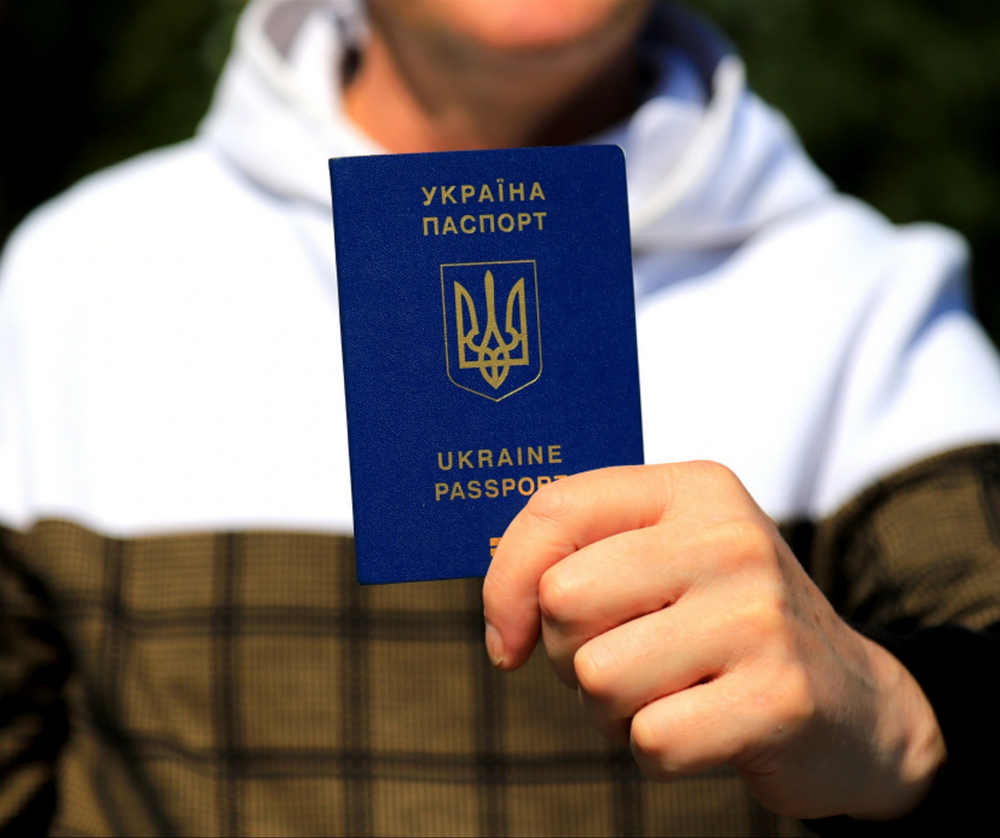
The Path to Ukrainian Citizenship: Constitution and History Exams
The Law of Ukraine, adopted on March 21, 2023, introduced exams on the basics of the Constitution and the history of Ukraine for foreigners who want to apply for Ukrainian citizenship.
Since then, foreigners have not been able to exercise their right to acquire Ukrainian citizenship in practice, as there was no mechanism for taking the exams.
Starting from February this year, this opportunity has become available.
A Testing Center for the Basics of the Constitution and the History of Ukraine has been opened at the State Institution “Scientific and Methodological Centre for Higher and Professional Pre-Higher Education.” This center is responsible for organizing and conducting the exams for individuals aspiring to become Ukrainian citizens.
The exams are fee-based. Registration can be completed on the Center’s website through a personal account.
A test database has been created to assess knowledge in these subjects, consisting of 350 questions: 190 on the history of Ukraine and 160 on the basics of the Constitution of Ukraine.
The exam includes 45 questions: 20 on the Constitution and 25 on history. The exam is considered successfully passed if the candidate provides at least 15 correct answers on the Constitution and 20 correct answers on history. Candidates are given 45 minutes for each section, meaning the total exam duration is 90 minutes.
A certificate is issued upon successful completion, which remains valid indefinitely.
Candidates can retake the exams an unlimited number of times but no more than once every four months.
Exam results can be appealed through an administrative procedure or in court.
On the website of Center, you can find:
- Instructions for conducting exams
- Program on the Fundamentals of the Constitution of Ukraine
- Program on the history of Ukraine
- Exams schedule
- Test tasks on the fundamentals of the Constitution of Ukraine
- Test tasks on the history of Ukraine
- Handbook to prepare for exams for foreigners and stateless persons who intend to be admitted to Ukrainian citizenship
We remind you that, in addition to the certificate of knowledge of Ukrainian history and the Constitution, applying for Ukrainian citizenship also requires a certificate of proficiency in the Ukrainian language, issued by the National Commission on State Language Standards.

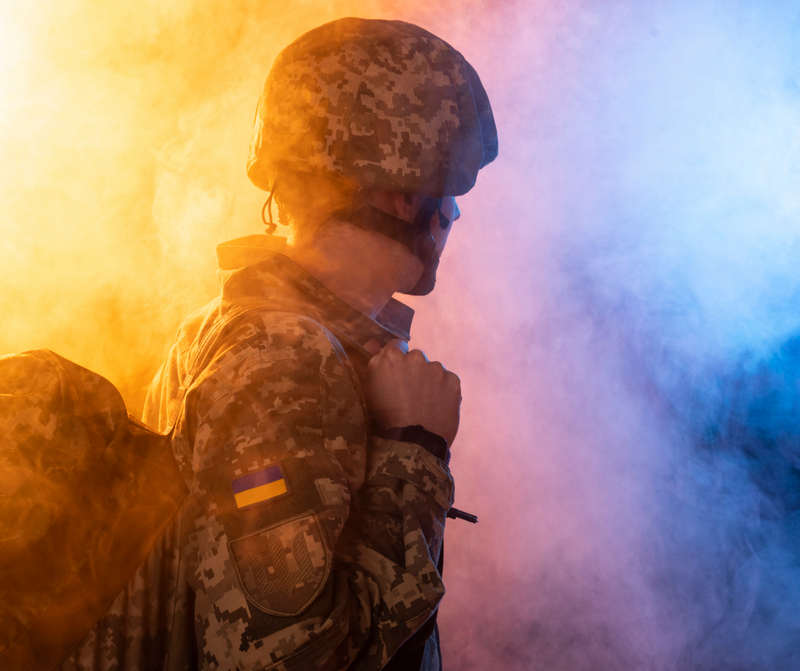
Ukrainian Citizenship Law No. 3897-IX: Changes for Frontline Fighters
On August 24, 2024, the President signed Law No. 3897-IX On Amendments Regarding the Legal Status of Foreigners and Stateless Persons Participating in the Defense of Ukraine’s Territorial Integrity and Inviolability. Most provisions will come into force in November.
Overall, the proposed changes are aimed at foreigners involved in resisting Russia’s military aggression. It is worth noting that non-Ukrainian citizens face risks when joining the Armed Forces, as some countries consider voluntary military service in another country a crime, and in certain cases, this can be grounds for citizenship revocation.
We cannot say that drastic changes have been introduced to the law. However, new provisions do make it easier for many foreigners to obtain the desired migration status in Ukraine.
Legal Stay for Contract Servicemen
Previously, foreign servicemen (hereinafter – contract servicemen) were required to leave Ukraine within 7 days after their contract ended or was terminated. For those facing criminal charges in their home countries for serving in the Ukrainian army, or for citizens of states supporting Russia’s military aggression, returning poses significant risks. The lack of a “buffer period” left them barely enough time to pack their belongings, let alone plan future or simply rest after service.
Now, the Law allows contract servicemen to stay in Ukraine legally for up to 3 months after their contract ends.
Family Matters: Marriage to Contract Servicemen and Fallen Soldiers’s families
The spouse of a contract serviceman now has grounds to obtain a temporary residence permit through reunification. Unlike most foreigners, they will not need to obtain a long-term visa. This can potentially reduce expenses and save time on migration-related issues for these families.
However, it’s important to note that the spouse’s stay will depend on their partner’s migration status. For example, if the service member is required to leave the country after their contract ends and the 3-month legal stay period expires, the same will apply to their spouse.
Previous legislation did not address the status of spouses and children/dependents of fallen servicemen, leaving them unprotected. This effectively meant that individuals not only lost their loved ones but also their right to reside in the country where they had built their lives.
Now, partners of fallen soldiers can immigrate regardless of how long they have been married (under the usual procedure, couples must be married for 2+ years). Their immigration is not subject to quotas, and they are exempt from the requirement to provide health status certificates and criminal background checks.
Volunteers During Martial Law
Previously, legislation recognized a specific category of foreigners— volunteers involved in anti-terrorist operations or in repelling Russian aggression in the temporarily occupied territories of Donetsk and Luhansk regions.
Law No. 3897-IX introduces a new category of individuals under migration law, referred to as “volunteers since 24.02.2022.” These are individuals who, since February 24, 2022, have:
“provided or are providing shooting, tactical, radio, explosive, medical, or other assistance to units of the Armed Forces of Ukraine, the National Guard of Ukraine, including territorial defense units and voluntary territorial community formations, while being directly in combat zones, and who have participated in combat or service missions with these units for at least six months.”
Note that this category is not for all volunteers. Also, contract servicemen are not included as they are under a different regulation.
These volunteers now can benefit from favorable conditions: they qualify for a temporary residence permit for 4 years, as long as they obtain a recommendation from the Ministry of Defense of Ukraine or the Ministry of Internal Affairs of Ukraine.
Improving the Status of Former Contract Servicemen
The law has clarified the definition of former servicemen, replacing the broad term “those who served.” During martial law, Former Contract Servicemen are individuals whose contracts were terminated due to reaching the maximum age for military service or due to health conditions, based on a Military Medical Commission’s conclusion. In other periods — peacetime or special period — this category also includes those whose contracts simply expired.
Previously, the law only focused on active servicemen as a group needing more favorable conditions. Now these conditions have been extended to those who have completed their service. The challenges that military service may have caused in their country of citizenship do not disappear when the contract ends, so the state must address these issues.
For instance, former contract servicemen who received a state award will now be treated the same as their awarded colleagues who are still in service when applying for citizenship. Given the reasons for discharge (age limits or health issues), this “equal treatment” is considered fair.
Acquiring Citizenship becomes Easier
Essentially, contract servicemen have been exempted from certain requirements for obtaining citizenship.
In establishing these new conditions, the legislator focused on assessing an individual’s “contribution” to the defense of the country. Those who have sacrificed their health, for example, will face fewer obligations when applying for citizenship.
- Individuals discharged from service due to health reasons will not be required to prove continuous residence in Ukraine. In fact, the length of residency in Ukraine (one of the most critical criteria in this process) will not be relevant in such cases.
- Current and former servicemen (if discharged for health reasons) will not need to obtain immigration permits to apply for citizenship.
- Military award recipients will be exempt from the obligation to prove legal sources of livelihood.
- Contract servicemen who acquired Ukrainian citizenship during martial law and signed commitments to take the necessary exams will be allowed to fulfill this obligation within two years after the end or cancellation of martial law.
- “Volunteers since February 24, 2022,” will also not be required to obtain immigration permits and will have grounds for citizenship application provided they reside permanently in Ukraine for 3 years (compared to the 5 years under the standard procedure).
Termination of Foreign Citizenship: a Declaration Instead of an Obligation
Since the onset of the full-scale invasion, there has been an increase in legal cases against individuals who failed to fulfill the requirement to terminate their foreign citizenship. Often, foreigners were unable to renounce their previous citizenship for objective reasons, such as ignoring authorities from their home country or political persecution. It’s important to note that failing to meet this obligation results in the loss of newly acquired Ukrainian citizenship. The situation remains critical for citizens of Russia and Belarus who have taken up arms to fight against the aggressor country.
The new law expands the category of individuals who can submit a declaration of renunciation of foreign citizenship. A declaration merely signifies the intent to renounce citizenship (or allegiance) rather than imposes an obligation to do so.
Under the new law, the following individuals can submit a declaration of renunciation of foreign citizenship:
- Current and former contract servicemen;
- Spouses and children/dependents of servicemen from the Armed Forces of Ukraine, the State Special Transport Service, or the National Guard who died in the line of duty;
- “Volunteers since February 24, 2022.”
Additionally, those who acquired citizenship from, January 1, 2018, to August 25, 2024, may submit a declaration of renunciation of foreign citizenship if they are:
- Current and former contract servicemen;
- Individuals with significant merits to Ukraine or whose acceptance into Ukrainian citizenship is in the state’s interest;
- Current contract servicemen who have been awarded a state honor;
- “Volunteers after February 24, 2022”;
- Citizens of the aggressor or occupying state who have faced political persecution in their country of citizenship;
- Spouses and children of such individuals.
Expired Documents
Another positive change in Law No. 3897-IX is the permission to use a passport that is expired or due for exchange. However, this option is only available in cases where obtaining a new passport would require an individual to approach the authorities of a country that has committed acts of armed aggression against Ukraine, does not recognize Ukraine’s territorial integrity and sovereignty, and refuses to acknowledge the illegality of violations against Ukraine’s territorial integrity and sovereignty (specifically, those that voted against the United Nations General Assembly Resolution “On the Territorial Integrity of Ukraine” dated March 27, 2014, No. 68/262).
There were 11 countries that opposed the mentioned resolution: Russia, Armenia, Belarus, Bolivia, Cuba, North Korea, Nicaragua, Sudan, Syria, Zimbabwe, and Venezuela.
| Process | Those allowed to present an expired passport |
| Permanent Residence Permit | Contract servicemen who have served for more than 3 years; Contract servicemen deemed unfit for service due to illnesses, injuries (trauma, concussions, disabilities) sustained while performing military duties; A spouse of a serviceman who died in the line of duty. |
| Extensions of Stay | Former contract servicemen;“Non-existent category”*; |
| Temporary Residence Permits (TRP): issuance and legal stay | “Volunteers before February 24, 2022”;“Volunteers after February 24, 2022” They are legally present in Ukraine from the moment they apply for a Temporary Residence Permit. |
| Immigration Permits | Service members who have served for more than 3 years;Service members deemed unfit due to illnesses, injuries (trauma, concussions, disabilities) sustained while fulfilling military duties (they are legally present in Ukraine from the day they submit their documents for the permit); They are legally present in Ukraine from the day they submit their documents for the permit, provided they do so within 6 months of the contract’s end. “Non-existent category”*; |
| Citizenship | Active contract servicemen;Former contract servicemen. |
*Unfortunately, one of the references in the law is incorrect, leading to a “phantom” category of people. It appears the legislator meant to refer to those who have lived in Ukraine for over 5 years on a temporary residence permit (subpara 11 of para 2 of Article 4 of the Law on the Legal Status of Foreigners and Stateless Persons), but mistakenly cited a non-existent point 11 in part 3 of the same article. Without a prompt response from Parliament, this reference is invalid, meaning those intended to benefit from the changes will not be able to do so.
Protection for Wrongfully Convicted Individuals
Voluntary service in the Ukrainian army may lead to political persecution. Many are familiar with cases of Russians being accused of “extremism” for donating to the Armed Forces of Ukraine, not to mention the direct act of resisting the aggressor state by joining the military.
Committing crimes against humanity, genocide, or other serious offenses in Ukraine is a valid reason for denying citizenship — a logical step to ensure national security. However, refusing citizenship to individuals with fabricated charges would be unjust.
Accusations of crimes based on the political motives of the occupying or aggressor state, or any country that doesn’t recognize Ukraine’s territorial integrity, won’t be a reason to deny citizenship to contract soldiers, volunteers, or those who have made significant contributions to Ukraine and whose citizenship is in the national interest.
Additionally, volunteers cannot be forcibly returned to a country that does not acknowledge Ukraine’s territorial integrity and sovereignty or refuses to recognize the illegality of such actions.
We can say the Law No. 3897-IX is indeed an important step in creating fair conditions for foreigners and stateless persons who defend Ukraine, including military personnel, their families, and volunteers. Making it easier to legalize their status in Ukraine is a significant way for the state to show its gratitude to those protecting it.
We expect updates to the rules on citizenship, immigration, and temporary residence to explain the new provisions of the Law.
Any questions? Our lawyers are always ready to assist you!
What will change Draft Law No.11469 for applicants for Ukrainian citizenship
On August 7, 2024, the President of Ukraine submitted to the Verkhovna Rada, Ukrainian Parliament, Draft Law No.11469 on amendments to certain laws of Ukraine regarding the implementation of the right to acquire and retain Ukrainian citizenship, proposing the introduction of the institution of multiple citizenship in Ukraine.
For the second time this year, the Office of the President has devised such an initiative. The previous Draft Law No.10425 was ready for the first reading in the Parliament and had a few alternative draft laws, but never made it to the Verkhovna Rada. A similar fate befell draft law No.2590 submitted in 2019.
It is still unclear why Draft Law No.11469 is being suggested as a new legal initiative. Given the fact that the text of Draft Law No.11469 is built upon Draft Law No.10425, it could have been submitted as part of refining the previous Draft Law No.10425.
Introducing the concept of dual citizenship in Ukraine is a contentious issue, as the Constitution of Ukraine enshrines the principle of single citizenship. To avoid legal collisions and fully implement the mechanism of dual citizenship, amendments to the Constitution are necessary. This issue has been discussed for a long time now.
Acquiring Ukrainian Citizenship as a Second Citizenship:
The Draft Law stipulates a simplified procedure for citizens of certain countries to apply for Ukrainian citizenship. However, it is not yet clear which countries will be included in this list, as it must be approved by a separate law.
The simplified procedure here means that such individuals are not required to pass exams in Ukrainian language, history, and the basics of the Constitution when applying for citizenship. However, they are obligated to pass these exams within no more than three years from the date of acquiring Ukrainian citizenship.
No new grounds for acquiring or granting Ukrainian citizenship are being proposed. Citizenship can continue to be obtained only through the existing three methods: acquisition, acceptance, or restoration.
Citizenship can be acquired through birth, territorial origin, or as a result of adoption or the establishment of guardianship or custody.
Citizenship of Ukraine can be granted based on continuous residence in Ukraine for the past five years.
Citizenship based on the territorial origin
Currently, individuals can acquire Ukrainian citizenship if they or their relatives were born or resided in territories that became part of Ukraine after it gained independence before August 24, 1991.
The Draft Law proposes revoking individuals’ right to acquire Ukrainian citizenship if they or their relatives were not born but only resided in the specified territories.
No explanation is given on the proposed changes in the explanatory note or press releases. We think that during this challenging period for Ukraine, with the demographic and migration situation being critical, excluding certain grounds for obtaining citizenship will only deteriorate the situation.
Naturalization
Currently, individuals have the right to be granted citizenship if they have continuously resided in Ukraine for the past five years on a temporary or permanent residence permit. Exceptions are made for those married to a Ukrainian citizen or serving in the Ukrainian military. The Draft Law now proposes to remove the possibility of granting citizenship to individuals with a temporary residence permit.
To obtain Ukrainian citizenship, individuals will need, according to the Draft Law, to reside in Ukraine for 10 years: first, 5 years to obtain a permanent residence permit (in the absence of other grounds for obtaining it) and then another 5 years before applying for citizenship. This makes the process significantly longer compared to the more lenient requirements that most of the European countries have. For example, in Germany, the residency requirement for obtaining citizenship was recently reduced from 8 to 5 years, and in certain cases, to 3 years.
For those seeking citizenship as the spouse of a Ukrainian citizen, the required duration of marriage may be increased from 2 to 3 years.
The draft law proposes to extend this requirement to persons applying for citizenship, except for those who obtain citizenship under a simplified procedure, the military, children and incapacitated persons.
Language Exams
The Draft Law proposes introducing this requirement for those applying for citizenship acquisition. Exceptions are made for those obtaining citizenship through a simplified procedure, military personnel, children, and legally incapacitated individuals.
Loss of Citizenship
The Draft Law suggests a complete revision of the grounds for the loss of Ukrainian citizenship. Acquiring citizenship will no longer be grounds for losing Ukrainian citizenship if it is citizenship of a country included in a legally defined list.
The voluntary acquisition of citizenship of a state recognized by Ukraine as an aggressor or occupying state will be grounds for losing Ukrainian citizenship. The same applies to acquiring the citizenship of any state not listed as one with a simplified procedure. Essentially, multiple citizenship is possible only for people wanting to hold a passport of a country from the legally defined list. Commenting on this provision in Draft Law No.10425, the Main Scientific and Expert Department of the Parliament noted that such an approach would amount to a violation of the principle of equality before the law. We cannot disagree with this.
The Draft Law proposes that foreigners obtaining Ukrainian citizenship through a simplified procedure would have the legal right to hold dual or multiple citizenship and enjoy all the rights and freedoms of a Ukrainian citizen. In contrast, Ukrainian citizens acquiring citizenship of other states not included in that list of countries (whose citizens can obtain Ukrainian citizenship through a simplified procedure) would risk losing Ukrainian citizenship and all the rights as Ukrainian citizens.
Among the grounds for the loss of citizenship outlined in the Draft Law are the use of a foreign passport within Ukraine, providing false information or forged documents to obtain citizenship, serving in the military of an aggressor state, committing crimes against peace, humanity, international order, or committing a terrorist act. Additionally, it includes the failure of individuals who acquired Ukrainian citizenship through a simplified procedure to pass the Ukrainian language, history, and the Constitution knowledge exams the within the prescribed timeframes.
A new positive aspect of this Draft Law, compared to previous legislative initiatives, is the introduction of sanctions for failing to pass the exams, which had not been stipulated before.
Unfortunately, the Draft Law overlooks an important issue: the timeframes for processing applications for the acquisition and termination of citizenship. The final decision in both cases is made by the President of Ukraine, and due to the lack of any legislative mechanisms of influence. From our experience, the processing time for these applications could be 5 or more years.
Among the positive changes in the Draft Law is the introduction of simpler procedures for foreigners serving in the military under contract, as well as for the families of military personnel.
Draft Law No.11469 introduces the concept of multiple citizenship in Ukraine; however, the text of the Draft Law contains several legal collisions as well as technical errors that need to be addressed. These changes must be implemented in line with the principles of equality and legal certainty for all Ukrainian citizens.
First was published at The Page

Dual Сitizenship draft law: promised changes and reality
On January 22, 2024, the President of Ukraine submitted to the parliament the Draft law No. 10425 “On Some Issues in the Migration Sphere Regarding the Grounds and Procedure for Acquisition and Termination of Ukrainian Citizenship”, which proposes some changes to the Law “On Ukrainian Citizenship”.
Multiple Citizenship
Among other things, the draft law provides for the introduction of multiple citizenship. It is not the first time the President initiates this. Back in 2019, a draft law No. 2590 was submitted to the parliament. It also suggested the named amendments, the introduction of dual citizenship in Ukraine, to the legislative acts dealing. The Draft law No. 2590 of 2019 was approved by the relevant committee, but did not make it to the first reading.
As of now, according to Article 4 of the Constitution of Ukraine, there is only exclusive citizenship in Ukraine. Therefore, in order for any legislative act regarding dual or multiple citizenship not to be subsequently recognized as unconstitutional, amendments to the Constitution of Ukraine will be required. At the same time, according to part 2 of Article 157 of the Constitution of Ukraine, the Constitution cannot be amended in conditions of war or in a state of emergency. It raises doubts about the possibility of adopting the draft Law No. 10425.
Who gets the right to a multiple citizenship
Press releases regarding the draft law mentioned that Ukrainian citizenship can be acquired by “those who, during different waves of emigration, were forced to leave their homeland and found themselves in Europe, the USA, Canada, Asian countries, Latin America” and “all those whose veins flow with Ukrainian blood and in whose chests beats a free heart. Ukrainians by descent, who have long proven themselves to be Ukrainians in spirit. And after many years of waiting, they finally get the opportunity to become Ukrainians by passport as well.”
At the same time, draft law No. 10425 has a list of the countries, whose passport-holders have a right to apply for a Ukrainian passport: Austria, Belgium, Bulgaria, UK, Greece, Denmark, Estonia, Ireland, Spain, Italy, Canada, Cyprus, Norway, Latvia, Lithuania, Luxembourg, Malta, the Netherlands, Germany, Poland, Portugal, Romania, Slovakia, Slovenia, USA, Hungary, Finland, France, Croatia, Czech Republic, Sweden, Switzerland, Japan.
Unfortunately, other countries, such as Kazakhstan, Israel, Brazil, Argentina, and Australia, where many ethnic Ukrainians reside in diasporas, were not included. Therefore, the draft does not provide for the repatriation of all ethnic Ukrainians.
In what form is dual citizenship proposed to be established in the Draft law?
To acquire or to be admitted to citizenship, all the named countries’ nationals will not have to renounce their citizenship and will have to acknowledge oneself as a citizen of Ukraine.
As a result, in all their relations with Ukraine, the foreigners, who obtained the citizenship, also get all the rights and obligations Ukrainian nationals have (including military and tax ones).
N.B. For such people, using a foreign passport instead of a Ukrainian one on the territory of Ukraine can be considered as a threat to national security/Ukraine’s interests and, henceforth, which can result in deprivation of Ukrainian citizenship.
Can all “ethnic” Ukrainians acquire citizenship?
While press releases about the draft law state that all ethnic Ukrainians will have the right to obtain Ukrainian citizenship, the actual text of the Draft law No. 10425 neither does not reflect it nor does not improve the procedure for citizenship acquisition based on the territorial origin. The procedure will not become simpler as well.
An individual applying for citizenship based on territorial origin must prove their lineage back to their great-grandparent, grandparent, or parent, fully demonstrating a documented connection to Ukraine. Given the challenges posed by three wars in the past 150 years, and a consequent displacement and the loss or absence of documents, many ethnic Ukrainians may find it difficult to establish this connection. The only alternative is to recognize the fact their relatives were born/resided in Ukraine through a lengthy legal process through the court.
Furthermore, the draft law proposes to eliminate the acquisition procedure based on “territorial origin”. In the current legislation, it works for individuals who themselves or whose relatives (great-grandparent, grandparent, parent) resided in the territory that became independent Ukraine. Such a ground for citizenship acquisition is planned to be taken away.
The draft law also introduces mandatory exams on the Ukrainian language, the fundamentals of the Constitution of Ukraine, and Ukrainian history for both individuals applying for citizenship and those seeking acceptance into citizenship (these are two different procedures). It’s worth noting that current legislation only requires exams for the citizenship acceptance procedure.
For individuals from the abovementioned list of countries, the draft law allows for taking exams within three years after acquiring or being admitted to Ukrainian citizenship, without imposing any consequences for non-compliance.
Citizenship Withdrawal/Loss
The draft law does not propose any essential changes to the procedures for citizenship withdrawal or loss. The problem that still exists and was not addressed by the draft is that only the President makes the decision on the citizenship withdrawal/loss. The President is not limited in time of making this decision. As of now, there are people waiting for more than 4 years for the order on the citizenship withdrawal to be signed.
The draft law also does not address the issue of prolonged delays in citizenship admission. The decision to grant citizenship is also exclusively made by the President.
Other amendments
Firstly, the draft law changes the requirements for individuals married to Ukrainian citizens. It proposes to allow citizenship admissions for marriages lasting three years or more, changing the current requirement of two.
Secondly, children born in Ukraine to foreigners holding temporary residence permits will no longer automatically acquire Ukrainian citizenship at birth. This proposal seeks to abolish the “right of the soil” for children of foreigners. In contrast, other European countries, such as Germany, have recently implemented such a right into their legislation to prevent demographic crisis.
Thirdly, a new ground for citizenship refusal is introduced: restrictions imposed by Ukrainian legislation on state secrets.
Fourthly, for all citizens of the Russian Federation and the Republic of Belarus who received temporary passports of the citizens of Ukraine during the war, but could provide documents confirming their withdrawal from citizenship for objective reasons, a deadline of 12 months from the cancellation of martial law is defined. However, these citizens, who have helped the Ukrainian army during their stay in Ukraine, may face persecution when returning to their country of previous citizenship to obtain documents confirming their citizenship withdrawal.
Fifthly, the draft law proposes to suspend the consideration of all applications for Ukrainian citizenship made by citizens of the Russian Federation and to halt the acceptance of new applications for the entire period of martial law and an additional 24 months after its expiration. Exceptions are made only for individuals who have merit to Ukraine or whose migration is in the state’s interest, as well as for those serving in the Armed Forces and minors.
In conclusion, not all changes announced in the press releases are reflected in draft law No. 10425. Some procedures remain unchanged, and there are no promised simplifications to allow ethnic Ukrainians from around the world to obtain Ukrainian citizenship. Unfortunately, behind the loud headlines, there are currently no real positive changes. The Draft law contains many technical errors, inaccuracies, gaps, and violations of legislative technique. In my opinion, in its current form, it cannot be accepted.
This article was first published at Ligazakon.net

Immigration Quotas for Highly Qualified Specialists in 2024
On January 15th, 2024, the criteria for immigration quotas for highly qualified workers and specialists were published.
Unfortunately, as of now, we cannot specify the exact number of immigrant specialists Ukraine is prepared to welcome. The decision regarding the size of immigration quotas is made by the Cabinet of Ministers; therefore, we await further actions from the government.
This year, changes include the addition of new professions to the list, the absence of an expected maximum number of immigrants for each profession, and changes in the period considered as validated work experience.
New Professions
While IT professions remain largely unchanged on the list from year to year, new professions from various sectors of the economy have begun to emerge.
This year, the Ministry of Economy has added the following professions to the list:
- Chief Geodesist
- Design Engineer
- Pharmacist
- Clinical Pharmacist
- Medical Nurse
- Welder
- Remote-Controlled Apparatus Operator
There is a noticeable emphasis on recruiting workers from the medical sector, driven by the recent significant wave of emigration caused by the full-scale invasion. Additionally, the inclusion of design engineers, welders, and remote-controlled apparatus operators was anticipated, given the focus on drones and the country’s defense capabilities during wartime.
A positive aspect: compared to the previous year, no profession has been excluded.
Maximum number of immigrants for a specific profession in 2024
The coordination of immigration quotas is a collaborative process involving various ministries and designated bodies. These entities make proposals to the State Migration Service, which, forwards the developed draft act on immigration quotas to the Ministry of Internal Affairs. Subsequently, the Ministry of Internal Affairs submits the draft act to the Cabinet of Ministers of Ukraine for consideration.
Currently, there is no “coordinated decision” regarding the number of immigrants Ukraine is willing to accept. It is anticipated that amendments determining the maximum number of immigrants for each profession on the list will be made later.
Changes regarding validated work experience
This year, the requirements regarding the work experience have changed.
- For professions where higher education is an additional requirement, Ukraine now expects prospective immigrants to have a validated work experience of at least 3 years within any period in the past 7 years. This marks a change from the previous requirement, which had a period in the past 5 years;
- For professions with no education criteria as well as for medical sector workers, the requirement for the validated work experience is at least 1 year within any period in the past 3 years. It has replaced the “validated work experience of not less than 1 year” requirement.
In other words, the bar has been lowered for those who need higher education while the other ones are facing stricter limitations.
Immigration Procedure
Before applying for an immigration permit, it is obligatory to obtain approval from the Ministry of Economy. It should confirm the candidate’s compliance with the criteria of a highly qualified specialist.
In general, the document package for immigration will look like this:
- Application for the immigration permit;
- Three photos;
- Original and copy of passport;
- Proof of residence;
- Family status information;
- Medical certificates;
- Originals and copies of documents confirming the qualification level of the specialist;
- Approval from the Ministry of Economy;
- Non-criminal record;
- Receipt for payment of state fee.
However, the complete list should be formed after assessing your circumstances.
Applications for immigration permits are submitted either through the State Migration Service or through consular offices located at the foreigner’s place of residence.
Documents submitted through the State Migration Service are processed within 6 months. Applying through consular entities means your waiting period is 1 year maximum.
Like any bureaucratic process, immigration to Ukraine requires a thorough understanding of the situation and attention to details. However, in compliance with legislative requirements, everything is possible!
Still have questions? Please have no hesitation to contact us.
Kateryna Zatulko, senior associate, attorney-at-law
Svitlana-Rujuta Lapa, junior associate
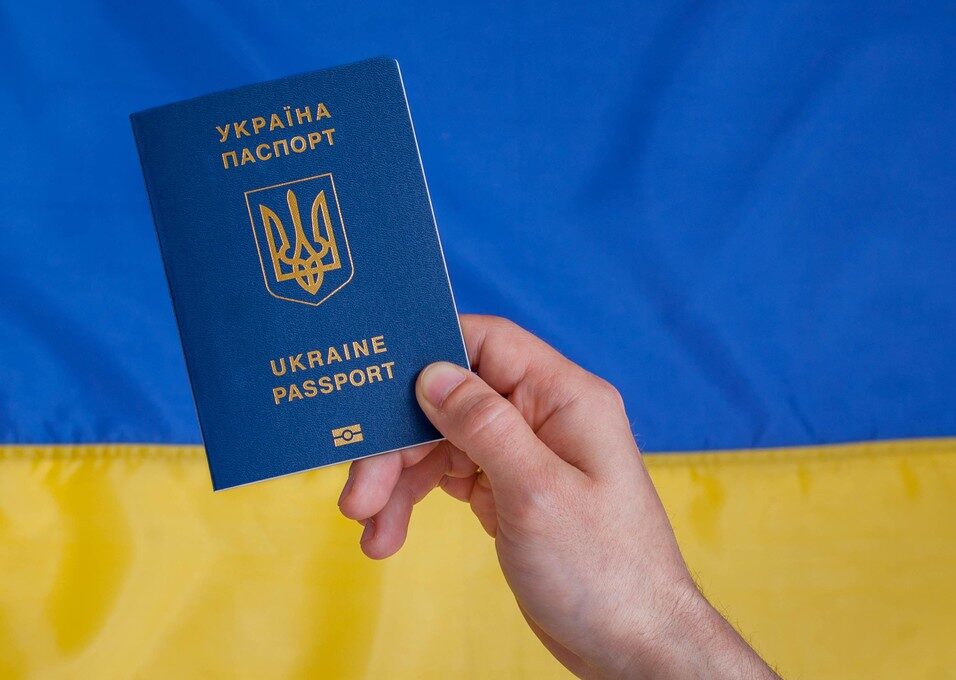
Amendments to Ukraine immigration law : Draft Law No. 6516
On July 18, 2023, the President of Ukraine signed amendments to the Law of Ukraine “On Immigration”. The amendments will come into force three months after their official publication.
The main changes to the legislation on immigration in Ukraine:
- • the list of persons who may apply for an immigration permit has been expanded;
- • the timeframe for consideration of an application for an immigration permit has been reduced;
- • a procedure for verifying the fictitiousness of marriages when applying for an immigration permit on the basis of family reunification was introduced;
- • the administrative fee for applying for an immigration permit was increased;
- • the list of grounds for refusal to grant an immigration permit was expanded;
- • a deadline for applying for a permanent residence permit was set;
- • the procedure for withdrawal of a permanent residence permit and forced return in case of revocation of an immigration permit was clarified.
Renewed list of persons who may apply for an immigration permit
The law provides the possibility of applying for an immigration permit to persons who have resided in Ukraine continuously for the last 5 years on the basis of a temporary residence permit obtained on the basis of parts 4-12 of Article 4 of the Law of Ukraine “On the Status of Foreigners and Stateless Persons”. So, persons, who during the last 5 years were studying, working, volunteering, preaching and living in Ukraine, would be able to submit documents for an immigration permit.
For residence in Ukraine to be considered continuous, it is necessary not to leave Ukraine for more than 90 days per visit abroad, and in total, absence from Ukraine in a year may not exceed 180 days.
It will not be considered a violation of the continuous residence requirement if a person travels abroad on a business trip, study, vacation, medical treatment upon the recommendation of a relevant medical institution, or if a person changes his or her place of residence in Ukraine.
Family members of highly qualified professionals and workers will be able to migrate within the general quota set by the Cabinet of Ministers of Ukraine. This means that an immigrant’s spouse and children can apply for an immigration permit together with him or her if they enter and stay in Ukraine together. In other cases, the spouse of an immigrant will be able to apply for an immigration permit only if they have been married to an immigrant for more than two years.
Reduction of the timeframe for consideration of an application for an immigration permit
From now on, applications for immigration permits will be processed within 6 months instead of 1 year. However, the processing time will still be 1 year for applications for an immigration permit submitted through diplomatic institutions of Ukraine.
Procedure for verifying the fictitiousness of marriage in the process of consideration of documents for obtaining an immigration permit
The Law stipulates that, together with an application for an immigration permit based on family reunification with a citizen of Ukraine or a foreigner who already has a permanent residence permit, an applicant must submit a consent to verify the fictitiousness of their marriage. The spouse with whom the foreigner is “reuniting” must also provide such consent.
The requirements for the consent are not yet defined by law.
Checks of the fictitiousness of marriage will be carried out by the State Migration Service of Ukraine. The law stipulates that the checks will be in the form of interviews and written tests.
As a result of the verification procedure, the fact that a person is married to a citizen of Ukraine or an immigrant will not be recognized as a basis for granting an immigration permit in the following circumstances:
- – one of the spouses received material compensation in exchange for giving free consent to the marriage, if this is not mandatory when entering into a marriage abroad, in accordance with the law of a foreign state;
- – the spouses do not live together and are not connected by a common household;
- – the spouses did not meet or communicate before the marriage;
- – the spouses do not communicate in a language understood by both of them;
- – one of the spouses has previously been married to a citizen of Ukraine or an immigrant, which was not recognized as a ground for granting an immigration permit;
- – each of the spouses does not have information about the other spouse’s personal data (date and place of birth, place of residence, education, place of work, profession, religion, close relatives, peculiarities of life and preferences);
- – refusal of a person to have his or her spouse present in person when applying for an immigration permit;
- – refusal of each of the spouses to provide written consent to an interview and written tests for verification.
Increase in administrative fees
Before the Draft Law enters into force, the fee for processing and issuing an immigration permit is UAH 179.74. The Draft Law stipulates that the fee will be 0.5 of the subsistence minimum for able-bodied persons as of January 1 of the calendar year, i.e., as of 2023, it will be UAH 1,342. It also provides that in case of submission of documents for an immigration permit through diplomatic institutions of Ukraine abroad, a consular fee is charged in the amount set by the Ministry of Foreign Affairs of Ukraine.
The list of grounds for refusal to grant an immigration permit
The renewed grounds for refusal to grant an immigration permit are:
- 1) a court decision to invalidate a marriage on the grounds of its fictitiousness;
- 2) failure to pass the “fictitiousness” test of the marriage by the State Migration Service of Ukraine;
- 3) failure to confirm the legality of stay in the territory of Ukraine;
- 4) failure to submit all documents required by the Law;
- 5) bringing to criminal or administrative liability for illegal crossing or attempting to cross the state border illegally;
- 6) violation of the procedure for entering and leaving the temporarily occupied territories;
- 7) violation of the legislation on the legal status of foreigners and stateless persons;
- 8) failure to comply with a court decision or a decision of state authorities authorized to impose administrative penalties;
- 9) failure to fulfill property obligations to the state, individuals or legal entities.
New deadlines for a permanent residence permit application
From the moment of obtaining an immigration permit, a foreigner will still have 1 year to apply for a permanent residence permit in Ukraine. However, this period is limited by the period of legal stay/residence of the foreigner in Ukraine, as it is stated by the Draft Law that he/she must apply for a permanent residence permit no later than 15 business days before the expiration of his/her long-term visa or temporary stay/residence.
So, to submit documents for a permanent permit, a foreigner will have to take into account both the validity period of the immigration permit and the validity period of his valid documents for residence in Ukraine (period of stay, visa or temporary residence permit validity).
Procedure for withdrawal of a permanent residence permit and forced return in case of cancellation of an immigration permit
If an immigration permit is canceled, the permanent residence permit issued on the basis of this permit is canceled. Along with the decision to cancel the immigration permit, the migration service also makes a decision on forced return.
All three decisions must be made simultaneously, and hard copies sent by registered mail to the foreigner in respect of whom they were made or handed over to him/her personally within 5 calendar days.
The canceled residence permit is withdrawn by the migration service or border guard service.
The decision on forced return specifies the time limit for departure abroad. If during this time the person has not left Ukraine and has not appealed the decision on cancellation of the immigration permit and permanent residence permit to the court, he or she is subject to forced expulsion.
If a person has appealed the decision on cancellation of an immigration permit and permanent residence permit to a court, the enforcement of the decision on his/her forced return is suspended until the court decision enters into force.
If the court finds the decision to revoke the immigration permit and permanent residence permit unlawful and revokes it, the immigration permit is considered valid and is the basis for applying for a permanent residence permit by way of exchange.

How to join the Ukrainian Army: legal advice for foreigners who want to join the defense of Ukraine
N.B. The article is written for informational purposes only. If you want to join the Ukrainian Army, please, apply on the website: https://ildu.mil.gov.ua/. Our company does not deal with this matter, since enrollment to the army is carried out by the relevant military authorities.
One of the most popular questions that our experts get after the full-scale invasion started is “Can you join the Ukrainian army as a foreigner?”. In this article, our experts have collected a maximum of answers to questions about how a foreigner can join the defense of Ukraine.
Foreigners can join the Armed Forces of Ukraine
Since the beginning of the full-scale armed invasion of Ukraine by the Russian Federation on 24 February 2022, foreign citizens have been actively joining the Armed Forces of Ukraine voluntarily to fight for Ukraine and protect the territorial integrity and sovereignty of Ukraine.
The International Defense Legion of Ukraine, which is part of the Armed Forces of Ukraine, was formed to enable foreigners to enlist in military service and to defend Ukraine in the fight against the aggressor state.
Further detailed information about the International Legion can be found here: https://ildu.mil.gov.ua/.
Following the Decree of the President of Ukraine No. 82/2022 of 28 February 2022, a visa-free regime was introduced for foreigners who have joined the International Defence Legion of Ukraine.
Requirements for foreigners to perform military service
According to the Law of Ukraine “On Military Duty and Military Service”, foreigners who are legally residing in Ukraine may perform military service in the Armed Forces of Ukraine. Women can also be recruited for military service under a contract, but only if there are vacant military positions.
Foreigners who are eager to join the Ukrainian Army can be recruited for military service after signing a contract.
General requirements to start military service:
- Age from 18 to 45 years, or 50 years, or 55 years depending on the military position;
- Right to legally reside in Ukraine;
- Identity document availability.
- Absence of criminal record;
- Suitable health conditions for military service;
- Passing through the professional and psychological selection successfully;
- Sufficient level of physical fitness;
- Previous experience of military service (non-mandatory). In case of relevant experience absence, foreigners accepted for military service are to be sent to educational units for training and undergoing special courses for the acquisition of the relevant military specialty.
Procedure for the enlistment of foreigners who legally reside in the territory of Ukraine for military service
Stage 1. Submission of documents
To enlist for military service, foreigners apply to the territorial recruitment and social support center at their place of residence or directly to the military unit in which they wish to serve under the contract.
Stage 2. Inspections
The relevant territorial recruitment and social support center in a way of sending inquiries to the competent authorities, and conducts checks on foreigners who have expressed a desire to perform military service to verify the legality of their stay in Ukraine, the availability of identity documents, the absence of a criminal record, and the accuracy of other information provided by the foreigner.
Step 3. Providing consent to the processing of personal data.
Stage 4. Passing a mandatory medical examination by the Military Health Commission.
Stage 5. Professional and psychological selection.
Stage 6. Passing the physical training standards.
Stage 7. Signing a contract.
Depending on the position, the contract is concluded for 3 years or a period of up to 5 years.
Cases when a foreigner is barred from entering into a contract
A contract for military service cannot be concluded when:
- The foreigner is staying in Ukraine illegally.
- There is an outstanding criminal record.
- No consent to the verification of information or identity document checks was provided.
- The fact of submitting false information or forged documents has been established.
- The time remaining for the foreigner to reach the age limit for military service is less than the term of the prospective contract for military service.
Procedure for the enlistment of foreigners residing outside Ukraine for military service
Such foreigners can enlist for military service through the mechanism of joining the International Defense Legion of Ukraine.
To join the International Legion of Ukraine, foreigners residing abroad must apply to the Embassy of Ukraine in the country of citizenship or legal residence. A sample application can be found at the following link: https://bit.ly/3BSVjAh.
A foreigner should submit an application and his/her passport, as well as documents confirming military service in the past (in case of availability).
The documents can be submitted either during an in-person visit to a diplomatic mission of Ukraine abroad or via electronic means of communication.
After verification of the submitted information, the foreigner will have an interview at the Embassy with a defense attaché. Further, an application is submitted for enlistment in the Armed Forces of Ukraine for voluntary military service under a contract.
After having been authorized to travel to Ukraine, the foreigner will receive instructions, the necessary documents, and equipment. It is recommended to bring a military kit, such as clothing items, equipment, a helmet, and body armor, if available.
Then a foreigner should go to Ukraine and upon arrival signs a contract for military service.
Peculiarities of military service undergone by foreigners
Foreigners enlisted for military service under a contract are subject to a probationary period of 2 months. If it is established that a foreigner who has entered military service is unable to take up a military position and perform official duties, as well as the repeated violations of military discipline are uncovered, the foreigner is considered to have failed the probationary period.
A foreigner who is enlisted for the first time in military service takes an official obligation to strictly observe the Constitution and laws of Ukraine and to faithfully perform the duties of military service.
State guarantees for foreign military personnel
The amount of financial support for foreigners is determined at the same level as for military personnel who are citizens of Ukraine. In addition, foreigners and stateless persons are entitled to one-off financial assistance in the event of the death of a serviceman, disability, or partial disability. The family members and parents of the deceased serviceman are entitled to such a payment in the event of the death of a serviceman.
In this respect, it is necessary to carefully fill in the information about foreigners’ family members at the time of enlistment for military service.
The contract may be terminated at the foreign serviceman’s request at any time.
Ukraine is taking all possible measures to provide foreigners with the opportunity to be freely involved in military service, to help the Ukrainian people, and to fight against the aggressor state.
Is it legal for Americans to fight for Ukraine?
For Americans seeking to provide assistance to Ukraine, there are two options to consider. First, the International Defense Legion of Ukraine is a military unit that allows foreign nationals with combat experience to join and serve in the Ukrainian army.
Alternatively, join the Ukrainian Volunteer Army, the unofficial movement created specifically to assist the regular military forces, encourages volunteers to join, including Americans. While this may still carry certain legal risks and implications, the process and requirements for joining this unit are different from joining the International Defense Legion of Ukraine.

Attention: scammers!
The legal company EXPATPRO presents its activities on the Internet only at the official website https://expatpro.co/, as well as social networks:
https://www.facebook.com/expatpro.co
https://www.linkedin.com/company/expatpro.co/
Recently, we received reports of interaction with a fraudulent organization that copied our company’s website. Ukrainian police rejected our claims about the fact of fraud, as the representatives of our team are not direct victims of scammers and there are no proven losses.
We also filed a DMCA complaint, but the scammers restored the fake website in a while.
Last week, we knew that scammers imitating us created the NATO-Ukraine Relief Commission website. The Ministry of Internal Affairs of Ukraine has no information about any such program (here is a link to the official website https://mvs.gov.ua/uk). There is no NURC registration data (legal entity number, bank account) in the registers, etc., from which we conclude that such an organization does not exist.
We add screenshots of scammers’ resources not placing their links to avoid increasing the reputation of these fake sites. Please check out the screenshots below!


Our team has previously complained about blocking these sites, also our experts are solving the issue in the online field. We will continue to do so in the future if individuals or organizations use our name.
But we also ask you to be aware! Our project’s official website and social networks are indicated in this text. We do not have any other resources. Differences in even one letter can lead you into the hands of fraudsters. If you have any questions or concerns, please email us at welcome@expatpro.co. If you are asked to provide any data or make a financial transaction under the name of a representative of our company, please make sure that you are dealing with us!
In case there was any damage caused to you or your company we can help with filing the claim to the National police of Ukraine as Attorneys.
Be aware of scam resources:
expetpro
NATO-Ukraine Relief Commission
We also share with you a link to the Cyber Police of Ukraine: https://ticket.cyberpolice.gov.ua/

Diia City Tax regime
In 2022, the Diia City special tax regime was launched. The idea behind this tax regime is to create special conditions for IT businesses (product companies, in particular) that will concentrate their assets in Ukraine.
What does this special tax regime imply?
Foremost, it replaces income tax with a tax on distributed profits. The difference between these two is the taxation base.
The Tax Code of Ukraine provides that transactions of a Diia City resident (hereinafter the Resident), which meet the criteria of a capital flow of such a company and which are not directly related to its business activity, are subject to tax. Such a mechanism is new and the criteria for classifying transactions as such, which are considered operations on distributed profits, have not yet been elaborated and improved, therefore certain changes are possible shortly.
Among such operations:
- dividend payout paid by a resident in cash or a nonmonetary form.
Exception: distribution of dividends in the form of interests (equities, shares), if such distribution does not change the interest allocation of the participants in the authorized capital, and the increase in the authorized capital by the value of the distribution is taking place.
- payout(repayment) of funds or property by a resident to a holder of equity rights, provided that their value exceeds an initial contribution (an investment).
- refund (resumption of an estate) held in trust by a resident or in a joint venture(if the amount paid back exceeds the amount that has been initially transferred).
- debt obligations performance(payment of interests, commissions, fees, penalties), in favor of non-residents of Diia City.
Exception: Performance of debt obligations in favor of resident and non-resident banks (if funds have not been provided through a permanent establishment);
- performance of debt obligations (payment of interests, commissions, remunerations, penalties) in favor of:
– a related non-resident person;
– a non-resident, if the amount of debt obligations exceeds the payer’s equity capital by 3.5 times or more;
– persons who are tax residents of an offshore jurisdiction.
- transfer of a property (including works, services) to a non-resident of DiiaCity on special terms and conditions, without claiming to compensate their value (including a transfer for free).
Exceptions:
– transfer of a property to non-profit organizations;
– distribution of such a property (works, services) during advertising/marketing and if the value of such a property (works, services) does not exceed 2 subsistence minimums for an able-bodied person as of 1 January of the accounting year;
– the value of such a property (works, services) is subject to personal income tax or it is not included in the calculation of the total monthly (annual) income (according to Article 165 of the Tax Code of Ukraine) or it is not subject to tax according to par. 170.7 of Article 170 of the Tax Code of Ukraine;
– additional benefits are transferred under special conditions in favor of the resident’s specialists, provided that they are not subject to personal income tax due to the absence of personalized accounting.
It is important to know that an identified lack of property under certain conditions may also be considered free transmission by a resident;
- granting financial aid, inter alia:
– to a person, who is not a resident of Diia City and provided that it is granted on the special conditions, non-refundable;
– to a related person, who is not a resident of Diia City, irrespective of the conditions of repayment;
– to a non-related person, who is not a resident of Diia City, if the amount has not been returned within 12 months from the month following the calendar month, when such financial aid was provided or deemed uncollectible, terminated due to a debt release;
Exceptions:
– provision of financial aid to non-profit organizations;
– provision of financial aid according to a collective agreement or a decision of a management body of a resident to its specialist, who is not at the same time a person related to the resident;
– the amount of financial aid or debt for goods (works, services) is subject to personal income tax, or it is not included in the calculation of total monthly (annual) income (Article 165), and/or it is not subject to tax according to paragraph 170.7 of Article 170 of the Tax Code of Ukraine;
– the amount of uncollectable debts a) is recovered by a borrower after their forgiveness; б) is not recovered after expiration of a limitation period; в) is the principal amount of a loan or a deposit given to a taxpayer without stipulation of terms for the return of such a principal amount;
– contributions to foreign (international) organizations and institutions in the amount that is not exceeding 300 subsistence minimums for an able-bodied person established as of January 1 of the year in question (1 organization);
- provision of financial aid and/or a free transmission of a property (works, services) to non-profit organizations in the amount exceeding 0.5% of the resident’s net operating income as reported in the financial statements for the previous tax year;
- provision of a non-repayable financial aid and/ora free transmission of a property (works, services) to non-profit organizations, which are national higher educational institutions in the amount exceeding 1% of the amount of the resident’s net operating income as reported in the financial statements for the previous tax year;
- provision of funds, property (including non-current assets) to a non-resident (except for the events of transactions with a permanent establishment of a non-resident in Ukraine) related to:
– settlement of obligations (if: a) respective borrowed funds have not been credited to the accounts with the Ukrainian banks; б) have not been used as the payment for the property, which 1) is located on the territory of Ukraine or 2) has been imported to the customs territory of Ukraine;
– settlement of obligations (on recognized fines, penalties, forfeitures, damage compensation, loss of profit) in favor of the non-resident related persons and/or the non-residents considered as offshores;
– investments in the projects, if they are located outside Ukraine, except for: 1) payment of membership (entrance fee) and/or target contributions to foreign (international) organizations and institutions in amount not exceeding 300 subsistence minimums for an able-bodied person established by the law as of January 1 of the tax (reporting) year per an organization; 2) acquisition of a property abroad, if it is imported to the customs territory of Ukraine prior to the payment made or within 365 days from the date of funds transfer; 3) acquisition of property abroad with a view to its further sale without importing it to the customs territory of Ukraine provided that the funds are received in accounts opened with the Ukrainian banks within 365 days from the date of the property payment transfer; 4) acquisition of property located in Ukraine, and it will be received by a resident prior to the payment or within 365 days from the date of the funds transfer; 5) investment in intangible assets;
- purchase of works/services, except:
– receipt of works/services before or within 365 days from the moment of payment;
– acquisition of works/services with a view to their further sale abroad provided that the proceeds from the sale of such a property are credited to the accounts opened with Ukrainian banks within 365 days from the date of payment for their acquisition;
– acquisition of electronic services, which are subject to payment in the form of a fixed payment on a prepayment (subscription) basis;
- provision of property/works/servicesto a non-resident of the Diia City under a contract that provides for the payment of compensation of the value of such property/works/services.
Exception: sale (provision) of the property after receipt of the payment or if funds from such a sale (provision) are credited to the resident’s accounts, that are open with Ukrainian banks within 365 days from the date of: 1) customs clearance of the property export; 2) transfer of risks connected with ownership of the property (without import/export of the property); 3) written certificate, invoice, other instrument confirming the provision of services, works, property/non-property rights; 4) receipt of a report on the revenues/volume and value of the property (works, services) sold (in the event the sale has been made through representatives by providing access via an electronic interface, providing technical, organizational, information and other opportunities using information technologies and systems to establish contacts and conclude agreements (taken the receipts (invoices) do not list the property (works, services) and their factual supplier).
- transfer of funds (provision of the property) by a Diia City resident for and on behalf of a non-resident in favor of such a non-resident (a person authorized by him) within the commission agreement, agent’s commission, etc., excluding: 1) an amount of funds / value of a property provided under the contract and returned to such a non-resident or the person authorized; 2) value of property (works, services), which has been purchased under the commission (power of attorney) and at the expense of such a non-resident for the funds received for the purpose of such a purchase (but on condition that the Diia City resident does not meet the conditions of a permanent establishment of the non-resident); 3) revenues from sale of property (except for equity rights and securities), works, services provided by the non-resident for sale (while provided that the Diia City resident does not meet the attributes of a permanent establishment of the non-resident); 4) the amounts paid by a non-resident on the purchase of securities or equity rights in Ukraine and returned to the non-resident as a result of their sale;
- Royalties paid to a person who is not a resident of Diia City in the amount that exceeds: the amount of royalty income and + 4% of net revenue from the sale of property/work/services and net of royalty income for the previous year.
Exception: 1) the resident does not have financial statements for the previous year (in this case current year data are used for the calculation; 2) these rules do not apply to royalty amounts accrued to an individual, provided the personal income tax has been withheld (paid) from such an amount;
- Royalties paid in favor of:
– non-residents registered in offshore zones;
– non-residents in respect of objects with the intellectual property rights that first arose for a resident of Ukraine;
– a non-resident who is not subject to taxation in respect of the royalties in his country of residency;
– a non-resident who is not a beneficial (actual) recipient of royalties, except for cases when the actual recipient has granted the right to receive royalties to other persons;
– joint investment institutions (unless the respective operations are carried out by a non-resident through a permanent establishment).
- transfer of funds (property) as a founder’s/participant’s contribution to the charter capital to a legal entity, which is a non-resident of Diia City; as a contribution to a joint venture to a non-resident of Diia City, to a non-taxpayer or to a trust management of a person, who is not a resident of Diia City.
- transfer of funds, property in regard to the acquisition of goods from a single taxpayer, during the tax year in an amount exceeding 20% of the amount of expenses from any activity as shown in the statement of comprehensive income for the previous tax period.
Tax rate
The basic rate is 9% of the taxation base.
However, if a resident of Diia City carries out a controlled transaction, the rate of 18% shall be applied to:
– the excess of the price determined on an Arm’s Length Principle over the negotiated value of the goods/works/services sold;
– the excess of the negotiated price over the price determined by the Arm’s Length Principle of the goods/works/services sold.
If a resident is a controlling person, the adjusted profit of the controlled foreign company is a separate object of taxation following Article 39-2 of the Tax Code of Ukraine.
Special rates of the Unified Social Tax, a Personal Income Tax, and a Military Tax
In addition to the special tax rating of Diia City residents’ capital, the special tax rates for the income of Diia City specialists are provided.
Thus, the rate of the personal income tax is 5%, and the unified social tax is charged not on the amount of remuneration of a specialist but based on the minimum wage (22%), the same as in the case of individual entrepreneurs-freelancers.
However, unlike the case with an individual entrepreneur, the Diia City resident shall also collect a military levy of 1.5% from the amount of the specialist’s remuneration.
Diia City tax regime is still new and unfamiliar; it will take time to get used to a different approach to determining the taxation base and the logic of tax charges. Accurate accounting shall be additionally encouraged by the duty of residents to undergo the audits. The first results will be announced in 2023.

Volunteer movement in Ukraine: foreign citizens` participation
- Registration of a public formation
- Activities of representative offices of foreign non-governmental organizations
- Legalization of foreign citizens – volunteers in Ukraine
Foreign citizens can legally participate in volunteering in Ukraine under certain conditions defined by Ukrainian law. This article explains how foreigners can volunteer, what legal framework regulates their activity, which organizations are open to foreign volunteers, and what residence or visa status they need to stay in Ukraine legally.
Foreign citizens have always actively helped Ukraine in various spheres and were widely involved in the Ukrainian volunteer movement, which has now become especially important due to the full-scale armed aggression of the Russian Federation against Ukraine. That is why it is important to consider the issue of organization of the activities of foreign volunteers in Ukraine and their legal integration into the Ukrainian volunteer movement.
Foreigners citizens can volunteer through non-profit organizations registered as legal entities in Ukraine and included to the list on the website of National social service of Ukraine.
Therefore, the organization must meet the following criteria:
– Registered as a legal entity in Ukraine;
– Listed in the register of non-profit organizations;
– Included in the list of the National social service of Ukraine (here – NSSU).
Registration of a public formation in the Unified State Register of Legal Entities, Individual Entrepreneurs and Public Formations
The most common types of public formations that can be used for volunteering are non-governmental and charitable organizations. An NGO may act in the form of an organization or a union.
The formation of an NGO is carried out at the constituent meeting of its founders and is documented with the minutes of association. Within 60 days from the date of the meeting, the NGO must be registered according to the respective law. The minutes of association and charter do not require notarization.
For registration, you need to submit to the state registrar at the location of the public formation:
– Application;
– Minutes of association;
– Charter.
After the state registration of a legal entity, the registration application and copies of the constituent documents, certified by the signature of the head or representative of such organization, must be submitted to the State Tax Service for assignment of the non-profit status.
The application for registration of a legal entity as a non-profit may be submitted simultaneously to the state registrar as an annex to the application for state registration of the establishment of a legal entity.
The non-profit status
To define organization as non-profit, certain criteria must be met, namely:
- the constituent documents of such an organization must contain a prohibition on the distribution of income (profits) or part thereof among the founders (participants), members of such an organization, employees (except for remuneration of their labor, accrual of a single social contribution), members of governing bodies and other related persons;
- the constituent documents of the organization provide for the transfer of assets to one or more non-profit organizations of the corresponding type or inclusion in the budget revenue in case of termination of such a legal entity (as a result of its liquidation, merger, division, accession or transformation).
Adding into the list of the NSSU
Foreigners can carry out volunteer activities through those organizations and institutions that involve volunteers in their activities, information about which is available on the official website of the central executive body that implements the state policy in the field of volunteering. Such body in Ukraine is the NSSU.
Organizations that have the right to involve volunteers in their activities and information about which is published on the official website of the NSSU, have the right to invite foreigners and stateless persons to carry out volunteer activities in Ukraine. Such an invitation is necessary for a foreign citizen to obtain a long-term visa type D and consequently obtain a temporary residence permit.
Organizations and institutions that involve foreigners and stateless persons in volunteer activities have special responsibilities in the field of migration, namely:
- within 5 business days from the start of the volunteering activities of the specific foreigner, inform the NSSU in writing.
- within 5 business days from the date of the termination of such activities, inform the State Migration Service of Ukraine.
Activities of branches/representative offices of foreign non-governmental organizations
Volunteer activities can also be carried out through the branches, departments, representative offices and other structural units of foreign non-governmental organizations. State registration in Ukraine of a separate subdivision of a foreign non-governmental organization, representative office, branches of a foreign charitable organization is carried out through its accreditation without acquiring the status of a legal entity.
The documents specified by law are submitted for registration to the Ministry of justice of Ukraine. Documents issued by the foreign state must be legalized (consular legalization or apostille) and translated into Ukrainian with notarization.
Legalization of foreign citizens – volunteers in Ukraine
Foreigners and stateless persons who are legally residing in Ukraine and have legal capacity are allowed to become volunteers.
The law provides for the right of volunteers to proper conditions for volunteering, provision of special protective equipment, reimbursement of expenses related the implementation of volunteer activities, including the costs of obtaining a visa, travel, postal and telephone services, medical examination, vaccination and other medical and preventive measures directly related to the provision of volunteer assistance.
Foreign citizens who carry out volunteer activities can stay in Ukraine legally within the established terms of stay for states with visa-free entry regime/within the period specified by visa for states with visa entry, and under a temporary residence permit.
In order to obtain a temporary residence permit, a foreigner must obtain a long-term visa type D (D-10), which indicates the grounds for future stay – volunteering in Ukraine.
N.B. There is only a limited list of countries whose citizens do not need a D-visa to obtain the temporary residence permit in Ukraine.
The purpose of stay in Ukraine for the visa D-10 obtaining is:
- participation in international and regional volunteer programs or
- participation in the activities of volunteer organizations.
The participation of a volunteer organization in the process of legalization of a foreigner on the territory of Ukraine is required both at the stage of forming a package of documents for the visa obtaining, and at the stage of submitting documents for obtaining a temporary residence permit.
A temporary residence permit is issued for one year and could be extended if there are grounds for that.
Among the necessary documents for obtaining a temporary residence permit are the following standard documents:
- passport document with the visa type D-10;
- translation of the passport document, certified by a notary;
- health insurance policy for the entire period of stay in Ukraine;
- receipt of payment of the administrative fee;
and
- statement of the state body responsible for the implementation of the volunteer program or statement of the organization or institution that involves volunteers in its activities;
- original of the Extract from the Register of Legal Entities, Individual Entrepreneurs and Public Organizations
In case a volunteer carries out his/her activities in Ukraine by participating in the activities of branches, departments, representative offices or other structural units of foreign non-governmental organizations he must obtain a visa type D-07, and for the temporary residence permit application he must bring a set of standard documents, as well as a statement of the relevant structural unit of the foreign organization and a document on the registration of such a unit, for example, a certificate or extract from the State Register of Legal Entities, Individual Entrepreneurs and Public Organizations.
According to the law, entry to Ukraine, stay in Ukraine and transit through the territory of Ukraine of foreigners and stateless persons is subject to sufficient financial security. Therefore, in the application, the host party (an organization that involves volunteers in its activities, a structural unit of a foreign non-governmental organization) indicates its obligation to cover all expenses of the foreigner on the territory of Ukraine and provide financial support to the foreigner for his all the period of his stay in Ukraine.
Volunteering in Ukraine allows foreigners to contribute meaningfully to humanitarian, social, and reconstruction projects. However, it’s essential to comply with the legal requirements and partner with verified organizations to ensure both safety and legitimacy. Therefore, in order to carry out volunteer activities as a foreigner on the territory of Ukraine, it is necessary to find or register a volunteer public formation.
If you need to find or register a volunteer organization, contact us!
FAQ: Volunteering in Ukraine for Foreign Citizens
Can foreign citizens legally volunteer in Ukraine?
Yes. Foreign citizens can participate in volunteer activities in Ukraine under the Law of Ukraine “On Volunteering Activity.” They must cooperate with officially registered volunteer organizations and comply with the rules set by Ukrainian migration authorities.
Do foreigners need a visa to volunteer in Ukraine?
Foreign citizens from visa-free countries can stay in Ukraine for up to 90 days within a 180-day period. For longer stays, volunteers need to obtain a D-10 visa and a temporary residence permit based on a volunteer program.
How can a foreigner find volunteer opportunities in Ukraine?
Foreigners can join international NGOs, Ukrainian volunteer foundations, humanitarian missions, or reconstruction projects. It’s best to contact officially registered organizations that can issue the required invitation letter for visa or residence purposes.
What types of volunteer work are available for foreigners in Ukraine?
Most common areas include humanitarian aid distribution, support for displaced persons, rebuilding infrastructure, logistics, and medical assistance. Many NGOs also accept foreign professionals for advisory or technical roles.
Is it safe for foreigners to volunteer in Ukraine?
Safety depends on the region and the type of work. Volunteers are advised to cooperate only with verified organizations, avoid high-risk zones, and follow official safety instructions and local curfews.
Can foreign volunteers receive financial support or accommodation?
Some organizations provide accommodation, meals, or transportation for volunteers, while others operate on a self-funded basis. It’s important to clarify these conditions before arrival.
Do volunteers need special registration or permits in Ukraine?
Yes, foreign volunteers must register their place of residence and ensure their volunteer organization is listed in the national register. For long-term volunteering, an official contract with the organization is mandatory.
Can volunteering in Ukraine lead to a residence permit?
Yes, a temporary residence permit can be issued for up to one year to foreigners participating in officially recognized volunteer programs. It can be extended if the program continues.

Migration changes
Migration changes dated 21/10/2022: expired residence permit are valid during the wartime
On October 21, 2022, the Cabinet of Ministers of Ukraine adopted the Resolution “Some Issues of Implementation of Legislative Acts in the Field of Migration in time of Martial Law”. The Resolution provides an opportunity for foreigners to legally stay and enter the territory of Ukraine having temporary or permanent residence permits, which have expired or needed to have been exchanged during the martial law period.
The right to legally stay in Ukraine and enter it under the expired documents or the documents which have had to be exchanged after February 24, 2022 retains for the period of martial law and within 30 calendar days from the date of its termination or cancellation.
This rule does not apply exclusively to citizens of the Russian Federation.
The Government has established an obligation for foreigners subject to the Resolution, within 30 calendar days from the date of termination or cancellation of martial law, to submit documents for the exchange of temporary or permanent residence permits, which expired or were subject to exchange after February 24, 2022.
In our opinion, it also provides the opportunity to exchange the expired temporary or permanent residence permit during the war.
A similar rule was in effect for some time during the first months of the quarantine, but then it was canceled without a transition period for legalization, and everyone, who had an expired residence permit, ended up in the status of an illegal migrant. Therefore, according to our practice, we still advise you to exchange residence permits in time.



UBO & legal ownership structure
The Ministry of Finance of Ukraine has finally adopted the forms for the ownership structure. This means that starting from July 11, 2021, the documents on the UBO (Ultimate Beneficial Owner) and legal ownership structure will have to be submitted when registering a new business entity.
Starting from July 11, 2021, a 3-month period (basically for directors/managers of existing legal entities registered prior to April 28, 2020) for submitting the first ownership structure reports starts.
What Documents Are Required?
For individuals –founders (who are the UBO): certified copies of passports are required (where such persons are not citizens of Ukraine, the respective personal document with a translation is required).
For legal entities – founders: a certified extract from the business registry shall be submitted.
In the case of a chain of owners, official documents confirming the structure and the grounds for exercising control (influence) are also required.
Direct and Indirect Control
When a legal entity is established directly by an individual, and the individual owns 25% or more shares, there occurs direct control over the legal entity. In this case, it is easy to track the connection.
When it comes to the cases where the UBO is identified through a number of other legal entities, it is necessary to provide the documents that can prove that such UBO has de jure and de facto control over each legal entity in the chain.
First Steps
Within the period from July 11 – October 11, 2021, all legal entities are required to submit the documents to confirm/update their current ownership structure.
Directors/managers of legal entities will also need to provide the respective official documents. For individuals in the ownership structure: a copy of their passport, certified by a notary is required. For foreign nationals, a translation shall be provided as well.
For legal entities: extracts from business registries, other official documents proving ownership are required (documents issued abroad should be apostilled or legalized by a consulate, depending on international requirements).
When to Update?
Starting from January 01, 2022, heads of legal entities will be obliged to keep the information about the UBO and the ownership structure updated. The obligation consists of 2 parts:
1) annual reporting (within 14 days of the registration date) AND
2) in case of any changes to the structures or information about the UBO, the head of the legal entity will have 30 business days to update the information in the State Register of Legal Entities of Ukraine.
Liability
The Code of Ukraine on administrative offences provides for a fine (UAH 17,000 – 21,000) in case of failure to submit or untimely filing the information about the UBO/ownership structure. This fine is imposed on the heads of legal entities in Ukraine.


Obtaining A Tax ID in Ukraine
All individual taxpayers should be registered with the supervisory authorities by including information about them in the State Register.
The State Register shall contain information on individuals who are:
– citizens of Ukraine;
– foreigners and stateless persons, who permanently reside in Ukraine;
– foreigners and stateless persons who do not have permanent residence in Ukraine, but under the legislation are obliged to pay taxes in Ukraine, or if they are founders of legal entities established in Ukraine.
So, in which cases is the tax ID required in Ukraine?
The tax ID is used in the case of:
– payments of income from which taxes are withheld under the legislation of Ukraine;
– conclusion of civil law agreements, the subject matter of which is a taxable object subject to taxes and duties;
– bank accounts opening;
– state registration of private entrepreneurs or issuance of special permits (licenses, patents, etc.) for certain types of economic activity in favor of such persons, as well as registration of independent professional activity;
– registration of property or rights to it and other assets of individuals that are subject to taxation;
– registration of vehicles that become the property of individuals;
– in other cases provided by law.
Therefore, in order to carry out all the above actions on the territory of Ukraine, it is necessary to register with the State Register of Individual Taxpayers and obtain the tax ID.
Procedure for obtaining the tax ID
Foreigners and stateless persons shall submit documents to the territorial bodies of the State Tax Service in the regions, cities of Kyiv and Sevastopol.
Foreigners and stateless persons who have a permanent residence permit or a temporary residence permit in Ukraine may register as taxpayers in the state tax inspections in regions, cities, districts in cities, Joint State Tax Inspectorates according to the place of residence in Ukraine, specified in the residence permit.
To obtain the tax ID, foreigners shall submit the following documents:
– registration card in the specified form;
– an identity document of a foreigner, duly translated into Ukrainian and certified by a notary and a copy of such translation;
– a copy of the mark, which certifies the border crossing;
– power of attorney, certified by a notary, a copy of it, and a copy of the passport of the representative (if the documents are submitted by the representative).
Please note, in order to submit documents and obtain the tax ID, foreigners must stay in Ukraine legally and within the permitted period of temporary stay in Ukraine (not exceeding 90 days within 180 days, unless otherwise specified by international agreements or provided by visa-free entry).
To obtain the tax ID, foreigners with a temporary or permanent residence permit in Ukraine shall submit the following documents:
– registration card in the specified form;
– a temporary or permanent residence permit in Ukraine and its copy;
– residence certificate and its copy;
– power of attorney, certified by a notary, a copy of it, and a copy of the passport of the representative (if the documents are submitted by the representative).
The term for issuing a document confirming the registration of a person as a taxpayer is 3 working days.
For the issuance of the tax ID, a person shall submit the same documents that were submitted to obtain the tax ID (except for the registration card).
There is no state fee for the issuance of such a document.
It is worth noting that the Parliament of Ukraine (Verkhovna Rada) has passed a law equating digital passports to paper ones. These changes apply only to the passport of a citizen of Ukraine and the passport of a citizen of Ukraine for travelling abroad. Electronic passports in the “Diia” application can now be provided on the territory of Ukraine for identification and confirmation of citizenship, except for crossing the state border, entering and leaving the temporarily occupied territory of Ukraine. Thus, citizens of Ukraine can provide electronic passports when submitting documents to obtain the tax ID.
The law enters into force on August 23, 2021.
See also:
Digital Transformation of Residence Registration
Legislator to Strengthen the Liability for Traffic Violators

Legislator to Strengthen the Liability for Traffic Violators
The EXPATPRO team would like to advise you of the recent updates to the regulations on liability for traffic rules violations.
The Law of Ukraine On Amendments to Certain Legislative Acts of Ukraine Concerning Strengthening of Liability for Certain Road Traffic Safety Offenses was adopted on February 16, 2021, and came into force on March 17, 2021. This law has amended the Code of Ukraine on Administrative Offenses, the Criminal Code of Ukraine, as well as the Laws of Ukraine On Road Traffic and On the National Police.
We invite you to pay attention to the peculiarities of the recent regulations.
Legislator points
The first point is that the legislator has strengthened the liability for drunk driving (being impaired by alcohol, drugs, or other substances or medicines to a level that critically reduces attention and speed of reaction of the driver) and eliminated all the flaws of law that allowed the offenders to exempt from legal liability. The penalty for drunk driving for the first time within one year shall now amount to UAH 17,000 fine with the deprivation of the right to drive a vehicle for 1 year; for the second time in the same year – UAH 34,000 fine with the deprivation of the right to drive vehicle for 3 years and possible paid withdrawal of the vehicle, or administrative arrest for 10 days with the deprivation of the right to drive vehicle for 3 years and possible paid withdrawal of the vehicle; for the third time in the same year – UAH 51,000 fine with the deprivation of the right to drive vehicle for 10 years and confiscation of the vehicle or administrative arrest for 15 days with the deprivation of the right to drive vehicle for 10 years and vehicle confiscation.
Previously, the fines for the said offenses were UAH 10,200, UAH 20,400, UAH 40,800, respectively. Moreover, the new penalties for drunk driving were introduced – paid withdrawal of the vehicle, confiscation of the vehicle, and administrative arrest. Unlike vehicle confiscation, the paid withdrawal provides that the vehicle is seized, sold at the auction, and money received from realization is returned to the vehicle’s owner.
Henceforward it becomes more difficult to avoid liability for the following reasons. The term of drunk driving case consideration at the court is now 1 year instead of 3 months period that easily allowed to avoid responsibility in the past because of intentional delay in court proceedings, overloaded courts, etc. Besides, according to the new regulations, legal proceedings cannot be closed and the offender cannot be released from administrative liability for insignificance or due to the transfer of materials to the labor collective or public organization for consideration. It is crucial to point out that in case of repeated violation the new penalty does not replace the previous one, they are added up. In such a case, the whole term of deprivation of the right to operate a vehicle may exceed the maximum allowable 10-years period.
If any person being drunk and driving a vehicle causes a road accident with victims, such a person will be criminally charged. Article 286-1 of the Criminal Code of Ukraine has been adopted in a new edition. Now it prescribes liability in the form of imprisonment for different terms, depending on the severity of the consequences caused by the road accident. The maximum term of imprisonment is 12 years with the deprivation of the right to operate a vehicle for up to 10 years. Such a penalty is provided for offenders who caused a road accident that resulted in the death of several people.
Furthermore, the commission of the abovementioned offenses precludes the perpetrator from the opportunity to be released from liability due to effective repentance, reconciliation of the perpetrator with the victim, transfer of a person on bail, change of circumstances. Release from serving a sentence on probation, replacement of the unserved part of the sentence with a milder one, and amnesty also do not apply to drunk drivers.
The reasoning behind these strict regulations is caused by the widespread occurrence of drunk driving cases, their recurrence, the exemption of drivers from legal liability, and the significant number of victims of such offenses. In 2020 alone, approximately 130,000 drunk drivers were apprehended. More than 9,000 drivers repeated the case of drunk driving and another 5,000 of such offenses were committed for a third time, despite the fact, that such offenders have paid fines and suffered other negative consequences of such violations. Moreover, there are numerous examples of road accidents with drunk drivers involved, with dozens of casualties, and some of the drivers managed to avoid liability for the deaths of innocent victims.
Other amendments concern penalties for speeding, seatbelts non-use, driving without a license or transferring a vehicle to a person who is not entitled to operate it, or driving after being deprived of the right to operate a vehicle.
Fines
The fines for exceeding the allowed speed limit: for up to 50 km/hour is UAH 340 instead of UAH 255, for over 50 km/hour – UAH 1700 instead of UAH 510. The penalty for non-use of seat belts amounts to UAH 510, which is 10 times more than before. The incorrect installation of state license plates and dirtiness of the plates are punished with UAH 850 fine.
Please note that while driving you should always have a valid driver’s license, vehicle registration document, and insurance policy. Otherwise, you will be forced to pay a fine of UAH 425, which remained unchanged. At the same time, the legislator has added the opportunity to use all those documents and show them at the demand of police officers in electronic form, for instance, by having the “Diia” application.
For driving without a right to operate a vehicle or transferring the vehicle to a person who has no such right there is a fine of UAH 3,400. When a person that has been deprived of the right to operate a vehicle (e.g. for drunk driving) was driving again, a fine of UAH 20,400 has to be paid (previously – UAH 510), in the event of repeat offense – UAH 40,800.
The legislator has also strengthened the liability for leaving the scene of a road accident by introducing a fine of UAH 3,400, or deprivation of the right to operate a vehicle for up to 2 years, or administrative arrest for up to 15 days.
The fines for violations committed by pedestrians and cyclists were also increased, e.g. for crossing the road at the inappropriate place or against the red traffic light signal – UAH 255, for violation of traffic rules by pedestrians or cyclists, committed in a state of intoxication – UAH 680 (if repeated – UAH 850 or public service for 20-40 hours).
As to the amendments to the Law of Ukraine On Road Traffic, the rules regarding how to act when you are stopped by a police officer were introduced. In such a case the driver is obliged to stop the vehicle; keep hands in the view of a police officer and not leave the vehicle without permission; switch off the engine of the vehicle and remove the key from the ignition; submit the necessary documents for verification; put the hazard lights on; get out of the vehicle.
Finally, such a type of punishment as ‘penalty points’ has been eliminated. Previously, at the beginning of the year, every driver has been granted a certain number of points. For the specific violations of traffic rules, for example, those automatically fixed like exceeding speed limits, some of the points have been withdrawn. Once a driver had used up all the points, he/she could be forced to pay a real fine for his violations, or another type of punishment could be imposed on the driver.
It should be stressed, that foreigners and stateless persons bear the administrative and criminal responsibility for traffic rules violations in the same way as Ukrainian citizens do.
The EXPATPRO team is always ready to advise you on any issues on road safety and traffic rules.
See also:
How to Draw Up An Invitation for a Visa?

How to Draw Up An Invitation for a Visa?
An invitation from the host party is one of the documents submitted for the Ukrainian visa. Mostly, invitations are required for short-term visas, but in some cases an invitation is required for a long-term visa (for purposes such as assistance in the international technical project, work for the representative office/permanent establishment of a foreign company in Ukraine, religious or volunteer activities, etc.).
The invitation can be provided by a legal entity or an individual. It depends on the purpose of the visit.
An invitation from a legal entity must comply with the following requirements:
– be issued on the official letterhead;
– contain the following information:
– registration number,
– date,
– number of the legal entity in the United State Register of Legal Entities, Private Entrepreneurs and Non-Governmental Organizations of Ukraine,
– surname, name, patronymic of the invited foreigner,
– information on the date and place of birth of the invited foreigner,
– information on the citizenship of the foreigner,
– passport details of the foreigner,
– place of residence abroad,
– purpose of the trip,
– period of the planned visit,
– number of planned entrances,
– place of residence in Ukraine,
– obligation of the legal entity to assume possible costs of the invited person’s stay and departure from Ukraine,
– signature and position of the signatory.
A copy of the extract from the United State Register of Legal Entities, Private Entrepreneurs and Non-Governmental Organizations of Ukraine providing the details about the legal entity shall be attached to the invitation. Moreover, other documents from the host party may additionally be required for certain visa types.
An invitation from an individual must comply with the following requirements:
– be notarized;
– be provided by a person who legally resides in Ukraine (it means that the invitation can be provided by a citizen of Ukraine or a foreigner, who has a temporary or permanent residence permit in Ukraine);
– contain the following information:
– date,
– surname, name, patronymic of the hosting individual,
– passport details and/or permanent/temporary residence permit (for foreigners and stateless persons) of the hosting individual,
– address of residence of the hosting individual in Ukraine,
– surname, name, patronymic of the invited person,
– information on date and place of birth,
– information on the citizenship of the invited person,
– passport details of the invited person,
– place of residence abroad,
– purpose of the trip,
– period of the planned visit,
– number of planned entrances,
– place of residence in Ukraine,
– obligation of the hosting party to assume possible costs of the invited person’s stay and departure from Ukraine,
– signature of the hosting individual.
Copies of the passport and/or permanent/temporary residence permit of the hosting individual should be attached to the invitation.
If you still have questions about applying for a Ukrainian visa, please contact: kz@expatpro.co
See also:


Apartment purchase in the primary market
EXPATPRO continues guiding you through the peculiarities of the Ukrainian real estate market on your way to buying an apartment.
In the previous article, we have considered in detail how to purchase an apartment in the secondary market. You could easily check it here.
In this article, we will focus on purchasing an apartment in a new building.
The stages of apartment purchase are as follows:
♦ Verification of all the available information and documents on the apartment or ‘due diligence’.
♦ Choosing the way of investment and signing the agreement.
♦ Registration of the ownership rights.
Stage 1: Due Diligence
Prior to signing an apartment sale and purchase agreement, it is advisable to carry out the due diligence procedure of this apartment. There is no obligation to do so, but we always analyze any potential risks relating to the deal in order to be sure whether it is reliable for our clients to contribute funds in purchasing such an apartment.
If you want to be sure that the potential investment object is trustworthy and your money is not to be wasted, the due diligence procedure is a must.
What exactly should be checked?
1) information on real estate developer (general contractor)
The history of the works, reputation, other projects, the real estate developer members, whether it has any debts to the state or other persons, including tax debts, whether there are no arrests and other encumbrances, whether it is not bankrupt or engaged in other court proceedings.
For this purpose, it is necessary to monitor the State Register of Legal Entities, the Register of Enforcement Proceedings, Unified Register of Debtors, the registers of the State Fiscal Service of Ukraine, Unified State Register of Court Decisions, other registers and databases.
It is also important to check the Unified State Register of Court Decisions on the information concerning the object of construction and the land plot, whether the buyers have sued the developer for breach of the obligations.
2) the legal regime of the land plot, on which the house is built or under construction
It should be borne in mind that the land plot on which construction takes place should be allocated for the specified purposes (see the Public Cadastral Map of Ukraine) – the construction and maintenance of a multi-apartment residential building, and the appropriate purposes should be indicated in the town planning documentation. Otherwise, a permit for the construction of such a house may be appealed to the court, leading to years of litigation and construction may not be completed.
You should verify whether the land plot is in the ownership or temporary used, who the owner or leaseholder is (check the respective lease agreement, certificate of land ownership, superficies agreement, etc.) If the land plot is not in the ownership, the lease term should not be less than the approximate term of the house completion and occupancy permit. The developer or constructor shall be indicated as the owner or tenant.
The relevant documentation regarding the specifics of the land plot itself (documents for changing the intended use of the land plot (if any available), technical documentation for setting the boundaries of the land plot, its division and/or consolidation, etc.) should also be checked.
3) permission documentation
You should verify whether the developer has any urban conditions and restrictions (for buildings located in Kyiv, such is checked with the Urban Cadastre of Kyiv). It is a crucial point since the city conditions and restrictions specify the number of floors in the building, the distance from the building to other elements, etc.)
There occurred a precedent in Kyiv recently when a developer was obliged to demolish several floors of the building to comply with the urban conditions and restrictions and obtain all the necessary documents to legally complete construction.
The next point of verification – whether there is a permit to perform construction work (NB! The declaration of the commencement of construction work is not a permit); the contractor’s license for construction; the project documentation; the document confirming the mandatory examination of construction projects: the liability classes (consequences) of the objects of the type CC2 (average consequences – houses up to 100 m high, from 20 to 300 permanent residents) and the type CC3 (significant consequences – from 100 m high and 300 permanent residents). The agencies approved by the government for conducting the mandatory examination of the construction projects can be checked here.
Other permitting documents include permits for special types of work, an order for a building address assignment to a new construction object, approval of construction conditions by the general contractor, the permission of specialized departments when the construction is executed in historic and architectural zones, exclusion zones, etc.
Often enough, a developer may downgrade the liability classes (consequences) such as indicating CC1 class (private house construction) instead of CC2 (construction of an apartment building up to 100 m high) for their own purposes, e.g. to avoid obtaining the costly license mandatory for CC2 and CC3 objects. However, this may result in an inability to legally commission the property and register the title.
Said another way, the higher the consequences class, the more difficult it is to bring both the legal and project aspects of the facility construction in compliance with the requirements of the legislation.
Hence, when selecting the object type CC2, and especially CC3, all the documents shall be checked as carefully as possible.
Depending on the status of the facility, you should also verify:
♦ An agreement on urban utility services communication, with heat, water, and energy supply included. The supporting documents may include contracts for public utility services;
♦ Certificate on completion of construction;
♦ A technical passport for an apartment;
♦ Certificate on facility commissioning;
♦ Certificate (an order of the district administration) on the postal address assignment;
♦ An agreement with the city council on payments of the share contribution to the city infrastructure (NB! Without payments under such an agreement the building may fail to receive the postal address, which will lead to the failure of the investor’s title registration).
Construction permits, construction completion certificates and commissioning certificates shall be verified with the State Architectural and Construction Inspection Register of permitting documents.
Besides, it is advisable to check whether there exists an increased public interest and attention to the facility (public disputes, rallies, and mass protests, etc.) and whether the developers and constructors are involved in some illegal schemes of money laundering or political scandals.
You can also check the desired developer in reliability ratings published by media resources.
The due diligence procedure is rather complicated, but at the same time, it is a substantial step for apartment purchase in Ukraine. Without it, one cannot be 100% sure that there will be no problems with the purchased apartment.
Stage 2: Ways of Investment and Signing the Agreement
The legislation provides 4 ways for developers to receive funds from individuals for the construction of facilities – investing in construction financing funds, issue of target bonds, participation in collective investment institutions, and in real estate transaction funds. Developers also widely use other methods of accumulating funds for construction (presale contracts, sale and purchase agreement of property rights), which are not expressly prohibited by law but are absent in specific regulations, and are governed by general terms of civil legislation.
Every way of investment has its pros and cons. The main disadvantage of all the ways is that nobody can guarantee that the building will be commissioned on time or that the developer will not go bankrupt. To minimize these risks, checking every single thing on the stage of due diligence is the best option for the investor.
The first investment option is about entering into an agreement with the construction financing fund. The manager of the fund is a bank or other licensed financial institution that has an agreement with the constructor, which undertakes to build one or more construction projects and commission them as required by law and transfer to the fund. The fund is obliged to finance the construction according to the agreement.
The fund receives money for construction from potential investors who intend to buy an apartment. After concluding the agreement with the fund and paying the price of the property under the terms of agreement (which may be partially paid), the investor receives the certificate of participation in the construction financing fund (it shall indicate in details all the features of the apartment – area, floor, number, etc.) After the building has been commissioned, an investor has to sign the apartment acceptance/transfer certificate or refuse from signing and hold a demand against the developer on the elimination of construction defects. After signing, the investor receives another certificate, under which the ownership right is registered.
The main advantage for the investor is that the use of money by the developer is monitored and controlled. In the event of non-fulfillment of the obligations, the fund may even change the developer. However, there may be cases when developers are closely linked to and influenced by the funds in a way that funds do not even aim to control the progress of construction and track the use of money for its intended purpose. This can lead to long-term construction.
The second option is to invest in target bonds. The lot of such bonds corresponds to the area of one apartment. The target bond indicates only its series, number, the number of square meters and does not specify an apartment itself (with a description of its exact location). Therefore, it is necessary not only to purchase a lot of target bonds but to conclude with the developer the ‘booking’ agreement regarding a particular apartment where area equals the number of square meters indicated in the bond.
Once construction is finished the developer repurchases the bonds and the investor receives the apartment. The bonds are issued under the control of the National Securities and Stock Market Commission (NSSMC).
Participation in collective investment institutions is similar to a construction financing fund with the only difference being that the bank (in construction financing fund) as a third party between an investor and developer is replaced by an asset management company (in collective investment institutions).
The potential investor concludes a forward contract with the asset management company. Such a contract is registered on the stock exchange. Under this agreement, the investor acquires property rights to the apartment, pays the asset management company, and undertakes to pay the established price to the constructor after the building is commissioned. The forward contract shall include such important features as the payment deadline, the terms of construction completion, commissioning date, apartment number, floor, area, etc. After the building is commissioned, the contractor and investor conclude the main agreement under which the apartment is being transferred to the investor based on the existing property rights.
Funds of real estate transactions are not common in Ukraine, though they are considered a legitimate form of investment.
Presale contracts and agreements on the sale and purchase of property rights (title deeds) are a bit risky forms of investment. They allow the developer to sell the same apartment twice and more since such agreements are not registered anywhere and may have standard and vague terms that do not specify the apartment that is purchased at the time of the start of construction.
The investor should remember that the standard contract is always in favor of the developer. Therefore, it is always a good idea to consult a lawyer about the terms of the particular agreement proposed by the developer.
At the stage of construction, you do not acquire any ownership rights or receive any title deeds by concluding any of the above contracts. For these reasons, it is crucial to study every document regarding the constructor and developer, and carefully read all the terms of the proposed agreement before signing. Otherwise, you risk wasting your investment or being engaged in long-term litigation, or waiting for decades for the building to be finally constructed or commissioned.
Stage 3: Registration of Ownership
Once the title has been registered, the investor becomes the rightful owner of the apartment. The registration can be done through the Administrative Services Center.
Before the registration, you will also have to obtain a technical passport for the apartment. You should also request the developer to provide you with certified copies of the document confirming that the building has been commissioned and assigned an address.
The package of the documents required for registration depends on the way of investment you have chosen (e.g., in case of investing in target bonds, you have to submit the target bonds purchase agreement and the ‘booking’ agreement).
EXPATPRO has extensive experience in real estate deals in both the primary and secondary real estate markets and is always ready to advise you on all and any issues you have concerning apartment purchase at any stage from choosing a reliable property to signing the agreement and registering ownership rights.

How to purchase real estate (apartment) in Ukraine?
Foreigners coming to Ukraine to start a business, or to get married or employed, or for any other reason, usually consider purchasing an apartment or a house in Ukraine.
In response to popular requests from our clients, the EXPATPRO team has prepared a brief guide on how a foreigner can buy an apartment in Ukraine, and which intricacies and pitfalls shall be considered, as the real estate market trends and legislation tend to be ever-changing.
A foreigner can choose to purchase an apartment in a new building or the secondary market. It depends on what you prefer. Anyway, all the papers and information have to be thoroughly and profoundly checked in both cases. However, there are some differences between these two options.
The essential point to keep in mind is that you can issue a power of attorney and your legal representative will do all the necessary actions to buy the apartment on your behalf.
We are ready to support you during the following stages of the apartment purchase, which have their own peculiarities depending on whether you purchase in the primary or secondary market:
1. Conducting due diligence.
2. Negotiations and a presale agreement.
3. The final apartment sale and purchase agreement. Payment. Registration of ownership.
Step 1: Conducting Due Diligence
If you find a property of your interest on the secondary market, don’t make a hasty decision to purchase it, as it should be well-checked, the same as the apartment in a new building.
Due diligence procedure comprises verification of the following papers and information:
1. a) legal status of the house where the apartment is located:
You should check the status of the building where the apartment is located. Is it an architectural monument or a cultural heritage object of Ukraine (it could be verified via the State Register of Ukrainian Immovable Monuments of state and local significance)?
If so, you face a complicated task on the check of the nuances (whether there is consent from the Ministry of Culture for the apartment alienation, if there is a valid protection contract, the act of technical condition of the monument that should be updated every 5 years, whether the term of one month expired, during which the State Department of Cultural Heritage Protection enjoys its right of privileged purchase, etc.)
1. b) title documentation to the property, such as an apartment sale and purchase contract or other document confirming the ownership of the seller (certificate of ownership, deed of gift, etc.), technical certificate (passport) for the apartment, a document confirming the registration of the ownership rights of the previous owners (shall be checked through the extract from the Register of Titles to Real Estate or the Certificate from the BTI (Bureau of Technical Inventory).
2. c) arrests, mortgages, other encumbrances on the property
It is necessary to check the information about the apartment in the public registers, e.g. whether the apartment has been mortgaged (checked with the Register of Titles to Real Estate) or is a subject of litigation (checked with the Unified State Register of Court Decisions, Registry of Enforcement Proceedings).
1. d) verification of the information about the seller (whether they are married (if so, notarized consent to sell the apartment from the spouse is required), whether they have minors, or disabled persons, or have unpaid debts (checked with the Unified Register of Debtors).
If it is a company, it has to be checked whether it is not bankrupt or engaged in any court proceedings.
If there are children who have the ownership rights to the apartment or rights to use it, there should be a consent of custody and guardianship agency on the alienation of the apartment. Otherwise, you run the risk of getting into a protracted legal battle and losing your apartment, if the deal contravenes or narrows the scope of existing property rights of the child, since in this case the deal could be declared invalid by the court.
1. e) documents of the owner(s) of the apartment (passport data, tax registry ID number, marriage/divorce certificates, birth certificate (if one of the owners is a minor), etc.).
2. f) checking whether debts on utility payments exist for the apartment.
3. g) revision of the persons registered in the apartment
If the seller does not provide information about the persons registered in the apartment, you need to request a notary to check the persons registered in the premises in order to find out the absence of the rights of minors and disabled persons to the apartment.
Step 2: Negotiations and a Presale Contract
Once the due diligence procedure is done, you can launch negotiations with the seller of the real estate and sign a Presale (deposit) contract.
According to the terms of the Presale contract, the parties agree on the terms of the main agreement: price, payment process, terms, liability for non-signing the main agreement.
To secure the rights of both parties under the Presale contract, the buyer usually pays a deposit that confirms his intention to buy the apartment and the seller undertakes not to sell the apartment to any other person. If the buyer evades the conclusion of the main contract within the stipulated terms, the sum of the deposit shall remain at the seller. And if the seller refuses to conclude the main contract, the buyer receives the doubled deposit back.
Step 3: The Final Apartment Sale and Purchase Agreement. Payment. Registration of Ownership
At this stage, the deal is being carried out and closed: the apartment sale and purchase agreement (hereinafter – “SPA”) shall be concluded, notarized and the ownership rights shall be registered by a notary within the Register of Titles to Real Estate.
Before signing and notarization of the SPA the parties must:
♦ evaluate the property since the price cannot be lower than the average market value of the apartment;
♦ pay a mandatory pension tax (fee) in the amount of 1% of the property value. This fee is usually born by the Buyer;
♦ pay a state fee of up to 1% of the property value to the notary certifying the apartment SPA.
The Buyer pays for the property before or after the signing of the SPA, however, becomes the owner of the realty upon signing the agreement, its notarization and registration within the Register of Titles to Real Estate.
In Ukraine, all payments over 50,000 UAH (approximately US $2,000) must be transferred through a bank. However, the majority of real estate deals between individuals are carried out through cash payments.
EXPATPRO has considerable experience in real estate support activities and advising both on the secondary and primary real estate market of Ukraine, as well as in the successful completion of the real estate deals.
You are welcome to read our next article on purchasing an apartment in a new building here.


Migration Quotas for IT, part 2
Requirements for IT specialists who want to apply for Ukrainian immigration permit are amended!(Order №1847 as of September, 09, 2020)
Read Part I of the article at our Facebook page
Read the first part of the article on Exaptpro
Now, there are mandatory qualification requirements and additional ones. The quotas were also redistributed:
• Manager of information security system – 100 applicants;
• Specialist in information security organization (that includes now Specialists in organization of protection of the restricted data, Professionals in information security organization and Professionals in organization of protection of the restricted data) – 300 applicants;
• Software engineers (Senior software engineers, Design Engineer (in electronics), Software Engineer) – 3000 applicants;
• Analysts (consolidated data analysts, analysts in computer systems, analysts of computer communications, Analysts of operation and application software) – 200 applicants;
• Chief Technical Officer – 500 applicants;
• Professionals in computer technologies – 800 applicants;
• Information and Software Operators – 100 applicants.
Managers of information security system and quality systems must have not less than 3 years of experience in the respective field.
Additional requirements:
University/college diploma, proven income received for the work as manager of information system/ manager of the quality systems, proven income received in the preceding calendar year not less than 24,000 USD, CISSP, CISA, CISM, ITIL Master, CompTIA Security + certificates.
Chief Technical Officer must have at least 3 year of experience at the respective position.
Additional requirements are:
University/college diploma in technical sciences, proven income received in the preceding calendar year not less than 24,000 USD, MIT certificate.
Specialist in information security organization must have at least 3 year of experience at the respective position.Diploma in technical sciences, proven income received in the preceding calendar year not less than 24,000 USD, CISSP, CISA, CISM, ITIL. Master certificates are additional requirements to the candidate.
Software engineers must have at least 3 years of experience. In addition, diploma in technical sciences can be presented, proven income received in the preceding calendar year not less than 24,000 USD, MIT certificate.
Computer system engineers, design engineers (in electronics) must have at least 3 year of experience at the respective position; additional requirements are diploma in ‘Computer engineering’, ‘Cybernetics’, ‘Mathematics’, ‘Applied Mathematics’, ‘Informatics’, proven income received in the preceding calendar year not less than 24,000 USD, MIT certificate.
Professionals in computer technologies also must have at least 3 year of experience. The same is applicable to Information and Software Operators. Additional requirements for both categories is proven income received in the preceding calendar year not less than 24,000 USD.


Migration Quotas for IT
Read the second part of the article.
The crisis in Belarus has created an inquiry for the option to relocate the IT business to safer jurisdictions.
One of the options that Ukraine may offer is the obtainment of the permanent residence permits. This year the Cabinet of Ministers of Ukraine approved the quota for IT specialists in Ukraine – 5000 permits should be issued in 2020.
This number of immigration permits is allocated to the following Ukrainian regions/cities:
– Dnipropetrovsk region – 600 permits;
– Lviv region – 600 permits;
– Odesa region – 600 permits;
– Kharkiv region – 700 permits;
– Kyiv – 2500 permits.
However, there are limits to the number of positions available in the IT sector the applicant can hold, and the requirements to them.
Please take a note to the following limits:
– Information Security System Manager – 100 applicants;
– Information Security Specialist – 100 applicants;
– Restricted Data Protection Officer – 100 applicants;
– Information Security Professional – 100 applicants;
– Restricted Data Protection Professional – 100 applicants;
– Senior Software Engineer – 500 applicants;
– Consolidated Data Analyst – 500 applicants;
– Chief Technical Officer – 500 applicants;
– Design Engineer (in Electronics) – 1000 applicants;
– Software Engineer – 2000 applicants.
The requirements for the documents to prove the qualification, please check here.
The immigration clearance process for IT specialists consists of the following stages:
1) submission of the application file with the respective documents to the State Migration Service of Ukraine or filing the documents through a consulate or embassy of Ukraine (in the second case, they are obliged to send the documents to the State Migration Service of Ukraine within 1 month). The decisive authority has 1 month to check whether the papers comply with a procedure and whether the file is complete. As a result, the applicant either gets a refusal or the decisive authority sends the requests to other state bodies for verification;
2) The Security Service of Ukraine, Ministry of Internal Affairs, National Police, State Border Service of Ukraine, Ministry for Development of Economy, Trade and Agriculture of Ukraine shall, within 30 days, provide the State Migration Service of Ukraine on whether they support the application upon the request of the State Migration Service of Ukraine. The aforementioned authorities may extend the response period for another 30 days.
3) Upon receival of the replies from the other state authorities, the State Migration Service of Ukraine analyses the information provided and takes a decision within 1 month.
Thus, the whole process will take at least 3 months, and, during this period, the applicant should take care of other grounds for a legal stay within the territory of Ukraine, if necessary.
The stages are clear in general, but the devil is in the details.
The main problem expected to be faced by job seekers and the decision-making authority is how the work experience shall be confirmed properly: the references from employers, customers. Since the practice is deplorable in such a process, all the documents are accepted. But the more, the better.
The second tricky moment is related to legal issues and the competence of the authorities. According to the Law of Ukraine ‘On Immigration’, the qualification requirements for the categories of professionals and specialists limited by quota, should be approved by the Ministry, which is responsible for the employment policy, which is the Ministry of Social Policy. At the moment, we have the List of specialties and requirements to the specialists and employees approved by the Ministry for Development of Economy, Trade and Agriculture of Ukraine.
Obtainment of an immigration permit gives the right to get a permanent residence permit in Ukraine with no validity limit.
Check if this option can be used by you, or find out info on other options.

How to get a visa to Ukraine
Before paying a visit to Ukraine, foreigners have to obtain an entry visa. However, Ukrainian legislation provides visa-free entry for the citizens of countries that ratified the Visa Waiver Treaties with Ukraine (more).
In some cases, foreigners who entered Ukraine on the grounds of Visa Waiver Treaties have to leave the country to get a visa of a special type.
Entry visas to Ukraine are issued by the Consulates of Ukraine located abroad. Since 2019, citizens of some countries can get an E-visa before a trip to Ukraine, which is valid for up to 30 days and single entry only. If you are a citizen of a country on the list, you can get an E-visa through the online application system, please check for more details here.
Ukrainian visas are issued within the following 3 types:
● Transit (B type) visa;
● Short-term (C type) visa;
● Long-term (D type) visa.
More about visa types:
Short-term (C type) visas. C type visas are issued in cases where a foreigner intends to stay in Ukraine for up to 90 days within 180 days starting from the first entry to Ukraine. C type visas are issued as a one-entry, two entries or multiple entries.
C type visas are the most commonly issued visas to Ukraine for the following purposes: tourism, business travel or private visits.
Nowadays, C type visas are not issued to the citizens of the countries participating in the Visa Waiver Treaties.
Long-term (D type) visas. D type visas are issued as multiple entry visas valid for 90 days. There are limited grounds for long-term visa, and it is required for the foreigners who plan to get residency in Ukraine. Visa D is obtained by foreigners intending to apply for a temporary residence permit due to work, family reunification, studying in Ukraine or other reasons. More about D type visa here.
Transit (B type) visas. B type visas are issued in cases where Ukraine is not the country of the traveler’s final destination and passengers/cargo are to transit through Ukraine by car/coach. Each transit period should not exceed 5 days. B type visas are issued as a one-entry/two entries/multiple entries visas.
Documents required for visa to Ukraine
To get a visa to Ukraine a foreigner must provide Ukrainian consulate with the following documents:
1) Passport, valid for at least 3 months after the intended date of departure from Ukraine;
2) Visa application form;
3) Medical insurance valid in Ukraine, with at least 30,000 Euro coverage;
4) Proof of sufficient funds to cover the costs of stay (e.g. bank statement or ATM receipts);
5) One photo 35 х 45 mm;
6) Paid visa fee receipt;
7) Document confirming the purpose of the trip to Ukraine.
For instance, for getting a Short-term (C type) visa, an applicant has to submit an invitation letter, a document confirming the tourist purpose of the stay.
For a Long-term (D type) visa, an applicant should submit a work permit, an immigration permit, an invitation from a university, an invitation from an international NGO, a document proving family ties (for family reunification), confirming the purpose of the trip. More about D type visa here.
Visa fee
The visa fee depends on 1) citizenship; 2) age of the applicant.
Citizenship criteria: the basic visa fee for processing visa applications via regular service is $65.00. Fees are doubled for all applications filed upon expedited service, which means $130 for urgent case consideration. Visa fees for certain visa types for applicants from some countries might differ from the basic visa fee above, due to the reciprocity principle.
Age criteria: visas for minors are issued free of charge.
A foreigner may apply for a visa irrespective of the previous duration of stay in Ukraine: even if there was an overstay, a visa can be issued. Please note, if the fine was imposed for the breach of the law, it shall be paid prior to the visa application submission. However, the visa is not issued to the individuals banned from entering.
Visa processing time
Up to 10 working days from the day of application within regular service, unless the additional check is necessary.
Up to 5 working days from the day of application within expedited service.

Permits for rep. office employees
Foreign legal entities have the right to register a representative office in Ukraine and involve foreign nationals to work in Ukraine.
The Inviter, i.e. a representative office of foreign legal entity in Ukraine, is responsible for the legal entry, residence, employment, and departure of foreigners who were invited to work after the expiration of their stay in Ukraine.
Foreign citizens and stateless persons who arrived in Ukraine to work in representative offices, may obtain a temporary residence permit.
One of the issues faced when hiring a foreigner to a Ukrainian company is getting a work permit. Good news, as in case of the employment of foreigners by the representative office of a foreign legal entity, no work permit is required.
Acquiring the residential status of an employee of the foreign legal entity’s representative office in Ukraine involves the following:
1. Obtaining the documents from the foreign legal entity representative office, registered in Ukraine (a request for assistance in visa and temporary residence permit issuance and representative office registration certificate);
2. Applying for D type visa in the consulate of Ukraine abroad based on working in the foreign legal entity representative office in Ukraine. More info about this type of visas here.
3. Submitting required documents to the Migration Service office in Ukraine for a temporary residence permit. Read more about the temporary residency by this link.


International Child Abduction
Currently, more cases are observed when one of the parents independently, without the knowledge or consent of the other, takes the child abroad, and thereby violates the custodial rights and affects the child’s access by another parent. Moreover, it is necessary to keep in mind that such an action is illegal.
According to international legislation, one of the parents has no right to make a personal decision without the consent of the other on changing the child’s permanent residence. The removal of a child is illegal if the child is taken abroad by one parent without prior consent, or is not returned from abroad within the period specified in the consent, consequently, the custodial rights are violated and it affects a child’s access by another parent. Children with dual citizenship (of both of the parents) and children who were born in so-called mixed families (one spouse is a citizen of Ukraine, the other is a national of a foreign country) are the most vulnerable to international child abduction in Ukraine.
The scenarios of international child abduction in Ukraine may vary, but the most common are the following:
● a father or a mother (a foreigner) crosses the border with the child, using the child’s passport as a national of a foreign country;
● a mother or a father (a citizen of Ukraine) crosses the border with the child, using the child’s passport as a citizen of Ukraine and the birth certificate, stating that the other parent is a foreigner (in this case, his or her consent for the child to travel abroad is not required);
● a mother or a father (a citizen of Ukraine) obtains a document confirming the joint residence of the child (in this case, one of the parents may solely decide, without the consent of the other parent, to travel abroad with the child for a period not exceeding 1 month per year) and crosses the border with the minor to never come back again.
Furthermore, a father or a mother (a citizen of Ukraine) living abroad may travel with the child to Ukraine, for example, to visit relatives and then stay without returning to the country of permanent residence.
To prevent the above-mentioned situations and to protect the rights of both parents and children, specific legal mechanisms were established. They ensure the return of children who have been illegally removed or retained in a foreign country.
Such mechanisms are provided for by the Hague Convention on the Civil Aspects of International Child Abduction, which entered into force for Ukraine on the 1st of September 2006, and are currently applied to relations with more than 80 Member Countries.
Under the Convention, the actions of a father or a mother under the following conditions shall be considered as an international abduction:
1) the child is under the age of 16;
2) the child was illegally removed or retained within the territory of a foreign country by one of the parents violating custodial rights and affecting the child’s access of another parent who exercised these rights;
3) the child had a permanent residence in a Member Country.
Each member country shall establish or designate an existing Central Authority to co-operate with the Central Authorities in another Member Country to ensure the return of the child(ren) and the fulfillment of other Convention’s functions.
The parent, whose child has been taken out of the country or retained abroad, violating his or her custodial rights, must apply for assistance in the return of the child to the Central Authority at the child’s permanent residence before removal. Such an application shall contain the most complete information about:
● the identity of the applicant;
● the identity of the child;
● the identity of the person suspected in the removal or the retention of a child;
● approximate location of the suspected person and the child along with justification of the child’s return by the applicant.
Special attention shall be paid to the fact that the place of child’s residence is decisive in resolving disputes about international child abduction, and both child’s or parents’ nationalities are irrelevant.
You may also be interested in the article – USPS Fingerprinting.
However, there are situations when the return of the child may be difficult or even impossible. For example, if more than a year has passed since the removal, and the child has adjusted to a new society, or if the child objects to return, and has reached the age when his/her opinion must be taken into consideration.


Business quarantine in Ukraine
The Ukrainian legislation is being amended extremely fast these days. Parliament is providing the business with the instruments to get ready for the quarantine, that was approved last night by the Cabinet of Ministers of Ukraine.
How this affects business:
For the period from March 18 – April 03, 2020
– railway, air and bus intercity and interregional passenger transport services are suspended (except for the possibility to travel by private transport only);
– the public overland transport continues to operate – transportation is allowed for 10 passengers max simultaneously;
– the operation of the subway is suspended in Kyiv, Dnipro, and Kharkiv.
City malls, cafes, restaurants, beauty salons, fitness centers shall remain closed for the period from March 17 – April 03, 2020. Food delivery is allowed.
As these measures are harsh, especially for small business, the Parliament has passed the following changes to the legislation:
• Such quarantine is considered a force majeure event;
• Employees are allowed to be put on unpaid leave; place of work and the working hours can be changed, with the option to work remotely (distance work);
• All the deadlines for submission of declarations have been changed (annual declaration can be submitted till July 01, 2020), cash register installation has been postponed (from October 01, 2020, to January 01, 2021, for those who sell technically sophisticated production and medicines, or whose income exceeds 1 mln. UAH) and extended through April 01, 2021, for other business entities (if they accept cash, bank cards).
• Persons, who fail to comply with the new regulation can be fined (17000 – 34000 UAH), plus criminal liability may be applied;
• PEs are relieved from the duty to pay the social tax (for March and April);
• No fine is applied in case the entity fails to pay in full or in time the social tax in March and April;
• No inspections by the state authorities, that were not preliminarily scheduled till May 31, 2020 (except for the pricing policy inspection, sanitary control).
For more details and how the new rules will affect your business, please contact our business administration team.


Countries of Visa-Free Regime
Under the Ukrainian legislation, the visa-free entry regime, or non-visa regime, implies that nationals of the list below do not have to obtain a visa to enter Ukraine.
Citizens of the countries below are allowed to stay on the territory of Ukraine without a visa for up to 90 days within 180 days term. If the trip is planned for more than 90 days, the foreigner shall get a long-term D-type visa.
Visa-free regime applies to citizens of the following countries:
Albania
Andorra
Antigua and Barbuda
Argentina
Austria
Belgium
Bosnia and Herzegovina*
Brazil
Brunei Darussalam*
Bulgaria
Canada
Chile
Croatia
Cyprus
Czech Republic
Denmark
Estonia
Finland
France
Germany
Greece
The Holy See
Hong Kong (China)*
Hungary
Iceland
Ireland
Israel
Italy
Japan
Kazakhstan
Kyrgyzstan
Latvia
Lichtenstein
Lithuania
Luxemburg
Macedonia
Malta
Monaco
Montenegro
Netherlands
Norway
Panama
Paraguay
Poland
Portugal
Qatar
Republic of Korea
Romania
Saint Kitts and Nevis
San Marino
Serbia*
Slovakia
Slovenia
Spain
Sweden
Switzerland
Tajikistan
Turkey
UAE
UK
Uruguay
USA
* Please note some countries have specifics, e.g. for citizens of Bosnia and Herzegovina, Serbia visa-free stay on the territory of Ukraine is allowed for up to 30 days during 60 days term; for citizens of Brunei Darussalam – up to 30 days; for citizens of Hong Kong – up to 14 days.
Pursuant to the Ukrainian visa regulations, citizens of a number of countries may stay in Ukraine for not more than 90 days within 180 days term and are exempt from the obligation to obtain any visa type to enter Ukraine (business visa or spouse visa for further residency). 8 countries fall under this rule: Armenia, Azerbaijan, Belarus, Georgia, Moldova, Mongolia (only for service, tourist, private trips), Russian Federation, Uzbekistan.
Ukrainian visa rules also allow citizens – holders of diplomatic or service passports from different countries to enter Ukraine without obtaining a visa.
See also:

Temporary residency in Ukraine
The legislation on obtaining a temporary residence permit and what you should know about that.
Usually, foreigners from the EU, USA, UK, Canada, South Korea, Turkey and some other countries have the right to stay legally in Ukraine without any visa (90 calendar days during 180 day-term). To find out more about visa-free countries please follow this link. Citizens of other countries who intend to stay temporarily in Ukraine need a visa. The list of countries, whose citizens need to obtain a visa to enter Ukraine, please see here.
The procedure of calculating the 90-day visa-free stay in Ukraine follows the relevant rules. You can get more information about it here.
So, how to extend your stay in Ukraine for more than 90 days?
The answer is simple – to obtain a temporary residence permit in Ukraine.
The temporary residence permit is an official document that gives the right to stay in Ukraine legally, as well as to leave the territory of Ukraine and return to Ukraine for an unlimited number of times during its validity, with the right to extend it. The validity of a temporary residence permit varies – from several months to several years. For example, 3-year valid permits are issued in case of work or a long-lasting international project, etc.
Current Ukrainian legislation provides the following list of reasons for a temporary residence permit:
♦ official employment;
♦ participation in international technical support projects (such projects must be registered);
♦ religious activity based on the invitation from a religious organization (officially registered, with а permission to involve foreigners);
♦ participation in activities of representative offices and other structural units of foreign non-governmental organizations;
♦ work in representative offices of foreign business entities or representative offices / branches of foreign banks;
♦ international cultural, educational or scientific activities under international contracts of Ukraine or specific programs, participation in international or regional volunteer programs, as well as participation in work of Ukrainian volunteer organizations (a special list of such organizations is approved by the government);
♦ study in Ukraine (not intended but already arranged);
♦ work as a correspondent or a representative of foreign media;
♦ investing at least 100 thousand euros in business in Ukraine;
♦ marriage with a citizen of Ukraine;
♦ family reunification with citizens of Ukraine or persons legally residing on the territory of Ukraine (holders of a temporary or permanent residence permit).
Before applying for a temporary residence permit, the applicant (if not a citizen of a visa-free country) will have to get a D-type visa (read more about visas to Ukraine).
A Temporary Residence Permit Due to Employment in Ukraine
The most common and transparent way is official employment in Ukraine. Any foreigner has a right to be employed in Ukraine if they obtain a work permit in accordance with the legislation of Ukraine. After receiving a work permit, a foreign citizen is eligible to apply for a temporary residence permit in Ukraine. The permit is issued for a term of validity of the work permit of a foreigner (and it can be up to three years).
Being an Employee versus Registering One’s Own Business
Using employment at a company as a means of legalizing the stay in Ukraine does have certain risks. The foreigner is dependent on the employer and can lose the residency right in case of dismissal from the position. The employment as the ground to legalize the stay in Ukraine is much easier and safer for those foreigners, who register their own business in Ukraine and hold a position of the director or a deputy director of their own company. By using this method, potential investors and foreigners who intend to run a business in Ukraine (no matter how big or small) won’t have any problems maintaining a temporary residence in Ukraine for as long as they need.
Family Reunification and Marriage
Family reunification is another reason for a temporary residence permit. This can include reunification with parents, a spouse who is Ukrainian and those persons who have already obtained permission to stay legally in Ukraine. For instance, if a foreigner has started a business in Ukraine, received a work permit and a temporary residence permit, then his/her family may join him and acquire legal status in Ukraine without a need to obtain a work permit or some other legal grounds for staying in Ukraine.
For residence permits based on family reunification, applicants need to apply for a D-type visa and afterward – for a temporary residency. That is how family reunification works. It is much easier to obtain residency if you have some family ties in Ukraine, for example, marriage to a Ukrainian, having a child who is a citizen of Ukraine or having relatives who are (were) Ukrainians or were born on the territory of Ukraine. The existence of family connections must be verified (through marriage certificate, birth certificate, etc.). If such documents are obtained abroad, please pay attention to the rules of legalization and apostillation of the documents issued in a foreign country for their further legal use in Ukraine. A temporary residence permit for family reunification is issued for a period of 1 year with the right to extend it.
When the marriage with a citizen of Ukraine lasts for more than 2 years, a foreigner has the right to obtain a permanent residence permit in Ukraine.
Education in Ukraine – an Opportunity for Getting a Temporary Residence Permit
A temporary residence permit can be issued to foreigners, who come to Ukraine for study at Ukrainian universities and colleges. The list of accredited Ukrainian universities and colleges is available on the website of the Ministry of Education and Science of Ukraine.
A foreigner, who intends to study in Ukraine and get a temporary residence permit based on studying, has to receive an invitation from the Ukrainian university registered with the Ministry of Education and Science of Ukraine.
It is also important to check whether all the documents for studying comply with the rules of legalization and the apostilling for their future use in Ukraine.
Based on the invitation for studying in Ukraine, a foreigner gets a D-type visa at the Consulate of Ukraine located abroad. Afterward, all the necessary documents must be filed with the State Migration Service of Ukraine for temporary residence permit issuing.
Submitted documents shall confirm the fact of studying in Ukraine (duly certified copies of the university admission order with studying term details of such foreign student) and the university’s obligement to inform the State Migration Service of Ukraine in the event of student’s expulsion.
Temporary residence permit validity depends on the study term of such foreign student in Ukraine. Usually, this kind of a temporary residence permit is valid for up to 1 year, and after the expiration date, it can be prolonged (or exchanged) based on a new document confirming the fact of studying in Ukraine. There is no need to get a new D-type visa if the legal deadline for prolongation (or exchanging) of the temporary residence permit is met.
Documents for temporary residence permit exchange have to be filed at the latest 15 working days before the end of the studying term, specified in the university’s admission order of the foreign student.
Temporary Residence Permit for Overseas Journalists
Foreigners, working as journalists at the foreign mass media outlets can obtain a temporary residence permit, if they arrive in Ukraine for work, and have the letter from their employer – foreign mass media outlets.
The procedure of the issue of the temporary residence permit for the overseas journalist includes the following steps:
1. Obtaining a D-type visa based on the letter from the foreign mass media.
2. Filing a request to the Ministry of Information Policy of Ukraine with letter from the foreign mass media regarding the application to the State Migration Service of Ukraine for a temporary residence permit.
Please note the specific requirements for the foreign mass media request filed to the Ministry of Information Policy of Ukraine for receiving the application to the State Migration Service of Ukraine.
3. Submitting the documents to the State Migration Service of Ukraine, including the foreign mass media request on the issue of the temporary residence permit.
Usually, a temporary residence permit for the overseas journalist is valid for up to 1 year with the right to prolong it.
Temporary Residence Permit for Overseas Sportsmen and Cultural Workers
Ukrainian legislation also allows foreigners to get a temporary residence permit due to cultural, scientific, and educational activities. When foreigners arrive in Ukraine, they need to obtain the petition (application) from the corresponding state authority. Such activity (cultural, scientific, educational, etc.) has to be specified in international treaties between the Government of Ukraine and the government of such foreign country of citizenship or has to be foreseen at the specific state programs.
As an example, the Ministry of Youth Affairs and Sports can invite a foreigner for professional sports activities in Ukraine, or a foreign cultural worker can arrive in Ukraine upon the invitation of the Ministry of Culture of Ukraine and then obtain a temporary residence permit on this ground.
Moreover, foreign volunteers have the possibility of getting a temporary residence permit in Ukraine for volunteer programs, but only if they have the corresponding invitation from a volunteer organization, registered by the Ministry of Social Politics of Ukraine. Temporary residence permit issued for overseas volunteers, sportsmen, scientific and cultural workers is valid for up to 1 year.
To sum up, obtaining a temporary residence permit in Ukraine grants foreigners rights to stay within the territory of Ukraine, leave and enter the country whenever needed, work, study, and receive state services within the validity term of their temporary residence permit. However, foreign citizens, willing to get legal status in Ukraine, need to remember that any breach of Ukrainian laws related to the foreigner’s legal status (including overstaying in the country, providing the forged documents, or false information) may result in forced expulsion from Ukraine and a ban on re-entering.
Read about legalization of foreign volunteers in Ukraine.

90 day stay in Ukraine
How to count 90 days stay in Ukraine?
Nowadays, Ukrainians enjoy a visa-free regime for traveling to the EU, which has become a prominent event for the Ukrainian society a while ago. From the other side, Ukraine grants a right to the nationals of the European Union member countries and many other countries for visa-free entry. (Please check the list of visa-free states here). At the same time, oftener stories and more questions occur related to troubles of foreigners violating the laws of Ukraine in the sphere of border crossing, due to misinformation. Let us make a sense of it.
Ukrainian guests are getting concerned that they will be banned from entering Ukraine because of the so-called ‘overstay’. These difficulties are related to the requirements of the EU, the Security Service of Ukraine in order to guarantee that the foreigner stays in Ukraine legally and is not dangerous neither to Ukraine nor to its EU-partners. Therefore, more foreigners are being denied entry or even banned to enter Ukraine. The establishment of entry regulations for Russian nationals is a vivid example of the Ukrainian government seeking to tighten control over the Ukrainian border.
1. What is an overstay and how it occurs? And how to calculate 90 days of stay in Ukraine?
According to Ukrainian legislation, the citizens of many countries have a right to stay in the territory of Ukraine without obtaining a visa for 90 days within the 180-days term. How is it calculated?
1. The specific date of control must be chosen. For example, it may be the date of planned entry to or departure from Ukraine (when the journey happened).
2. Starting from this date, one has to count down 180 days (back). Only within this period, the foreigner may legally stay in Ukraine for 90 days without obtaining a visa.
3. Next is to check 90 “visa-free” days within this 180 days. The foreigner has to count the days of stay by the stamps of entry and departure from Ukraine indicated in the passport documents.
If the foreigner counts more than 90 days of stay within the 180-days term, it means that the law has been violated and the ‘overstay’ occurred.
You can easily check your days of stay here using the migration calculator. Please refer: https://dmsu.gov.ua/en-home/e-services/duration-of-stay-calculation.html
2. What happens if the foreigner has overstayed?
This information is easily checked at the border control. Please take note, nowadays the border control system allows combining information on foreigners using two passports of the same country.
According to article 203 of the Code of Administrative Offences of Ukraine, the foreigner will be fined for 1700-5100 UAH.
The overstay is not covered by the fine, therefore, the foreigner will have to wait 90 days before re-entering Ukraine. Moreover, a foreigner may also be banned from entering Ukraine.
3. How to stay in Ukraine for more than 90 days?
As per Ukrainian legislation, there are several ways to stay in Ukraine for more than 90 days for non-Ukrainian citizens:
1) get a temporary residency;
2) get a permanent residency;
3) extend a stay in Ukraine up to 180 days.
More about residency in Ukraine
Using one of the given ways a foreigner may enter and leave Ukraine legally (for some period or constantly) with no limitations. For those, who consider obtaining one of the aforementioned statuses without breaching border rules before applying, it is also worth noting that you will have to cross the border before getting one of them.
4. What to expect in the future?
The border crossing regime is not getting easier. We expect new rules to be introduced for Russian citizens visiting Ukraine. More foreigners are currently seeking legal status in Ukraine due to the political situation in the neighboring countries. The situation in the East of Ukraine though makes the issue more complicated, as well as the requirement of EU policies that Ukraine has undertaken to perform.


Visa D to Ukraine
How to get D type Visa in Ukraine?
THE NEW RULES ARE NOT BEING APPLIED NOW AND WILL NOT COME INTO FORCE IN THE IMMEDIATE FUTURE.
Under these rules, foreigners from countries that ratified the Visa Waiver Treaties with Ukraine (listed below) will not have to leave the territory of Ukraine to get a long-term visa (D type visa). Read more about the D type visa here. Since June , 2019, D type visa will be issued at the Ministry of Foreign Affairs (Department of Consular Service) in Kyiv as well as at the Consulate of Ukraine abroad.
We kindly remind that D type visa is required for those foreigners who intend to get residency in Ukraine. A long-term visa is used for getting temporary and permanent residence permits.
The procedure of getting D type visa is simplified only for those foreigners who plan to obtain a temporary residence permit in Ukraine on the following grounds:
– employment;
– participation in international technical assistance projects;
– employment at representative offices of foreign businesses in Ukraine;
– employment at branches or representative offices of foreign banks;
– implementation of cultural, scientific, educational activities on the grounds and in the manner prescribed by the international agreements of Ukraine or special programs, as well as participation in the international and regional volunteer programs, or activities of voluntary organizations registered in Ukraine;
– in cases when a foreigner is a founder or participant or beneficiary owner (controller) of a legal entity registered in Ukraine and whose share is not less than 100 thousand euros;
– education.
Unfortunately, simplification of procedure does not appeal to the issuance of D type visa on the ground of family reunification (foreigners who arrive in Ukraine for reunification either with persons who are Ukrainian nationals or foreigners who’ve got a temporary residence permit and are legally staying within the territory of Ukraine).
The list of documents required for visa remains unchanged (more info here). For a Long-term visa – a work permit, an invitation from a university, an invitation from an international NGO are the documents, confirming the purpose of the trip.
Visa fee under new rules
To issue a long-term visa without leaving Ukraine, a foreigner shall pay approximately 97 USD within regular service (194 USD within expedited service) that is more expensive than issuance in the Consulate of Ukraine abroad (within regular service — 65 USD).
Visa processing time
Up to 10 working days from the day of application within regular service. Up to 5 working days from the day of application within expedited service.
Countries that ratified the Visa Waiver Treaties with Ukraine:
| • Albania; • Andorra; • Antigua and Barbuda; • Argentina; • Austria; • Belgium; • Bosnia and Herzegovina; • Brazil; • Brunei Darussalam; • Bulgaria; • Canada; • Chile; • Croatia; • Cyprus; • Czech Republic; • Denmark; • Estonia; • Finland; • France; | • Germany; • Greece; • Hong Kong; • Hungary; • Iceland; • Ireland; • Israel; • Italy; • Japan; • Kazakhstan; • Latvia; • Lichtenstein; • Lithuania; • Luxemburg; • Macedonia; • Malta; • Monaco; • Montenegro; • Netherlands; • Norway; | • Panama; • Paraguay; • Poland; • Portugal; • Qatar; • Republic of Korea; • Romania; • Saint Kitts and Nevis; • San Marino; • Serbia; • Slovakia; • Slovenia; • Spain; • Sweden; • Switzerland; • Tajikistan; • Turkey; • UAE; • UK; • USA. |
Read also

Non-visa stay in Ukraine
Nowadays, Ukrainians enjoy a visa-free regime for traveling to the EU, which has become a prominent event for the Ukrainian society a while ago. From the other side, Ukraine grants a right to the nationals of the European Union member countries and many other countries for visa-free entry. Please check the list of visa-free states here.
At the same time, more and more often foreigners have problems while crossing the border due to ignorance and misinformation. Let us make a sense of it.
Ukrainian guests are getting concerned that they will be banned from entering Ukraine because of the so-called “overstay”. These difficulties are related to the requirements of the EU, the Security Service of Ukraine in order to guarantee that the foreigner stays in Ukraine legally and is not dangerous neither to Ukraine nor to its EU-partners. Therefore, more foreigners are being denied entry or even banned to enter Ukraine. The establishment of entry regulations for Russian nationals is a vivid example of the Ukrainian government seeking to tighten control over the Ukrainian border.
1. What is an overstay and how it occurs?
According to Ukrainian legislation, the citizens of many countries have a right to stay within the territory of Ukraine without obtaining a visa for 90 days within 180 days. How is it calculated? The officials take a specific date and count down 180 days back. After that, they check whether you have used 90 “visa-free” days within this term. If so and you are still in Ukraine it means you have violated the law and “overstayed”. You can see the instruction for calculating “number of days” here.
2. What happens if the foreigner has overstayed?
This information is easily checked at the border control. Please take note, nowadays the border control system allows combining information on foreigners using two passports of the same country and simple change of one passport to another will not help confuse border guards. According to article 203 of the Code of Administrative Offences of Ukraine, the foreigner will be fined 1700-5100 UAH for it. Moreover, a foreigner may also be banned from entering Ukraine.
The overstay is not covered by the fine, therefore, the foreigner will have to wait 90 days abroad before re-entering Ukraine.
3. How to stay in Ukraine for more than 90 days?
As per Ukrainian legislation, there are several ways to stay in Ukraine for more than 90 days for non-Ukrainian citizens:
1) get a temporary residency;
2) get a permanent residency;
3) extend a stay in Ukraine.
More about residency in Ukraine.
The foreigner having a permit may without any limitation enter and leave Ukraine on legal grounds (for a certain period or permanently). The third option does not provide such an opportunity, it is recommended to choose it for those who are at the stage of obtaining official documents for the issuance of permits (for example, work permits or marriage certificates, etc.).
4. What to expect in future?
The border crossing regime is not getting easier. We expect new rules to be introduced for Russian citizens visiting Ukraine. More foreigners are currently seeking legal status in Ukraine due to the political situation in the neighboring countries. The situation in the East of Ukraine though makes the issue more complicated as well as the requirement of EU policies that Ukraine has undertaken to perform.


Visa regime countries
Citizens of countries with a visa regime of entry may stay in Ukraine only on the basis of a visa (short- or long-term) obtained at the Ukrainian consulate abroad. More about visa types.
Ukraine has established a visa regime of entry for nationals of the following countries:
Australia
Algeria
Angola
Afghanistan
Bahamas
Bangladesh
Barbados
Bahrain
Belize
Benin
Bolivia
Botswana
Burkina Faso
Burundi
Butane
Vanuatu
Venezuela
Vietnam
Gabon
Guyana
The Gambia
Ghana
Guatemala
Guinea
Guinea-Bissau
Honduras
Grenada
Djibouti
Dominica (Commonwealth)
Dominican Republic
Ecuador
Equatorial Guinea
Eritrea
Ethiopia
Egypt
Yemen
Zambia
Zimbabwe
India
Indonesia
Iraq
Iran
Haiti
Jordan
Cape Verde
Cambodia
Cameroon
Kenya
China (PRC)
DPRK
Colombia
Congo (Democratic Republic)
Congo (People’s Republic)
Costa Rica
Ivory Coast
Cuba
Kuwait
Laos
Liberia
Lebanon
Libya
Lesotho
Mauritius
Madagascar
Malaysia
Malawi
Mali
Morocco
Mexico
Mozambique
Myanmar
Namibia
Nepal
Nigeria
Niger
Nicaragua
New Zealand
Oman
Pakistan
Palestine
Papua New Guinea
Peru
South Africa
Puerto Rico
Rwanda
El Salvador
Sao Tome and Principe
Saudi Arabia
Swaziland
Senegal
Sierra Leone
Syria
Singapore
Sudan
Thailand
Tanzania
Timor-Leste
Togo
Tunisia
Turkmenistan
Uganda
Uruguay
Philippines
Central African Republic
Chad
Sri Lanka
Jamaica


Marriage in Ukraine
What is “marriage” as per Ukrainian legislation?
As per Ukrainian legislation, marriage is a willful, equal right union of a man and a woman aiming to create a family, registered by the authority of the state registration of civil status acts (Registrar).
A man and a woman residing as one family without marriage are not considered to be spouses.
Legal regulation of marriage
The law of Ukraine defines the procedure of marriage registration in Ukraine between a citizen of Ukraine and a foreigner or a stateless person as well as a marriage between foreigners or stateless persons.
As per current law, foreigners and stateless persons have equal rights and obligations regarding marriage and family relations as well as citizens of Ukraine.
What conditions should be observed for marriage?
According to the law, the marriage procedure in Ukraine is not complicated. It is necessary to comply with the following conditions to register a marriage in Ukraine:
– a bride and a groom should be of the marriage age (18 years old, a right to marry can also be obtained by a court decision – following the petition filed by persons who are of the age of 16);
– a bride and a groom should not be married to another person;
– no other drawbacks for a marriage, such as: marriage between siblings is forbidden, between relatives of direct line ascending, between an adoptive parent and adoptive child).
Documents you need for marriage in Ukraine
When compared to a marriage between Ukrainian citizens, a marriage procedure with the foreign citizens in Ukraine is far more complicated.
Foreigners willing to register their marriage in Ukraine have to provide the Registrar (department of the Ministry of Justice) with the following documents:
1. Original passport or other specified documents (with a notion, confirming the legality of their stay atin the territory of Ukraine, unless otherwise provided by the current Ukrainian legislation).
2. If the foreigner’s passport doesn’t contain information about his marital status, the foreigner should submit the legalized certificate, confirming that he is not married, issued by the authorized body in a country of his origin with a translation into the Ukrainian language.
3. Foreign citizens, who were previously married, will be able to register a repeated marriage only if they provide documents confirming the termination of their previous marriage. For example, a court decision of marriage dissolution, if it is final, a certificate of marriage dissolution, a spouse’s death certificate, or other documents confirming the termination of a previous marriage, provided for by foreign legislation. Such documents must be issued by the authorized body and appropriately legalized with a further translation into the Ukrainian language.
The procedure of marriage registration with foreign citizens
The procedure of marriage registration for foreigners in Ukraine is as follows:
1. Personal application submitting to the Registrar. In case, the person attempting to enter into marriage is not able to submit an application personally for valid reasons, his/her signature upon the application must be notarized. A notarized application shall be submitted by a representative acting on the grounds of a notarized power of attorney.
2. The Registrar accepts the application, explains to the applicants their rights and obligations, the procedure of marriage registration, duty to provide the correct information and the outcomes of the submitting of false information.
3. The actual date of marriage registration is appointed on the grounds of agreement with the applicants. Generally, a marriage with a foreigner shall be registered in 1 (one) month after the application. Earlier marriage registration shall be performed for valid reasons, confirmed by the documents (pregnancy, serious illness, etc.)
4. Marriage is registered in the presence of both applicants.
The procedure of check of the foreigner’s legality of stay in Ukraine
The principal point, which is vital for marriage registration with the foreign citizen, is that a foreigner must stay in Ukraine legally as of the day of marriage registration.
After obtaining all the above-mentioned documents, the Head of the Registrar subdivision shall send a request to the State migration service verifying whether a foreigner’s stay in Ukraine is legal and finding out the number of days, he has before leaving Ukraine.
Based on the inspection results the State migration service issues a conclusion on a legal stay of foreign citizens in Ukraine notifying of a number of days he/she stayed in Ukraine legally.
Urgent marriage procedure
A marriage procedure, when a man and a woman willing to marry are citizens of different countries can be both general and urgent.
Since 2016 the project called “Marriage for a day” (Marriage within 24h) has been performed in several cities of Ukraine. The price for such service shall amount to 2 500,00 UAH during working days, and 3 500,00 UAH at weekends and holidays. This price also includes the payment for Registrar services and the state fee.
For an urgent marriage procedure, it is necessary to conclude an agreement with an institutor (commonly it is a state institution) and submit a general application for marriage registration. The future spouses shall apply to the Registrar district subdivision (at the institutor’s location area), where a marriage registration will be carried out only after payment of services and when all necessary documents have been obtained (conclusion issued by the State migration service, receipts, agreement, application form, passport translation).
After a marriage registration, a married couple obtains the marriage certificate.
Visa agreement procedure after marriage
After the marriage registration, a foreign citizen, if planning to reside in Ukraine, shall apply for a temporary residence permit. A foreigner should leave Ukraine to obtain a new type “D” visa (on the grounds of a marriage certificate). The purpose of visiting Ukraine shall be family reunification. This procedure (of the re-entering) should be carried out even though a foreigner is a citizen of a country, that ratified the Visa Waiver Treaties with Ukraine.
Permanent residence permit
A marriage with a citizen of Ukraine is a ground for obtaining a residence permit in Ukraine. For two years being married to Ukrainian citizen, a foreigner can get a permanent residence permit, and later – will obtain citizenship of Ukraine.
If a foreigner enters into marriage with a person who is not a citizen of Ukraine but is a foreigner, who has a permanent residence permit, he will be able to obtain such a permit without observing these two years. But for becoming a citizen of Ukraine in such circumstances, a foreigner should wait five years, observing a variety of other conditions.
A Marriage outside of Ukraine
A marriage between a citizen of Ukraine and a foreign citizen, which wass registered outside the territory of Ukraine, is considered to be valid in Ukraine. This marriage should not be registered in Ukraine repeatedly. Though, a marriage certificate issued to a foreigner and a citizen of Ukraine outside its territory should be properly certified (legalized/apostilled) in a country of its consignment and translated into the Ukrainian language with a notarization.
Dissolution of marriage
A marriage can be dissolved in a judicial or non-judicial manner (through the offices of the Registrar) depending on certain circumstances (common children and their age, parties’ motivation, definiteness with children, alimony, and division of property matters).
Division of Conjoint property
A property that has been acquired by the spouses in marriage belongs to both wife and husband on the joint ownership title.
Usually, in case of marriage dissolution, a spouses’ property is divided between them into equal parts. At the same time, the separate private property of a wife or a husband is: a property acquired: before marriage, in marriage but on the grounds of a gift agreement or as an inheritance, in marriage but purchased with his/her own money, an apartment or a land property purchased as a result of privatization.
Marriage contract
A married couple may conclude a marriage contract. This contract can be concluded both before and after marriage registration (in this case a marriage contract shall be valid as of the day of marriage registration) and shall be notarized. A marriage contract regulates spouses’ property relations, defines their property rights and obligations.
Cover photo from The Paris Photographer.

Setting up a company in Ukraine
Setting up a company in Ukraine
Lots of foreign citizens, as well as companies, consider starting a business in Ukraine. Ukraine is a developing country with a mild tax regime, opened data resources, easy business registration procedures and strengthening its position in the “Doing business” rating.
Naturally, there are difficulties and negative aspects of running a business in Ukraine: high salary tax rates (41,5% total), bureaucratic procedures in obtaining licenses, permits to run certain types of business activities.
Therefore, as the process of registration can run quite smoothly, we usually advise thinking beforehand of all the important issues related to setting up a company in Ukraine.
Choosing the form for your business
Before starting a business in Ukraine investors should consider possible options of legal entity in Ukraine.
Ukrainian legislation sets several organizational legal forms for companies:
1) limited liability company;
2) company with additional liability (it resembles a general partnership, but a separate legal entity is created);
3) limited partnership;
4) joint-stock company.
A foreign company has also an opportunity for the foundation of a representative office (it is not considered as a separate legal entity in Ukraine).
Shareholders` agreement
The new law dated 06.02.2018 (has not come into effect yet) regulates issues with limited liability companies and companies with additional liability. Shareholder’s agreements will soon become the enforceable instrument for governing relations between shareholders. It is not mandatory, but if you want it to become an efficient instrument, we advise our clients considering the conclusion/non-conclusion of the SHA before registration of the company. However, there are no time restrictions on it.
Authorized capital
Usually, limited liability companies, partnerships have no authorized capital amount limitations; the minimal authorized capital amount for joint-stock companies is approximately 170 000 USD.
In some areas of business, there are specific requirements for the amount of authorized capital. For example, for financial companies, the amount of the authorized capital shall not be less than 3 500 000 UAH.
The authorized capital amount is indicated in the Company’s Articles of Association and shall be evaluated in UAH. It is essential for the Investors who plan to make their contribution as a bank transaction from abroad in foreign currency and want to indicate it in USD, EUR, etc.
Money, securities, proprietary rights, and property can be a form of a contribution to the authorized capital. The evaluation of proprietary rights, assets that are transferred to the company as the contribution to the authorized capital is made by the shareholders (except for the cases where expert evaluation is necessary).
Registration
Registration itself is an easy process. Authorized Registrars shall enter the data to the State Registry of business entities of Ukraine within 24 hours. At the same time, a notable set of documents must be prepared. Please note, that some documents submitted to the Registrars must be verified by a notary. Legislation of Ukraine currently allows notaries to be Authorized Registrars that also makes the whole process easier and more convenient.
If any information that is included in the State Registry of business entities changes, the company has to update the respective data. The procedure itself is quite similar to the initial registration but the state fee will be charged.
Taxes
It is worth noting that Ukraine ranks No. 43 in Doing business rating in taxation issues. As per the legislation of Ukraine, there are two tax systems for business entities in Ukraine:
1) general tax system;
2) simplified tax system.
The general tax system is used by the default: the business entity has to pay 18% of the net profit. If the amount of services rendered (goods produced) exceeds 1 000 000 UAH within one calendar year, the taxpayer has to register as VAT-payer.
The simplified tax system can be used by small businesses. Not any business entity may choose it: first of all, the yearly turn over shall not exceed 5 000 000 UAH, and second of all, not all types of business activity are allowed to use this system. The tax rate is 5% of income without paying VAT or 3% of income plus VAT.
No matter what system you choose, the company has also expenses for its employees: there is 22% of the single social security tax that the company pays itself, 18% income tax and 1,5% military fee that company deducts from the salary of its employer and transfers to the tax body.
Read about controlled foreign companies tax regulations in our article.
Starting a business is not an easy thing. The duly organized company at the very beginning is easier to run, structure and develop it for the future. Thus, it will be useful to be clear on the aforesaid issues. These will prevent extra expenses in case of wrong decisions, difficulties occurring while negotiations and any surprises arising out of the unfamiliar jurisdiction.
We hope your business in Ukraine will become successful and prosperous!


How to extend visa in Ukraine?
Any foreign citizen, who comes for a visit to Ukraine can stay in Ukraine either for the term specified in a visa or for 90 days visa-free term (for the citizens of countries that ratified the Visa Waiver Treaties with Ukraine). In both cases, a foreign citizen can stay in Ukraine for a maximum of 90 days within the last 180 days’ period.
How to calculate 90 days of stay in Ukraine properly?
When this 90 days term expires foreign citizen has two options:
1) leave Ukraine with the right to re-enter after 90 days period;
2) extend a stay in Ukraine.
Legislation of Ukraine provides the following options for the extension of stay of any foreign citizen:
1) get temporary residence permit;
2) get permanent residence permit;
3) to be granted a decision by migration service office on permission to extend the stay on the territory of Ukraine.
Such a decision (3) shall be granted only when there are serious grounds, such as illness, pregnancy or childbearing, illness of the family member who has to be taken care of, waiting for the official documents being issued (such as immigration permit, obtainment of the citizenship of Ukraine, etc.), force majeure events that do not allow to leave Ukraine within the legally permitted terms of stay. All the aforesaid facts have to be supported with the respective documents.
The application for extension of stay on the territory of Ukraine shall be submitted to the local migration service office and, what is important, at least three days before the expiry of the visa or 90 days’ term. The special stamp is inserted in the passport when the migration service body grants with the decision on the extension of the term of stay on the territory of Ukraine. The maximum period of extension is 90 calendar days. If you leave Ukraine before the 90 days term, you will not be permitted to re-enter Ukraine, so you will have to either wait for 90 days or get the new visa.


New rules for LLC in Ukraine
The new law of Ukraine that came into effect on June 17 changes the regulations of the Limited Liability Companies activity in Ukraine
Due to new rules, all limited liability companies have 1 year to amend the constitutional documents as per the new requirements.
What are the changes?
The new law makes the Articles of Association (Charter of the company) shorter. From now on this document has to contain only the provisions on the name of the company, governing bodies and their competence, the procedure of the entry/exit for the members. All the rest can be omitted from the Charter.
The law heavily amends voting procedures.: Important issues must be voted unanimously by all members of the company, such as redistribution of shares, approval of the member’s contribution value (in a non-monetary form), the number of votes necessary for approval. Making amendments to the constitutional documents, increase/decrease of the authorized capital amount shall be supported by 75% of votes, but this number can be changed by unanimous decision of all members.
It also gets more difficult to leave the company for a member holding 50 and more percent of the limited liability company’s share. Such action must be supported by all the other members.
It is worth noting that the member of the company can’t be expelled from the company except for the case he/she fails to contribute in full.
Even though all business entities were given one year to amend the constitutional documents, all of us have to obey the requirements of the new law now.
Therefore, please check how these new rules impact your business and make sure you are well-prepared in advance.
Planning to set up a business in Ukraine? Read our article regarding on the first steps.

Residence permit in Ukraine
To obtain a residence permit in Ukraine, foreigners must meet specific eligibility criteria, collect a standard set of documents, and apply through regional migration offices. This guide explains both temporary and permanent options, including who qualifies, step-by-step process, and common pitfalls to avoid. What should you know about staying in Ukraine for more than usual tourist’s 90 days? You will have to get a residency in Ukraine.
There are two types of residency permits in Ukraine: temporary residence permit and permanent residence permit, which differ in the procedure of acquiring (grounds for the issue) and the scope of rights that are granted with such a document.
Temporary Residence Permit
The temporary residence permit is the official document, that gives the right to the holder to legally stay in Ukraine, leave and reenter the territory of Ukraine an unlimited number of times within the term of validity.
The temporary residence permits’ validity varies: from several months up to several years (for example, in case of the work or long-lasting international project, etc. permits are given for a 3-year validity term).
The law of Ukraine provides the following list of grounds for getting temporary residence permit:
- Official employment;
- Participation in international technical assistance projects (such projects must be officially registered);
- Preaching, performing religious rituals, or conducting other canonical activities at the invitation of an officially registered religious organization (there must also be an approval to involve foreigners);
- Employees of branches or representative offices of foreign legal entities registered in Ukraine;
- Employees of representative offices of foreign banks;
- Participants of international cultural, educational, or scientific activities provided for by international contracts of Ukraine or specific programs, participants of international or regional volunteer programs;
- Volunteering in Ukrainian NGOs (there is a government-approved list of organizations that can invite foreign volunteers);
- Provision of medical assistance or rehabilitation assistance on a volunteer basis during martial law;
- Correspondent activity of representatives of foreign media;
- Studying in Ukraine;
- Investing at least 100,000 EUR in a business in Ukraine;
- Marriage to a citizen of Ukraine or a foreigner holding a temporary residence permit in Ukraine;
- Military service in the Armed Forces of Ukraine, the State Special Transport Service, or the National Guard of Ukraine;
- Provision of shooting, tactical, radio-technical, explosive, medical, and other assistance to units of the Armed Forces of Ukraine, the National Guard of Ukraine, including units of territorial defense and volunteer formations of territorial communities, provided they are directly in combat zones and jointly carry out combat missions with such units for at least 6 months.
Before applying for a temporary residence permit, a foreigner must obtain a type D visa (learn more about visas to Ukraine).
Permanent Residence Permit
The permanent residence permit is another type of a document that gives a foreigner the right to stay in Ukraine legally for a long period. It has no validity limits (has an indefinite duration, but the document itself has to be renewed in certain cases). Likewise the temporary residence permit, the permanent residence permit allows staying in Ukraine, easily leave and enter its territory, employment by any company without obtaining a work permit. Therefore, the legal status is quite similar to citizenship, but a bit reduced – no voting rights, no title rights to agricultural land, no option to benefit from the visa-free entry to EU due to the Visa Waiver Treaties, etc.
The grounds for acquiring permanent residence permit is available for:
- Being a highly qualified specialist (that are highly demanded by the Ukrainian economy);
- Scientists and/or cultural figures whose immigration is in the state’s interest;
- Investors who have invested at least 100,000 USD in the economy of Ukraine;
- Brothers/sisters, grandsons/granddaughters, or grandfathers/grandmothers of Ukrainian citizens;
- Spouses of Ukrainian citizens, as well as of persons with permanent residence permits in Ukraine, provided they have been married for at least 2 years;
- Former citizens of Ukraine;
- Incapacitated parents or minor children of foreigners who have a permanent residence permit in Ukraine;
- Persons who have served in the Armed Forces of Ukraine, the State Special Transport Service, or the National Guard of Ukraine for 3 or more years, or for at least 1 year during martial law, or have served less but were recognized by a military medical commission as unfit as a result of illnesses or wounds received during military service;
- Overseas Ukrainians;
- A legal guardian or trustee of a Ukrainian citizen, or a person under the guardianship of a Ukrainian citizen;
- Persons who have continuously resided on the territory of Ukraine for 3 years from the date of establishing their status as a victim of human trafficking;
- Persons who have continuously resided in Ukraine for 5 years on the basis of temporary residence permits;
- One of the spouses, if the other spouse died during military service in Ukraine;
- Persons who have the right to acquire citizenship by territorial origin;
- Stateless persons who have resided in Ukraine on the basis of a temporary residence permit for 2 years from the date of obtaining the status of a stateless person in Ukraine.
Before applying for a permanent residence permit, a foreigner must obtain an immigration permit.
It is worth noting that foreigners are obliged to register their place of residence in Ukraine within 30 calendar days after receiving a residence permit.


Private Entrepreneurship in Ukraine
Private entrepreneurship in Ukraine (also known as “FOP”) is the most accessible legal form of doing business for individuals. This guide explains how to open a private entrepreneur (PE), choose the right taxation group, register through Diia or in person, and comply with legal and tax requirements.
A private entrepreneur (PE) in Ukraine is a business entity that is entitled to perform work or provide services as an independent contractor. When registering as a Private Entrepreneur, one should select the types of activities and the applicable tax system.
Registration Procedure
Any legally capable individual, regardless of citizenship, may register as a PE in Ukraine. The place of residence of the individual within Ukraine does not affect the location of registration as a PE. Therefore, one may register with any registrar in Ukraine (either at a notary’s office or the administrative services centers). Registration takes up to 24 hours after submission of the documents.
Moreover, one may register as a PE online: the applicant shall have the electronic digital signature in this case.
To register as a Private Entrepreneur (FOP) in Ukraine, you need to obtain a tax identification number (TIN), prepare and submit the registration application along with your passport and address proof to the Administrative Services Center or a notary, and then open a bank account. You can choose the simplified tax system (5 % of income under certain limits) and must pay a mandatory social contribution. Read the full step-by-step guide in the article.
Taxes for PE
PE runs the business under the selected taxation system: general or simplified.
The general taxation system provides for the payment of 18% net income tax. Besides, the PE has to pay 1.5% of the military tax and 22% of the single social contribution to the Pension Fund from net income. Registration as a VAT payer is mandatory if annual turnover reaches 1 000 000 UAH (in Ukraine, VAT is 20%).
The simplified taxation system provides for the payment of a single tax depending on the selected single tax group and is applied with restrictions on activities (the latter means that some activity types are prohibited for taxation under the simplified system). Consequently, a PE can choose one of the four groups of the single taxation system:
1) PE of the first group pays a fixed tax (210 UAH per month in 2020), provides only retail sales of goods or household services to the population, has an annual income of up to 1 000 000 UAH and no employees;
2) PE of the second group pays a fixed tax (944 UAH per month in 2020), sells, produces goods, provides services (performs work) exclusively to the population and / or payers of the single tax, has an annual income of up to 5 000 000 UAH, and no more than 10 employees. Such PEs can work for / provide services to business entities who use the simplified tax regime or only to individuals;
3) PE of the third group has annual income up to 7 000 000 UAH, no restrictions on the number of employees, and pays a single tax of 3% of income (for VAT payer) or 5% of income (for non-VAT payer).
4) PE of the fourth group – farm owners whose tax rates depend on the type of land.
PEs usually tend to choose the third group of single tax, which allows them to conveniently keep records, perform work and provide services to any legal entity or PE and export services (goods, works).
Please take into consideration that restrictions exist in the form of payment for single tax payers: it can be made exclusively in cash (cash and / or bank transaction).
Additionally, the single social contribution to the Pension Fund at the rate of 22% of the minimum wage (that is 1039,06 UAH in 2020) shall be paid monthly.
Worth noting, if a PE receives payments in cash (POS-terminals are also considered as cash transaction) and the amount of income is over 1 000 000 UAH, a special cash-register machine shall be installed.
The major fact against doing business as a PE is that PE is liable with all his property.
PE vs Employeе
A significant number of companies, especially IT companies, in order to optimize the tax burden, often use a scheme, according to which a certain specialist is engaged to work as a PE instead of being hired as an employee. At the same time, the employer significantly reduces the tax burden and avoids certain obligations imposed over him by labor law (vacation, decree, guarantees of dismissal, etc.).
There is a risk that the relationship between the person and the company will be recognized as a de facto employment relationship. And, consequently, result in fines for the ‘employer’.
It should be noted that the legislation on the activities of PE is changing. The procedure for registration and the taxation system for PE are permanently simplified and improved. Frequent changes occur in taxation, the use of special cash registers implemented.
Various initiatives lessen the impact of the PE on reducing budget revenues, for example, several of the recently announced:
● to approve the criteria that would establish the actual employment relationship between the PE and the company;
● on the introduction of the fifth group of the simplified tax system for IT professionals (that provides a slight increase to 5% tax rate for PEs in IT, 1,5% military fee, and a higher social tax rate (22% of the two minimum salaries, in 2020 the amount equals to 2078.12 UAH) and special contribution to the development fund, increasing from 1% in 2020 to 5% in 2024 annually);
● to prohibit PEs from providing any services (in this case, the schemes of avoiding employment relationships will cease to exist).
Frequently Asked Questions
What is a private entrepreneur (PE) in Ukraine?
A private entrepreneur (FOP / ФОП) is a legal status allowing an individual to conduct business under simplified tax and reporting regimes, acting as a sole proprietor.
How can I register as a private entrepreneur?
Registration can be done online via the Diia portal or in person at a local administrative center (ЦНАП). You need your identity document and taxpayer identification number (TIN).
Is there a fee for registration?
The registration itself is free. However, private entrepreneurs must pay monthly taxes depending on the taxation group and a unified social contribution (USC).
Can foreigners register as private entrepreneurs in Ukraine?
Yes, under certain conditions. Foreigners may register as private entrepreneurs if they have a Ukrainian tax identification number and a Ukrainian address (which may be confirmed via a lease agreement or other document).
What are the taxation rates for private entrepreneurs?
Most private entrepreneurs under the simplified system may pay a flat single tax (for example, 5 %) on revenue, plus the unified social contribution. For other incomes, standard personal income tax (18 %) and military tax (1.5 %) apply.
How much is the unified social contribution (USC)?
The standard rate for the USC is 22 %. It must be paid monthly, and it cannot be less than the amount calculated based on the minimum wage.
How often must I submit tax and social contribution reports?
Starting in 2025, reports and calculations for personal income tax and USC must be submitted on a **monthly** basis instead of quarterly.
Are there legislative changes I should be aware of?
Yes. From August 28, 2025, certain outdated legal entity types (including “private enterprise”) will be abolished. Ensure you monitor reforms to avoid legal risks.
More about launching business in Ukraine

Early Withdrawal from Self-Isolation
On June 25, 2020, the Resolution of the Cabinet of Ministers of Ukraine No. 522 repealed the Order No. 392 on self-isolation or mandatory observation for foreign citizens entering the territory of Ukraine.
The Resolution stipulates that foreigners who were tested negative by means of polymerase chain reaction (PCR) for COVID-19 can be released from self-isolation or observation.
A foreigner who came from a country with a high prevalence of coronavirus infection has to take a test after crossing the border, then immediately move to expected self-isolation or observation location and after a negative test result, the foreigner can cease isolation at once.
According to the information provided at the hotline of the Ministry of Health of Ukraine, the procedure for ceasing isolation is as follows:
After the Act at Home [DIY vdoma / Дій вдома] application installed and the appropriate geolocation evidenced, you need to take a PCR test at one of the accredited private clinics. Please find out if a clinic has a mobile medical team, if so you have to call them.
If the clinic does not provide a mobile medical team, you need to call 102 to report that you are in self-isolation, and you need to go to the hospital to pass a PCR test to quit self-isolation. This message is necessary in order to record the fact of departure, for no fine to be imposed.
Please notify the medical workers at the clinic of your intention to take a PCR test to be released from isolation (you will be given a special medical form to be completed). After the PCR test has been passed, the clinic sends the test results to the public health center, which in turn resends it to the Ministry of Health. Within 5 days, you will receive a message from the Ministry of your self-isolation release (if tested negative for COVID-19).
Despite aforementioned, all the foreigners entering Ukraine are obliged to have appropriate medical insurance to cover the costs for treatment of COVID-19 (in case if any).
On a positive note, if a foreigner comes from a country with the nonsignificant spread of infection, she/he does not need to be observed.
Worth noting, not subject to observation are those citizens of the countries with a high incidence of COVID-19, that have not been in the territory of these states during the last 14 days, as well as the employees of diplomatic missions and consular posts of foreign countries, members of official international missions, organizations accredited in Ukraine, their members, families, drivers and crew members of freight vehicles, crew members of aircraft and ships, river vessels, members of train and locomotive crews, participants of external independent evaluation, each accompanied by one person, if there is no reason to believe that they were in contact with a person infected with COVID-19. Also, the persons who gave consent to self-isolate using the Act at Home application are not subject to observation.
Besides, no self-isolation is necessary for the foreigners with the residence permit, both permanent and temporary, as well as the persons with the refugee status, and persons in need of protection, who are already based on the territory of Ukraine.

Rules of Isolation
Since March 11, 2020, those crossing the state border of Ukraine may choose one of two options:
1. Stay at the observation space or isolation unit
or
2. Stay for a 14-day self-isolation term at the place of residence, with the permanent reporting within the Act at Home application.
Through the application, the user reports of the place of self-isolation by sending a photo with automatic determination of geolocation, in order to confirm the stay at the place. The app also provides the option for an Emergency call to the hotline of the Ministry of Health of Ukraine, where you can get the necessary information about COVID-19 and ask for emergency help if necessary. The functionality to monitor the course of symptoms is expected with the app.
If a person prefers to stay self-isolated by using the app, the confirmation of this decision has to be provided during the passport control in the state border (by providing the phone number and the address of the expected place of self-isolation). We recommend to download the application and log in before arriving to save time.
Act at Home is available at App Store and Play Market. You can also download the app by scanning the QR code from the information board in the passport control areas. Please take note the Act at Home app can be used only with the Ukrainian phone numbers (starting with +380, and that will be active for the next 14 days).
By following all the steps necessary for the registration, please allow the app to send push messages (the switch to the left of the phone number entry box), fill in the boxes on the place of your expected self-isolation. Please note, you have to specify the location of the place of residence, not the current location.
At the point when you see the question “Are you already at the address of self-isolation or observation?” on display, please pause and show it to the representative of the State Border Guard Service to confirm that you have downloaded and installed the app properly.
Please confirm arrival only when you reach the address of self-isolation, and send a reference photo only when arrived at the place of isolation (at the moment of sending the reference photo, the geolocation will be indicated auto
matically). It has to match the address you specified when logging in to the application.
How is the self-isolation stay monitored by the app?
When a person confirms arrival at the place of self-isolation, the address indicated when using the app while crossing the border, the photo must be taken and sent through the app. The first photo taken when authorized in the app shall be considered as a reference photo. It is with this photo that artificial intelligence will compare the following photos. So please take a photo of your face.
After the reference photo has been taken, the main screen will show the days left until the end of quarantine. The countdown starts at 14. On the last, 14th day of self-isolation, you will see: 0 days left. When the self-isolation period expires, the message “Your self-isolation or observation period has expired” will appear. After 14 days of self-isolation, the Exit button activates, and the user can quit the application and, optionally, remove it.
When and how do I evidence my conscious self-isolation through the app?
Randomly during the daytime, you will receive the request to evidence your self-isolation. Within 15 minutes, you have to take a photo in the application and send it via the app. Artificial intelligence compares this photo to the reference photo and checks the geolocation. The geolocation is fixed only at the moment of sending the photo confirmation. The application does not collect any data, except for this moment. No messages shall be sent during nighttime (11 p.m. – 09 a.m.)
Failure to send a photo, or if you provide a photo of another person or geolocation does not match the location, leads to the verification failure. The app resends another notification, and in the event, a person does not send a photo after the fifth warning, the application automatically sends a verification failure notification to the National Police. Verification fails if the app is removed or the phone registered with the app is inactive.
Please take into consideration that verification failure is the only case when the user data shall be sent to the National Police. In this case, the police will get your full name, location of self-isolation, and the telephone number.
Where can I go during the 14-day isolation term?
Persons staying in self-isolation, except persons suffering from COVID-19, with no care provided to them by other persons are allowed to visit groceries, household stores and pharmacies, medical device stores, located within a distance of 2 kilometers from the place of self-isolation, by using personal protective equipment, including respirators or protective masks without an exhalation valve.
What do I have to do if my card with a Ukrainian phone number remains in Ukraine or I haven’t got it?
If at the time of crossing the border you have only a foreign sim card in the phone, you have to show to the Official that you have installed Act at Home app and stopped at the point where you have to enter the Ukrainian phone number for self-isolation registration. If no Ukrainian sim card, you are welcome to buy at the close shops where available. You have to provide the Official with the information on the Ukrainian phone number that shall be active for the next 14 days and used with the app, as well as the location of the expected self-isolation. These data will be recorded in the information system of the State Border Service.
Please note, you have to activate the app within 24 hours after you have crossed the border. If failed to do so, or made it via the wrong telephone number, the verification is considered unsuccessful, and the notification of such failure is automatically sent to the National Police.
If you have not provided the representative of the State Border Guard Service with the proof the app has been installed, you will have to be transferred to the observation space/isolation unit for hospitalization.
That foreigners who were tested negative by means of polymerase chain reaction (PCR) for COVID-19 can be released from self-isolation or observation.
How to get a temporary or permanent residence permit in Ukraine
To get a residence permit in Ukraine, you need to apply through the Migration Service with valid grounds such as work, study, or marriage to a Ukrainian citizen. Below you’ll find all required documents and steps.
Despite Ukraine’s deep economic crisis in 2014-2016 and its de-facto war with Russia, foreign nationals from all over the world, including US and EU countries, consider temporary or permanent residence in Ukraine with increasing interest.
Ukraine attracts foreigners with its huge economic potential, developed infrastructure, heartwarming people and, of course, the relatively low-cost living. Many foreigners see Ukraine as an attractive place for starting a business. Ukraine has relatively mild taxation for small and medium businesses and also lots of government programs for stimulating business activity in certain areas. Recently Ukraine has made great strides towards implementing e-government programs, and increasing the transparency of administrative services; however, many areas still need to be reformed.
Business opportunities in Ukraine exist in almost any sphere that you could think of: IT area, manufacturing, agriculture, marketing, advertising, and other services. As an employer you can benefit from Ukraine’s rich and underutilized labor pool, higher education is available to all citizens and education is compulsory here. At the same time, Ukraine is a desirable destination for global nomads who work remotely and can do their job wherever they choose, such as IT workers, designers, translators, consultants, copywriters, etc. Many of these foreigners can earn a good salary from serving Western clients and then take advantage of Ukraine’s low-cost living to enjoy comfortable lives here. Read about simplified procedure of TRP Issuance.
How Can Foreigners Stay in Ukraine Legally?
Citizens from a long list of countries can enter Ukraine without a visa: citizens of EU countries, the USA, Great Britain, Canada, Georgia, South Korea, Japan, and some other countries can stay in Ukraine for 90 days during six-month. In case of violation of this rule, a foreigner who overstays in Ukraine gets “illegal status” and thus can’t use government services, notaries and other official services. For example, foreigners who have overstayed their time in Ukraine cannot obtain a Ukrainian tax ID, get married, nor give a power of attorney to a lawyer. A foreigner who breaks the 90-day stay rule can also be fined (as per article 203 of the Code of Administrative Offences of Ukraine) or even be banned from entering Ukraine for 3 months to 3 years period. Of course, such inconveniences can considerably disrupt the business activity or the personal life of a foreigner who has been residing in Ukraine.
Quick Guide: How to Get a Residence Permit in Ukraine
- Apply via the State Migration Service of Ukraine
- Provide valid grounds, such as employment, business registration, family reunification, or ethnic Ukrainian status
- Obtain a D-type visa (if required) before applying
- Submit the full set of documents and pay the government fee
- Expect processing time of 15–30 business days for a Temporary Residence Permit
Temporary Residence through Employment
There are several ways for a foreigner to avoid such inconveniences and stay in Ukraine legally for a continuous period. The most common and transparent way is official employment in Ukraine. Any foreigner has a right to be employed in Ukraine if he or she obtains a work permit as per the legislation of Ukraine. After getting a work permit, a foreign citizen is eligible to apply for a temporary residence permit in Ukraine for 1 year (for the employed owners of a business in Ukraine the term may be up to 3 years) with the unlimited right to extend it (and the work permit also) each time.
Recently, the procedure of getting a work permit in Ukraine became easier to understand. The list of required documents no longer includes diplomas, criminal records clearance, and medical documents, making the permit easier to obtain. An employer now has the option to choose the term of a work permit’s validity (up to 1 year for “regular employees” and up to 3 years for owners of a business).
Self-Employment and Running a Business in Ukraine
Using employment at a company as a means of legalizing one’s stay in Ukraine does have certain risks. The foreigner is dependent on the employer and can lose the residency right in case of dismissal from the position. Conversely, using employment to legalize one’s stay in Ukraine is much easier and safer for foreigners who register their own business in Ukraine and become the director or a deputy director of their own company. Using this method, potential investors and foreigners who want to run a business in Ukraine (no matter how big or small) won’t have any problems maintaining a temporary residence in Ukraine for as long as they need. Moreover, such owners of the business can obtain temporary residence status for up to 3 years.
It’s worth noting that with the recent changes to work permit procedures, an employer in Ukraine now has relatively high expenses when employing foreign citizens as “regular employees”: the monthly salary of a foreign specialist has to be not less than 10 minimum salaries as per the legislation of Ukraine (currently it is 32,000 UAH or about $1,200) plus taxes calculated on this amount. At the same time, the owner of a business can have a minimum salary of 3,200 UAH (or about $120).
Residence Permit via Family Reunification
Family reunification is also the reason for issuing a temporary residence permit. This can include reunification with one’s parents, a spouse who is Ukrainian and those who have already obtained permission to stay legally in Ukraine. For instance, if a foreigner has started a business in Ukraine, received a work permit and temporary residence permit, then all his family may join him and also acquire legal status in Ukraine without a need to obtain a work permit or some other legal basis for staying in Ukraine. For residence permits based on family reunification applicants need to apply for a D type visa and after that – for permanent residency in Ukraine. This is how family reunification works.
It is much easier to obtain residency if you have some family connection in Ukraine: for example, marriage to a Ukrainian, having a child who is a citizen of Ukraine or having relatives who are (were) Ukrainians or were born on the territory of Ukraine.
However, getting married to a Ukrainian citizen does not automatically grant you permanent residency: you need to prove that your marriage lasted for more than 2 years, otherwise you can only apply for a temporary residence permit.
Overseas or Foreign Ukrainian
Being an “Overseas(Foreign) Ukrainian” is another efficient mechanism that gives foreigners who identify themselves as Ukrainians, have a blood relationship with Ukrainians or someone who was born on the territory of modern Ukraine. This special status gives foreign citizens the right to get free of charge a long-term 5-year visa, an immigration permit and thus, apply for a permanent residence permit, work in Ukraine without obtaining a work permit and thus, apply for a temporary residence permit (Law of Ukraine No. 4381-VI On Foreign Ukrainians, Law of Ukraine No. 5067-VI On Employment of Population).
How to get residence permit in Ukraine?
Ukrainian legislation sets out the grounds for issuing a permanent (for life) residence permit. They include the following:
● Marriage with a citizen of Ukraine for more than 2 years
● Being a parent of a citizen of Ukraine
● Being a child of a citizen of Ukraine
● Being born on the territory of Ukraine
The aforementioned grounds are unconditional. But Ukrainian legislation also recognizes some grounds for issuing an immigration permit (and, therefore, a permanent residence permit) within the annual government-established quotas. These quotas are used in the following cases:
● Investors, who invest at least 100,000 USD in the Ukrainian economy are permitted to apply for an immigration permit and, thus, receive a permanent residence permit;
● Scientists and cultural activists, Ukraine is interested in;
● Brothers, sister, grandparents or grandchildren of Ukrainian citizens;
● Parents, spouses, and minors of immigrants to Ukraine;
● Highly-qualified specialists in high demand in Ukraine.
Additionally, Ukraine currently supports repatriation processes and provides possibilities for acquiring special status for those foreigners who used to be citizens of Ukraine in the past.
Visa D Requirement and Application Process
To acquire residency in Ukraine (temporary or permanent) foreign citizens need to obtain a D type visa at a Ukrainian consulate abroad. This is one of the steps for obtaining a residence permit. The cost of such a visa differs. It depends on your country and is based on the principle of reciprocity (i.e., the cost of visas in your country for Ukrainian citizens). Exceptions to this requirement include citizens of Belarus, Georgia, Moldova, Azerbaijan, Uzbekistan, Armenia, and Russia, who do not need to obtain a D type visa for residency.
The good news is that obtaining a temporary or permanent residence permit provides you with almost the same scope of rights and duties that a Ukrainian citizen has. Those foreigners who obtain a permit may stay within the territory of Ukraine, leave and re-enter the country within the validity term of their permit, work, study, and obtain government services. But foreign citizens, willing to acquire legal status in Ukraine, need to remember that any violation of the laws of Ukraine related to the legal status of a foreigner (including overstaying in the country, providing of forged documents or false information) may result in forced expulsion from Ukraine and a ban on re-entering.
| Type of Permit | Main Grounds | Validity Period | Approx. Cost | Extension Possibility |
|---|---|---|---|---|
| Temporary Residence Permit (TRP) | Employment, business ownership, study, family reunification | 1 year (up to 3 years for business owners) | ≈ 1,200–2,000 UAH + service fees | Renewable |
| Permanent Residence Permit (PRP) | Marriage > 2 years, Ukrainian parent/child, investment ≥ $100,000, repatriation | Indefinite | ≈ 2,000–3,000 UAH + service fees | Not required |
| Overseas Ukrainian Status | Ethnic Ukrainian origin, proof of ancestry | Grants right to 5-year visa and easier PRP | Free (visa fee may apply) | N/A |
| Family Reunification (TRP) | Marriage or close relatives in Ukraine | 1 year | ≈ 1,200–1,800 UAH | Renewable |
| Employment-based Work Permit | Hired by Ukrainian employer or own company | 1–3 years | Employer fees + taxes (min 32,000 UAH salary requirement) | Renewable |
FAQ: Residence Permits in Ukraine
1. How long does it take to get a residence permit in Ukraine?
Usually, the process takes around 15–30 business days after submitting all required documents to the State Migration Service. However, timing can vary depending on the city and the type of permit.
2. Can I work in Ukraine with a temporary residence permit?
Yes. Foreigners with a valid Temporary Residence Permit and work permit are allowed to work legally in Ukraine for the duration of the permit.
3. What documents do I need to apply for a residence permit?
Typically, you need your passport, D-type visa (if required), proof of grounds (work, family, study, business), insurance, photos, and the official application form.
4. Can my family join me if I have a residence permit in Ukraine?
Yes. Your spouse, parents, and children can apply for a Temporary Residence Permit through family reunification once you’ve obtained legal status in Ukraine.
5. What is the difference between temporary and permanent residence permits?
A Temporary Residence Permit is valid for 1–3 years and must be renewed, while a Permanent Residence Permit grants an indefinite right to live and work in Ukraine.
6. Do I need a D-type visa to apply for residency in Ukraine?
In most cases, yes — except for citizens of Belarus, Georgia, Moldova, Armenia, Azerbaijan, Uzbekistan, and Russia, who can apply without obtaining a D-type visa.
7. What happens if I overstay in Ukraine?
Overstaying may result in fines, temporary bans from entering Ukraine (from 3 months to 3 years), and problems with obtaining official services or documents.