


The War Proved That Ukrainian Small Business Is Highly Resilient and Promising
In the interview with Tetiana Yashchenko and Vasyl Cherednichenko, partners in EXPATRO, we talk about the practice of migration law and IT, changes in the partner structure and how their company works during the war.
– Vasyl, could you please tell us how EXPATRO’s work has changed since the start of the full-scale war?
– Undoubtedly, our work has changed drastically, in terms of clients and employees. The start of the full-scale invasion was a dreadful shock for everyone. We suspended operations for a few days. Later, as soon as we realised that people were safe, we returned to work. We notified the team that we were continuing to work on the projects we had started before, and were ready to undertake new ones.
First and foremost, we focused on supporting our employees and the team as a whole. This was a priority for us, both in terms of organisational and financial support.
Given that a certain number of our clients are foreigners, many of whom have left the territory of Ukraine and some have suspended their projects, our work with them has changed. Over time, Tetiana and I decided that we needed to reopen the office in Kyiv, so in May, EXPATPRO resumed its work in the same way as before the full-scale invasion of Ukraine by the russian federation.
– What changes occurred in the company’s structure during this time?
– It is worth noting that we have had changes in the company’s partner structure, as Liubomyr Kuziutkin decided to leave the company. He is now focused mainly on his private projects. This decision is primarily due to family circumstances. We will continue to cooperate with him on his new projects. Accordingly, the company now has two partners: me and Tetiana. Tetiana heads the corporate law, IT, and accounting practices, while I am responsible for private clients, migration law, and real estate.
– Tetiana, what steps has the company taken to adapt to the new conditions?
– First of all, the essential thing was to keep in touch with our employees and make sure they were safe. We started to schedule online meetings more frequently. Before the full-scale invasion, in some cases, we departed from the tradition of regular team calls and started working in the office. After the outbreak of a large-scale war, we had to restore this tradition again so that our employees were aware that we were there, we had work to do, no one had disappeared, and they had a place to return to. We had been working online for a long time, so no major organisational changes took place, and we had all the accesses set up. The only thing we needed to do was to establish a more consistent internet connection and communication. During the first few weeks of the war, everyone was mostly busy providing their families with a safe place to stay, so the work was mainly focused on partners and senior associates who were involved with clients. However, our work in business and accounting support did not stop even on 24 February.
– Vasyl, what is the current state of affairs with the practice of migration law? Has the number of inquiries changed? Which issues do clients most often address to you?
– Previously, the focus of our work was on foreigners who came to Ukraine, and we were engaged in processing their documents and supporting their projects. Now the trend is that fewer foreigners are coming to Ukraine, in particular from the category we used to work with: entrepreneurs or people who have family ties to Ukraine or work here. This flow of foreigners has decreased and suspended slightly, but after the war, we expect a multiple increase and resumption. However, we are now being approached by foreigners who are somehow connected with the military, volunteering, and people involved in the work of international and charitable organisations. We are currently dealing with the migration of such persons.
Many questions have arisen regarding belarusian and russian citizens. Currently, most of our work is with belarusian clients who came to Ukraine in 2020, fleeing the authoritarian regime. Their legal status in Ukraine is not simple. We also receive inquiries about legal issues related to the relocation of Ukrainians abroad, and the paperwork there and in Ukraine.
– Have many foreign companies left Ukraine since the start of the full-scale war? What industries did they represent?
– The trend shows that people are indeed leaving: from small businesses to large companies. However, as we can observe, the business remains in Ukraine as an organisation. Foreigners are not rushing to close their companies in Ukraine and stop doing business. In particular, part of our work is to provide services to those businesses and structures that have remained, even though their employees have temporarily moved abroad. As far as we understand, foreign businesses have no intention of leaving Ukraine. This is just a pause, and after the victory, all employees will definitely return to Ukraine.
– Do you see any interest from foreign businesses that might want to enter Ukraine?
– Vasyl: We have already had inquiries from new foreign clients who are interested in the Ukrainian market. There are inquiries from people doing business related to restoration and construction, damage assessment, production of dual-use goods, demining, etc. We receive such requests, and we understand that they are now ready to start their business in Ukraine.
Tetiana: I would like to add a few words here. IT companies have remained, and we are observing an increase in the number of employees. Their expectations include the possibility of a proper booking procedure for employees, and they continue to increase their workforce in Ukraine, so this industry has not suffered. In addition, the number of requests from charitable international organisations is increasing, and many innovative and technically interesting engineering projects are finally able to find funding in Ukraine, as there are many donor programmes for innovative engineering solutions.
– How is the IT sector performing in general? Will companies return to Ukraine, or are there any risks that the world might lure away IT specialists from here because it would be more profitable for them to work abroad?
– Tetiana: Indeed, there are such concerns, especially involving specialists from belarus, whom Ukraine welcomed earlier. Also in 2020, special programmes for IT specialists were introduced, which were successfully implemented in 2021. Most of the specialists did leave. The risk for business is that it is difficult to obtain permits for such employees, it is impossible to pay their salaries, their accounts are blocked, and legislative procedures are not quite clear, so most decide to move from Ukraine to Poland. Thus, there will also be an outflow. Many companies with capital, where belarusians are part of the ownership structure, also temporarily stop working in Ukraine or leave our market completely. They do not understand how to prove that they do not pose a threat to national security, that they are actually working in Ukraine intending to continue to operate successfully in the future.
Speaking of our clients, none of them made a decision to leave the Ukrainian market completely. Most of them suspend work or minimise their expenses, transfer their staff to another company, but do not close their offices. Once the situation stabilises for them (the business), they will immediately be ready to return. The same applies to other foreigners (individual entrepreneurs) who are ready to return to Ukraine because they used to feel comfortable working in our country. In fact, for many specialists, Lviv is now the new IT capital (laughs – Ed. note).
– Does Diia.City meet expectations?
– Tetiana: The idea is brilliant, but the implementation is a bit tricky. I am sure that very little tax will be paid. Not many of our clients have switched to Diia.City, because they are used to working with a stable mechanism. Given that the tax authorities and auditors assessing their activities have little experience here, it is still difficult to make such radically risky financial decisions, and there have been very few of them doing so. In addition, we should not forget about currency risks. I don’t think it would be right to judge Diia.City’s performance by the results of the military year of 2022. We need everything to work in a normal mode, which is not the case now. I hope that Diia.City will be fully functional in the future, but the statistics of the transition will be somewhat distorted due to the war.
– Ukraine has introduced e-residency. How will it support our economy?
– Tatiana: It is an attractive initiative. Firstly, if we look at the numbers alone, the number of contractors should increase. What is clear: there are more entrepreneurs, more foreigners who choose the preferential taxation regime in Ukraine, and they find it convenient. Given that such a decision does not change the general tax status of an individual automatically, I do not think that many foreigners will risk separately reporting in their own country the income they have legally received in another country, paid taxes in another country and will not worry that the tax authorities will want to tax such income or change their status to another. Therefore, there is more work for the Ministry of Finance of Ukraine to do here, namely to provide official clarifications and international cooperation to resolve issues in the context of double taxation. Unfortunately, no one can guarantee this. Secondly, we do not yet know how this e-residency will work, as the online system has not been developed and no requests can be submitted yet. Therefore, time will tell.
– Tetiana, what is the current state of corporate law practice? What kind of requests did you receive in 2022? What prospects do you see for the practice in 2023?
– We ended 2021 under the slogan of reporting on ownership structures. We were sure that we would breathe a sigh of relief in 2022, but it didn’t happen. In 2022 we were unable to resolve the issue of tax residency, whether it is possible to keep a citizen of the republic of belarus as a minority shareholder, if they, for example, permanently reside in Germany. Therefore, we received many requests to change the ownership structure. Opening offices in Ukraine in 2022 seemed to be less popular, but international organisations and charities, that provide assistance to Ukraine, were more active.
Other requests included the temporary suspension of companies’ operations, minimising costs, and changing the management team, as it is not an easy task to dismiss a top manager. It is necessary to draw up the documents correctly and minimise the risks of compensation.
I would like to highlight requests for work with banks. Approving documents with banks now means additional hassle. For foreign businesses, the situation is not entirely clear. In the first months of the war, everyone was sympathetic to such force majeure. Now things are somewhat different: some people are starting to forget that Ukraine is in a full-scale war and life goes on according to different rules.
– Apart from IT and corporate law, what other practices are also in demand? Describe the general state of business in Ukraine in 2022 – early 2023.
– Tetiana: Ukrainians surprised themselves in 2022: many companies stayed in Ukraine, adapting to new tasks and challenges. Smaller companies adapted more easily, as they were more flexible and managed to change their work organisation slightly, and by the end of 2022, they had already started making plans for two or three months in a row. Our company does the same.
Currently, businesses need support with contracts, and many issues arise with permits. The government is basically trying to simplify certain regulations by introducing preferential terms and temporary permits. Most companies want to return to work according to the rules, schedule, without delays or excuses. In 2023, we expect a lot of requests from accounting departments regarding timely reporting. Double taxation issues were popular among requests, and this trend will continue this year.
The country’s economy will be saved by intellectuals who are flexible enough to work from anywhere in the world. And then we will work together in synergy to overcome the difficult times.
– Do you see any prospects for investment development of the economy as a whole after the country’s reconstruction?
– Vasyl: Currently, companies are interested in issues related to life under martial law. We are also being approached by foreigners for advice on the business climate of the Ukrainian legal system in the future. Ukraine is a kind of magnet now and the centre of attention around the world. It is a large country with a large population and powerful resources, so it is obvious that there will be many more opportunities after the Victory. In addition, investments will flow to Ukraine; we expect the return of investors who have suspended their projects but are already planning to come back. The war has shown that Ukrainian small business is very resilient and promising. Entrepreneurs are ready to adapt to any difficulties. Who else but small businesses should create a new strong economy now? We no longer need to rely on one thousand giant companies that pay the lion’s share of taxes and shape the country’s economy. We need to support small businesses, which have shown that they are the ones that make the country’s life viable. Fair and transparent rules for doing business should be introduced for both Ukrainians and foreigners. When it comes to migration law, unfortunately, investments have declined today, and all that remains are old approaches to work that are not transparent. It would be helpful if the migration service treated foreign investors better.
– What are EXPATPRO’s plans for 2023?
– Vasyl: To continue our work and stay in our current position. There is a great desire to preserve the team. We really appreciate our employees and dream of working towards increasing the number of projects. And the most important thing is the VICTORY.
Tetiana: We have been striving for many years to become professional specialists in migration law and have won our place in the IT industry. Therefore, we need to maintain these positions. We have a great team of experts, and we have the potential for further growth. In addition, we have unique skills in working with foreigners, so they will need our help in the future.
Originally published on 25 January 2023 here:
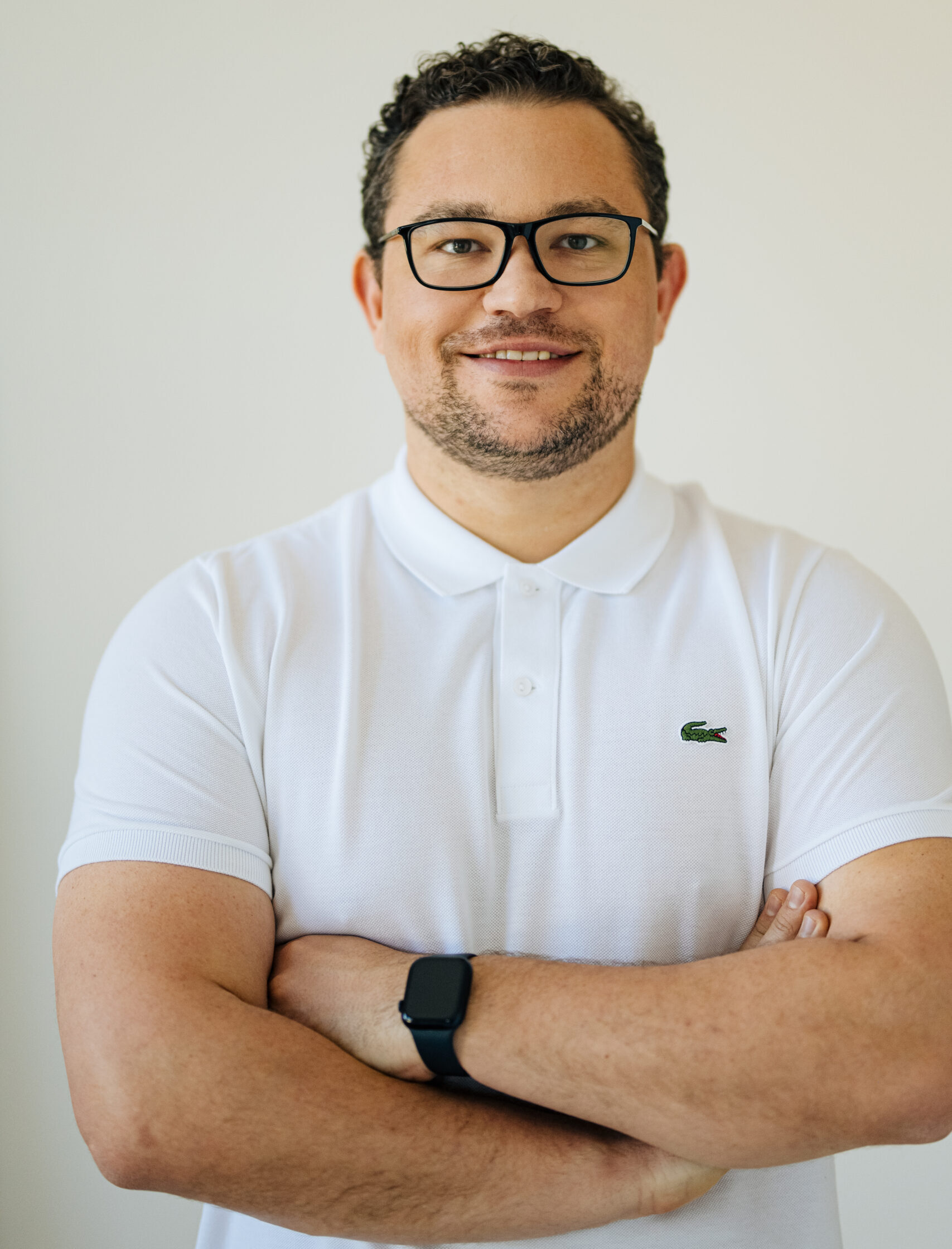
Vasyl Cherednichenko
Attorney at Law, Partner at EXPATPRO

Tetiana Yashchenko
PhD, Partner at Expatpro